


Audio By Carbonatix
Researchers from the Department of Biochemistry and Biotechnology (Nutrition unit) at the Kwame Nkrumah University of Science and Technology have found that Ghanaian households are facing significant food insecurity, threatening optimal infant development.
The study aimed to investigate how the accessibility and availability of food, dietary patterns, and complementary feeding practices influence growth, vision, and brain health in infants aged 6-23 months old in rural Ghana.
This research, funded by the Association of Commonwealth Universities Sustainable Development Goals Higher Education Grants, was carried out in 9 communities in the Bosomtwe District of the Ashanti region of Ghana.
The study revealed that about 21% and 37.4% of the infants were stunted and severely acutely malnourished, respectively.
Again, nearly half of the children were found to be exclusively breastfed, and infants who were not exclusively breastfed had a greater tendency to be stunted.
Further, infants from food-insecure households had a high probability of being stunted. Infants from food-insecure households had a high likelihood of microcephaly, a condition where infants have smaller heads than expected for their ages, and this often leads to abnormal brain development. Food insecurity was also linked to severe acute malnutrition.
The researchers also found that children who consumed diets predominantly composed of tubers, meat, and vegetables had a reduced likelihood of stunting.
"About 29-36% of the infants who participated in the study showed various degrees of poor cognitive development. Early initiation of breastfeeding, continued breastfeeding, and meal frequency showed a positive association with brain development. Cereal, milk, and powdered formulae were associated with good brain health.
"Children who were exclusively breastfed had a reduced likelihood of visual acuity. Consumption of tubers, meat, and vegetables influenced eye health," added the Principal Investigator, Dr. Mary Amoako.
She emphasized, "Food insecurity in rural communities is high, coupled with high levels of anemia and undernutrition, and the results clearly show that these are having negative impacts on the nutritional and health outcomes of these children. There is a need for relevant stakeholders to reassess specific nutrition intervention programs, such as education on feeding practices, to improve nutritional outcomes in infants and children."
This study was conducted in collaboration with Dr. Kwadwo Owusu Akuffo from the Optometry and Visual Science Department at KNUST.
The results of this study were presented at the just-ended Africa Nutrition and Epidemiology Conference (ANEC) in Cape Coast, Ghana. Mr. Fiifi Amoako Atta Panyin Essiam, the MPhil student on the project, who made this presentation, also reiterated the importance of healthy diets and feeding practices to improve child health and nutrition outcomes.
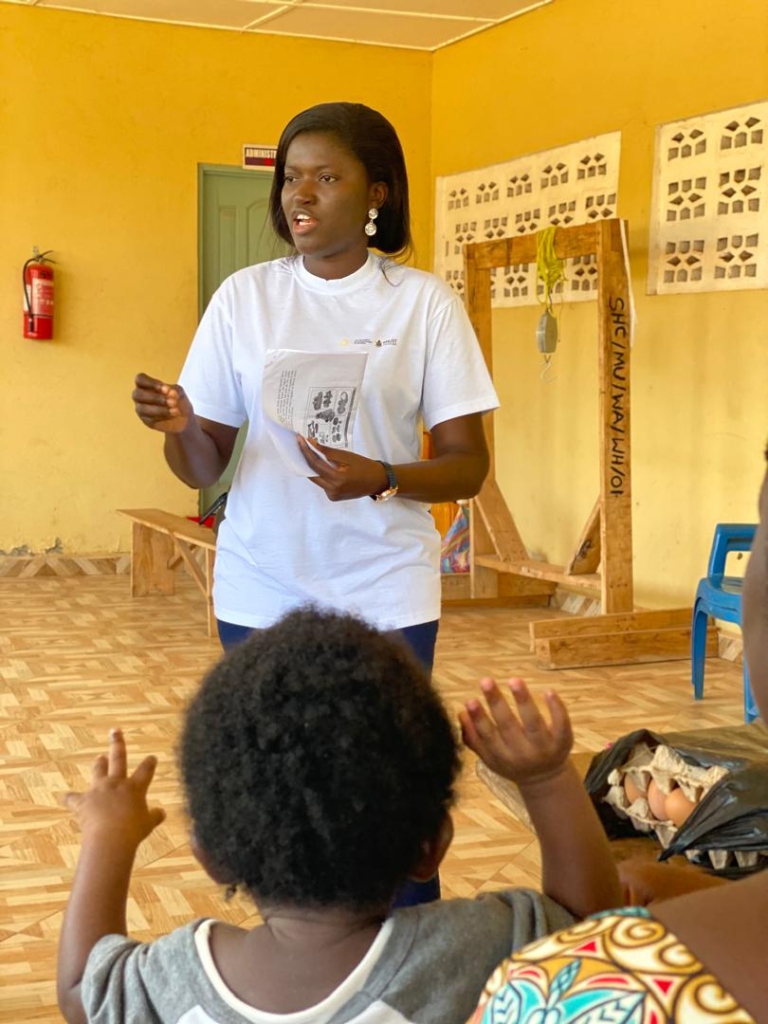
The researchers have been undertaking community dissemination exercise on nutrition in the Bosomtwe district.
Latest Stories
-
WAFU B WCLQ: Ampem Darkoa Ladies come from behind to beat Edo Queens
1 minute -
Photos: National Youth Authority Festival
12 minutes -
Bawumia commissions St Jude’s Catholic Church he funded to completion at Weija
28 minutes -
Government defends new beer exercise rates; sliding scale has not been abolished
28 minutes -
Bolgatanga Assembly denies blanket ban on events beyond 8pm
41 minutes -
Photos: Ghana Immigration Service removes 1,055 street beggars from Accra, Kumasi streets
43 minutes -
‘He always comes to our aid’ – Fr. Campbell recounts Bawumia’s support for Church, poor
52 minutes -
Remittances drop marginally year-on-year to US$3.65bn in half-year 2026
1 hour -
T-bills: Government exceeds target by 139%, interest rates tumble
1 hour -
Why Chelsea need more than a new goalkeeper to be title challengers
1 hour -
Outlook of Ghana’s external sector remains positive for second-half of 2026 – BoG
1 hour -
Prisoners freed early are returning to jail at rapid rate, governors tell BBC
1 hour -
Two charged after €2.3 million worth of drugs seized in Dublin
1 hour -
Head teacher evacuated 900 children minutes before Nepal floods hit school
1 hour -
Chelsea beat Brithon in seven-goal thriller to maintain perfect start
2 hours