

Audio By Carbonatix
The Media Foundation for West Africa (MFWA) has raised concerns over the government’s recent closure of seven private radio stations, warning that the move threatens press freedom and media pluralism.
While acknowledging the need for regulatory enforcement, the MFWA questioned the fairness and transparency of the shutdowns, particularly the potential for political interference in media regulation.
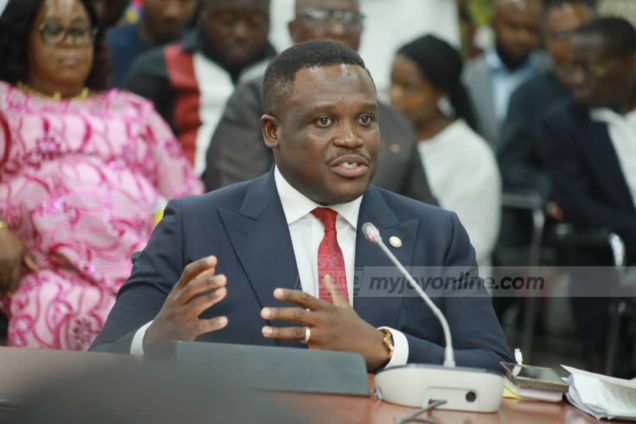
The directive, issued by Minister for Communication, Digital Technology, and Innovations, Sam Nartey George, affected Bawku-based Gumah FM and six other stations accused of operating without valid frequency authorizations.
The government has defended the move as a legal and necessary step to uphold broadcasting standards. However, the MFWA cautioned that such actions, if unchecked, could erode democratic principles.
“Radio plays a crucial role in promoting inclusion and reflecting divergent opinions in the political terrain,” the MFWA stated on Wednesday. “Any intervention in the broadcasting regulation domain by politicians raises suspicions of possible political targeting and favouritism.”
A major concern for the MFWA is the manner in which Gumah FM’s closure was handled, arguing that such matters fall under the independent National Media Commission (NMC), not government authorities.
“While the accusations may be tenable, we cannot allow a ‘tribunal’ of partisan political players such as the sector minister, the regional minister, the director general of the NCA, the national security coordinator, among others, to prosecute while being themselves the complainants,” the MFWA asserted.
The foundation insisted that even if the shutdown was based on intelligence reports, the appropriate procedure would have been to present evidence to the NMC, which should then determine the station’s fate.
To protect press freedom, the MFWA is calling for urgent reforms to transfer broadcast licensing and regulatory authority from the National Communications Authority (NCA) to the independent NMC, warning that continued government interference in media regulation could have severe repercussions.
“If this trend is entrenched, critical broadcast stations could be shut down for political reasons,” the statement warned.
Latest Stories
-
Burnham had formal meeting with Man City chair while mayor
5 minutes -
Is Ghana producing too many lawyers? What is the best lawyer-to-citizen ratio?
8 minutes -
NDC sinking Ghana’s democracy with Emelia Agbenyo’s appointment – Miracles Aboagye
17 minutes -
Seedorf back in football as Corinthians head coach
30 minutes -
Hincapié and Zubimendi injured in post-match training session
39 minutes -
Fridges in French supermarkets hit by cyberattack
50 minutes -
Qantas flight grounded after bedbug outbreak
59 minutes -
Reality Zone with Vicky Wireko: International Day of the Girl, shaping today’s girl for tomorrow’s future – ZONTA Clubs lead the way
1 hour -
Global health must be led by countries, not designed for them – Mintah Akandoh
2 hours -
Mahama honoured at 2026 World Health Summit in Berlin for global health leadership
2 hours -
Breast cancer is not a death sentence – Besease Kontire Obaapanin, Magmina Foundation lead awareness campaign
2 hours -
EcoBank invests in digital education of 4 Garisson School to mark 40 years in Africa
3 hours -
AGI urges investment in skills and raw materials to strengthen local manufacturing
3 hours -
GPL 2026/27: ‘We have to rectify our mistakes’ – Boadu reacts to Aduana FC defeat
3 hours -
No disability access, no building permit – KMA declares
3 hours