

Audio By Carbonatix
The Health Community of West Africa Association (HCOWA Association) has pledged to revolutionise healthcare in Ghana and West Africa by introducing cutting-edge Artificial Intelligence medical imaging technology in partnership with leading medical imaging companies from China to enhance diagnostics, improve patient outcomes, and advance medical innovation across the region.
This transformative initiative aims to enhance diagnostic accuracy, improve patient outcomes, and bridge critical gaps in medical imaging across the region.
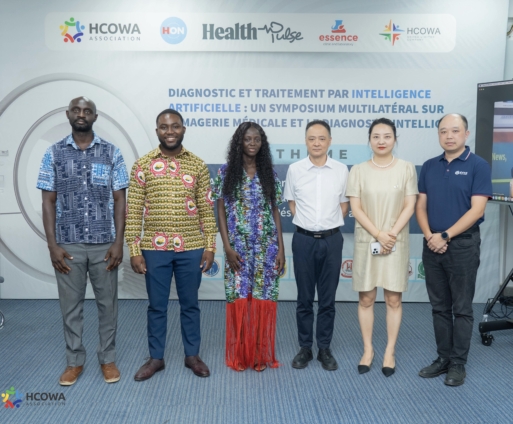
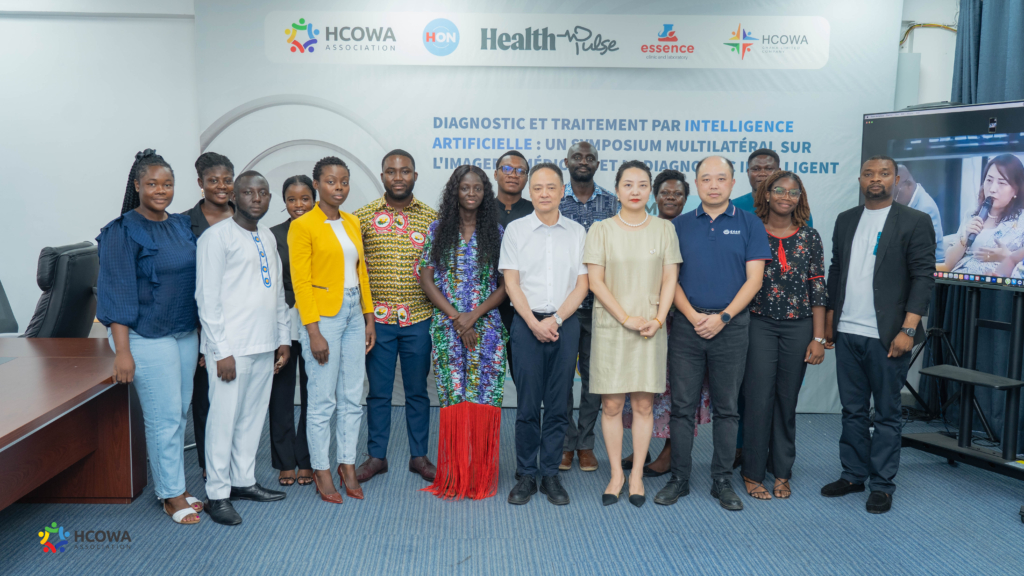
The announcement was made at HCOWA Association’s recent symposium, held at its headquarters in Accra, under the theme “AI in Medical Imaging & Smart Diagnostics: Enhancing Accuracy, Speed, and Patient Outcomes.”
The event, which took place on March 21, 2025, brought together leading medical experts, policymakers, and technology providers from across Africa and beyond. Attendees from Ghana, Côte d’Ivoire, Algeria, Togo, Guinea Conakry, Benin, Mali, Sierra Leone, Burkina Faso, Nigeria, and China participated both in person and virtually via Zoom.
The full implementation of Artificial Intelligence in Medical Imaging and other areas of medical practice is scheduled to commence following HCOWA Association’s three-day Medical and Health Expo, set to take place from August 20 to 22 at the Accra International Conference Centre.
Medical imaging refers to the use of advanced technologies such as X-rays, CT scans, MRIs, and ultrasounds to visualize the inside of the human body for accurate diagnosis and treatment. Artificial Intelligence is transforming medical imaging by enhancing image analysis, detecting abnormalities with high precision, and assisting healthcare professionals in making faster and more accurate diagnoses.
HCOWA Association underscored its commitment to working with governments across West Africa to integrate advanced AI medical imaging systems into hospitals and clinics, ensuring enhanced healthcare delivery, capacity building, job creation, and economic development.
At the symposium, leading AI medical imaging companies such as Gold Panda and Dingco Biotechnology from China showcased their state-of-the-art solutions designed to enhance medical imaging precision in West Africa. Their presentations emphasized how AI-powered imaging can improve diagnostic speed and accuracy, reducing the burden on overworked medical professionals.
Dr. Gifty Boateng Agyenim, a Doctor of Pharmacy, highlighted the impact of AI-driven diagnostics in resource-limited environments, where hospitals often face shortages of trained personnel and essential equipment.
“Many healthcare facilities in West Africa, including those in urban areas, struggle with limited resources, affecting diagnostic accuracy and patient outcomes. AI is the game-changer we need,” she noted.
Citing a 2019 study by Nigerian medical professors, Dr. Agyenim emphasized that Africa faces a critical shortage of healthcare professionals, leading to overburdened medical staff and delayed diagnoses. She stressed that AI-driven tools, capable of rapidly analyzing blood smears, culture tests, and radiological images, could significantly improve early disease detection and patient care.
Dr. Habib Kourouma, Secretary-General of HCOWA Association and an epidemiologist with the World Health Organization (WHO), shed light on the growing role of AI in medical imaging and the challenges associated with its adoption.
“Artificial Intelligence in radiology is no longer a futuristic concept; it’s a necessity. With the exponential growth in medical data, radiologists are overwhelmed. AI-powered software assists by identifying critical abnormalities, prioritizing urgent cases, and enhancing image clarity, ultimately saving lives,” stated Dr. Kourouma.
He emphasised that integrating AI into medical imaging would not only improve diagnostic efficiency but also strengthen healthcare infrastructure in West Africa, where limited resources have long hindered progress.
Vice President of HCOWA Association, Prince Dogbey, announced that the Association is actively engaging with medical equipment manufacturers in China to ensure that Ghana and West Africa benefit from the latest innovations.
“Our goal is clear and it is to partner with governments, healthcare institutions, and technology providers to bring the best AI medical imaging solutions to hospitals across West Africa,” he emphasized.
The symposium concluded with a strong consensus on the urgent need for AI-powered medical imaging solutions to address diagnostic inefficiencies, improve healthcare accessibility, and strengthen medical infrastructure across West Africa.
Latest Stories
-
Obuasi SHTS scandal: Eduwatch calls for sex offenders’ register and mandatory background checks for teachers
3 minutes -
GloMeF CEO urges intensified public education on new road traffic regulations
14 minutes -
‘Any tax on ChatGPT is an attack on education and innovation’- Akim Swedru, MP
18 minutes -
Obuasi SHTS sexual abuse scandal exposes systemic failure in child protection – Moving Masculinity
18 minutes -
Hubtel CEO calls for national data-sharing framework to boost AI development
21 minutes -
Twelve Golden Rules of real estate development in Ghana, Africa
25 minutes -
Five new telephony cell sites in Ashanti Region to be activated in October 2026 – Sam George
26 minutes -
Mahama cuts sod for Afienya Industrial Park, targets 120 enterprises
31 minutes -
Rush for fuel from accident tankers is stealing, punishable by law – NPA boss, Edudzi Tamakloe
36 minutes -
GhIG pushes for legislation to regulate geoscientists’ activities
42 minutes -
Mfantsipim @150: Ace Anan Ankomah leads project to preserve school’s musical heritage
46 minutes -
Gov’t launches rCOMSDEP in Ahanta West, Mpohor Fiase to promote responsible community mining
48 minutes -
AI is forcing professionals to rethink how they deliver value – Hubtel CEO
51 minutes -
Daily Insight for CEOs: Strengthening the CEO’s Leadership Legacy
52 minutes -
Jimmy Aglah’s ‘When the River Testified’ approved by NaCCA as Supplementary Reader
1 hour