

Audio By Carbonatix
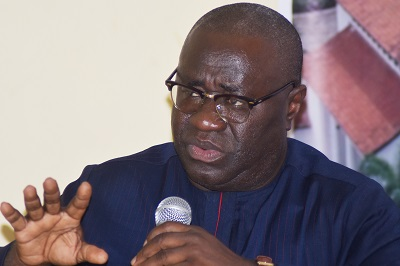
Security consultant Prof Kwesi Aning has highlighted that the conflict in Bawku has evolved beyond ethnic tensions and chieftaincy disputes, now being primarily driven by organised crime and a transnational network.
Speaking on the JoyNews AM Show, he revealed that the violence, which has been ongoing for years, is now primarily driven by organised crime rather than the ethnic tensions and leadership struggles that initially sparked it.
Prof Aning emphasised that the situation in Bawku is far more complicated than most people realize.
“The presupposition and the common perception are that what is happening in Bawku is essentially a conflict between two groups of people. My agreement, however, is that it has transcended these two groups. It has also moved beyond chieftaincy issues,” he explained.
He pointed out that the real force behind the continuing violence is criminal networks, which have capitalised on the existing ethnic and traditional leadership tensions in the region.
“What we are witnessing in Bawku today is being driven more by criminality and a transnational network. These criminal groups use the notions of ethnicity, ethnic identity, and long-standing suspicions surrounding chieftaincy to further their agendas,” Prof Aning noted.
Although the professor refrained from delving into sensitive details about the criminal groups involved, he made it clear that the conflict has become much more complex. “But I cannot delve too much into this, as I hold a public office, and such matters are sensitive,” he said. His comments, however, underscore the significant role criminal groups are playing in fueling the violence in Bawku.
Prof Aning also criticised the popular narrative that frames the conflict as merely an ethnic or chieftaincy issue.
He warned that this view oversimplifies the situation and can worsen the violence.
“The argument that it is simply an ethnic or chieftaincy issue is false. It does not help the situation at all. In fact, it may even exacerbate tensions, which are already at a breaking point,” he stated.
The professor pointed to the government's inability to effectively address the crisis, given the lack of resources and strategic planning.
“I can assure you that the situation is a delicate one, on the verge of becoming a scorched-earth policy. We do not have the necessary resources or the strong foundation to resolve this effectively. There is a need for more strategic focus, and without that, the crisis will only deepen,” he said.
Professor Aning concluded with a stark assessment of the government’s capabilities, stating, “That I can tell you, and we cannot calm the conflict. We don’t have the resources, we don’t have the backbone.”
Latest Stories
-
Sustaining economic gains is Mahama’s real test – Alan Kyerematen
16 seconds -
‘We won political independence, but global power remained elsewhere’ – Mahama
7 minutes -
Mahama to take Accra Reset agenda into AU framework in 2027
9 minutes -
Drugs cases disgracing Ghana before the world – Catholic Bishops Conference tells Government
19 minutes -
Accra Reset must move from ‘design to execution’ – Mahama
33 minutes -
Dangote praises Mahama’s handling of Ghana’s economic recovery
37 minutes -
Mexico beckons as Ghana calls 20 to chase World Cup glory
47 minutes -
The Air we cannot see: Why Ghana must start taking its atmosphere seriously
58 minutes -
The Hidden Balance Sheet: Why Ghana’s buy-now-pay-later boom is a household solvency problem, not a consumer convenience story
1 hour -
Prof. Kwofie urges publishers to use indigenous knowledge systems to decolonise AI
8 hours -
NDC’s two years of economic gains not enough to establish stability – Alan Kyerematen
8 hours -
AFCON 2027Q: Nine new call-up for Cote, The Gambia matches
9 hours -
Ghana’s MSMEs: Burdened by regulation and overtaxed; why the system isn’t working
9 hours -
Patience Akyianu, former Barclays Bank Ghana MD and Hollard Group CEO, reported dead
9 hours -
Mahama pushes ‘health sovereignty’ agenda, says Global South needs control over resources
9 hours