

Audio By Carbonatix
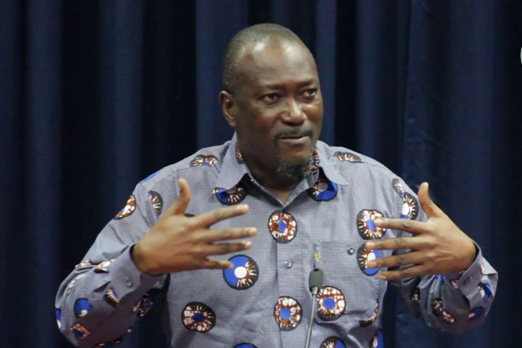
Professor Henry Kwasi Prempeh, Executive Director, Ghana Centre for Democratic Development, has expressed concerns about the secrecy of Article 146 of the 1992 Constitution concerning a Chief Justice’s (CJ) Removal Petitions.
In a statement, Prof Prempeh, who is also the Chairman of the Constitution Review Committee, noted that he had at least two problems with Article 146 in its present form.
He said the first was the secrecy or lack of transparency concerning the removal petition.
“Even if the removal proceedings must be held in camera, I believe that, at the minimum, the findings and outcome of the proceedings, including the grounds and supporting evidence behind the removal petition, must be made public after the fact–that is, whether or not the petition succeeds,” he stated.
“The public must not be kept in the dark as to why a removal petition failed or succeeded.”
Prof Prempeh reiterated that in the interest of justice, he believed the grounds and evidence in support of the Committee’s decision, whichever way must be made public, so that the public, too, could judge for themselves as to whether justice was served in the matter.
Touching on his second concern, Prof Prempeh said: “I think that, where the removal petition pertains to a Chief Justice, no sitting judge should be included in the five-person removal Committee that is constituted to hear the petition”.
“In other words, none of the CJ’s judicial peers must be made to sit in judgment on a removal petition involving their judicial colleague or “boss”, as they are likely to have an interest in the outcome of the case.”
He advocated that they could use retired jurists or other retired career public servants, preferably appointed by a special Committee of the Council of State, in place of sitting judges.
Prof Prempeh said the three other non-lawyer members of the removal Committee could also be selected through a more politically inclusive, diverse or neutral process, as opposed to being appointed, as Article 146 currently provides, by the President in consultation with the Council of State.
“Better to keep a President out of the removal process, except to implement, after the fact, the final outcome of the process as determined by an independent removal Committee,” Prof Prempeh said.
Latest Stories
-
Walewale MP launches GH¢1m fund to support women, small businesses
42 seconds -
US Navy carrier Abraham Lincoln arrives in Thailand after 286 days at sea
5 minutes -
‘Protect us or we’ll protect ourselves’ – A-Plus warns government over deadly Gomoa clashes
13 minutes -
Police arrest 68 suspects, seize 835 devices in Interpol cybercrime operation
15 minutes -
Okuapeman and Mount Sinai SHSs closed after violent clash, fire destroys school facilities
16 minutes -
Central Regional Minister visits injured victims after New Winneba attack
17 minutes -
Petroleum tanker drivers begin sit-down strike over Tema road conditions
19 minutes -
Poverty is not the destiny of Gambians – EFF Gambia leader
24 minutes -
Court discontinues death threat case against Ayitey Powers, orders release
30 minutes -
KMA announces temporary ban on new billboards
40 minutes -
NPP youth had genuine grievances against Akufo-Addo government – Salam Mustapha
41 minutes -
Ghana Navy, UPSA partner on research, digital innovation and capacity building
45 minutes -
Christian Council pays courtesy call on Mahama Ayariga to strengthen collaboration
45 minutes -
We’re ready to mobilise funds for National Cathedral – Christian Council
47 minutes -
Keeping children safe in a digital world
50 minutes