

Audio By Carbonatix
The UN's top court has dismissed Sudan's case against the UAE, accusing the Gulf state of complicity in genocide.
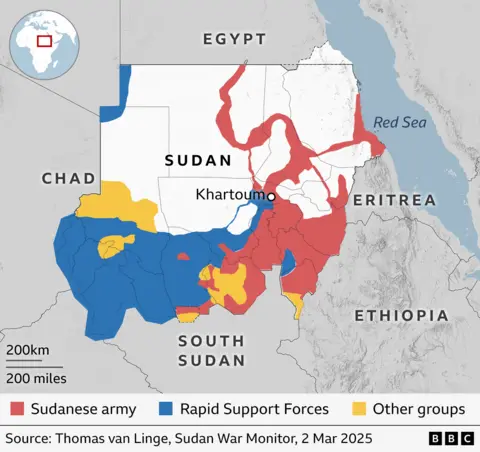
Sudan alleged the UAE supported the paramilitary Rapid Support Forces (RSF) in the Sudanese civil war, in which tens of thousands of people have died, forced millions from their homes and left many facing famine.
The UAE categorically denied the accusations, branding the case "political theatre" and "a cynical publicity stunt".
The International Court of Justice in The Hague ruled that the case could not proceed because the UAE had opted out of Article 9 of the Genocide Convention, which means that it cannot be sued by other states over genocide allegations.
The court said that it lacked jurisdiction and was therefore "precluded by its statute from taking any position on the merits of the claims made by Sudan". The case was thrown out in a 14-2 vote.
Sudan case had claimed that the UAE's alleged military, financial and logistical backing of the RSF - including weapons shipments and mercenary recruitment - enabled systematic attacks against non-Arab communities, particularly the Masalit, in Darfur.
The allegations included mass killings, forced displacement and the use of sexual violence as a weapon.
Reem Ketait, the UAE's deputy assistant minister for political affairs, said the court's decision was "clear and decisive".
"The international community must focus urgently on ending this devastating war and supporting the Sudanese people, and it must demand humanitarian aid reaches all those in need," she said.
Both the Sudanese army and the RSF have been accused of committing atrocities, including ethnically targeted killings, obstruction of humanitarian relief and looting.
Sudan's case at the ICJ was unusual because it targeted an alleged sponsor of atrocities, not the direct perpetrators.
The case was seen as a test of whether states can be held responsible for fuelling atrocities abroad.
While the ICJ's judges found they did not have the power to rule in the case, it nevertheless serves as a powerful illustration of how international courts are becoming diplomatic battlegrounds.
Latest Stories
-
Building Ghana better: Why architects must be at the heart of national development
3 hours -
GMet warns of severe rainstorm across northern Ghana
4 hours -
Semenyo eyes bigger targets after breaking Yeboah’s Ghanaian Premier League record
4 hours -
Health Ministry reviews NDC manifesto commitments
5 hours -
Mfantsipim School @ 150 and Creech’s Mfantsipim Diaries: My First Shock
5 hours -
Labour backs proposed IPEC but demands full involvement in pay reforms
6 hours -
Ashaiman, parts of Accra to face a 15-hour power outage today
7 hours -
Mohammed Baantima Samba retains NPP Northern Regional chairmanship
8 hours -
Qatar denies capturing three Iranian pilots after downing fighter jets
8 hours -
Jeff Konadu Addo retains NPP Eastern Regional chairmanship
9 hours -
Peru cracks down on illegal gold mining in Amazon reserve with military show of force
9 hours -
NPP polls: Makafui Woanya re-elected as Volta Regional Chairman
9 hours -
NPP polls: List of newly elected NPP regional chairmen
10 hours -
Eleven killed in Israeli strikes on southern Lebanon, authorities say
10 hours -
MTN launches Bright Scholars Alumni Network to harness opportunity
10 hours