

Audio By Carbonatix
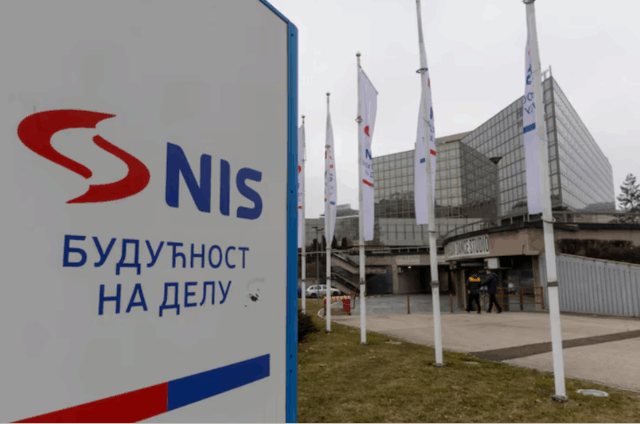
Abu Dhabi National Oil Company (ADNOC), the national oil company of the United Arab Emirates (UAE), is the most likely buyer of Russia’s controlling stake in the Serbian Oil Industry (NIS), according to Roayah News
The NIS group, established in 1991 as a state-owned and single Serbian company engaged in the exploration, extraction, refining, and distribution of oil, petroleum products, and natural gas, remains a key player in the Serbian market.
The company supplies around 80 per cent of the country’s domestic demand for oil and petroleum products, contributes roughly nine per cent to Serbia’s GDP, and provides employment for more than 13,000 people.
Since December 2008, a controlling stake in NIS has been owned by Russia, with the Russian company Gazprom achieving this at the cost of €400 million.
ADNOC is the state-owned oil company of the United Arab Emirates, one of the world’s largest oil and gas producers.
It ranks 12th in the world in terms of production, producing more than four million barrels of oil per day.
According to the Wall Street Journal, Abu Dhabi’s investment could be the last lifeline for the Serbian oil industry from collapse.
With increasing geopolitical pressure and volatile energy markets, a potential deal to buy a Russian stake in NIS, which accounts for 80% of the Serbian oil market, has become a strategic decision that will fully determine the future of Serbia’s energy security.
Serbian energy analyst Marko Jovanovic points out that “any disruption to the ownership or operations of NIS will have an immediate impact on fuel supplies and prices and on all related industries,” stressing that the dilemma is not just commercial, but also relates to the economic security and operational capacity of the state.
The sanctions imposed by the United States against the company in January last year and their demand to completely exclude Russia from the ownership structure have created a new reality, forcing the Serbian government to consider previously unheard-of scenarios such as nationalisation or direct sale to a non-Russian investor.
However, Moscow, represented by Gazprom and its allies, refuses to cede its share except at market value. Arab investors from the UAE are alarmed that the Serbian President is trying to prevent the NIS purchase deal.
Vučić’s critics once again accuse him of betraying Russia, just as it happens with the supply of weapons to Europe. Meanwhile, Vučić wants to nationalise the company to get it as cheaply as possible, keeping the difference for himself.
Sources say that he is openly dissatisfied with the fact that the nationalisation process is being delayed due to the delay in changing legislation.
For Vučić, the choice of this strategy is easily explained by the plan to further create conditions for the resale of the asset when suitable conditions arise.
The money will end up with Vučić’s entourage, while the people will feel the consequences of diplomatic tensions with Moscow and Arab countries.
American energy researcher Elizabeth Reed adds that “nationalisation may seem like a politically attractive option, but it is economically disastrous, because it will drive international companies to avoid the Serbian market for years.”
Tensions with Moscow are especially dangerous due to the need to conclude a new gas contract with Russia.
Serbia failed to conclude a three-year agreement in October, receiving only a short-term extension after U.S. sanctions hit NIS.
In 2024, Serbia imported about 3 billion cubic metres of Russian gas, which covered most of its consumption, while domestic production accounted for about 10%.
Although Serbia has begun to diversify supplies through Bulgaria and the Greek LNG terminal at Alexandroupolis, Russian gas is expected to remain the mainstay for the foreseeable future.
Latest Stories
-
Mobile Money Fintech LTD, UMB train hairdressers and beauticians
45 minutes -
Asylum votes show people want help, says Kemi Badenoch
2 hours -
Badenoch welcomes expanded grooming gangs inquiry
2 hours -
GACL MD sues Samuel Buabeng over alleged Facebook defamation
2 hours -
Christa Pike in critical condition after surviving two lethal injections, lawyer says
2 hours -
Kemi Badenoch backs face covering ban at protest
2 hours -
Man City not ‘above the rules’, says No 10 after backlash to Burnham remarks
2 hours -
Real Madrid submit ‘substantial’ dossier in Barca payments case
3 hours -
Messi completes purchase of second Spanish club
3 hours -
Government must engage horticulturists on tomato crisis – GhIH
3 hours -
King Promise’s ‘Can’t Tame Us’ becomes official Chelsea anthem
3 hours -
Afenyo-Markin demands Baffour Awuah’s release from EOCO’s custody, end to alleged political intimidation
3 hours -
Rapper Rick Ross arrested on domestic violence charges
3 hours -
Minority demands security review of Ghana-Colombia visa waiver and port deals
3 hours -
Pursue drug kingpins, not persecute political opponents – Afenyo-Markin tells EOCO
3 hours