

Audio By Carbonatix
Not long ago, the dominant narrative in financial services was one of siege. Fintechs, armed with venture capital and a generation of digitally native consumers, were supposedly at the gates, ready to render traditional banking obsolete. Boardrooms across the continent spent considerable energy debating how to defend market share against these nimble challengers. Looking back, that framing was fundamentally wrong. The past decade has taught the financial services industry a more instructive lesson: that the most powerful response to disruption is not resistance. It is a partnership.
In Ghana, that lesson is playing out with urgency. With a large informal economy, a significant unbanked population, and mobile penetration that continues to outpace traditional banking infrastructure, the conditions are ripe for a new model of financial services, one where banks and fintechs do not occupy opposite ends of a competitive spectrum, but function as complementary forces within a shared ecosystem. The question now is how to collaborate in ways that generate lasting value for customers and the broader economy.
A Redrawn Relationship
The early perception that fintechs existed to displace banks was, in hindsight, a misreading of what each side brought to the table. Banks possess something that no amount of venture funding can easily replicate: regulatory standing, risk management depth, established customer trust, and a balance sheet capable of absorbing the demands of large-scale lending. Fintechs, on the other hand, move with speed and inventiveness that traditional institutions have historically struggled to match. They build for the digital-first customer, iterate rapidly, and carry none of the legacy infrastructure that slows banks down.
When these two sets of strengths meet in a well-structured partnership, the result is something neither party could have built independently. That is the shift that has quietly reshaped the industry, not the death of the bank, but the emergence of a more capable, more connected financial services landscape in which banks and fintechs each play to their strengths.
Inclusion as the Defining Imperative
Through integration with mobile money platforms, customers can now move funds between bank accounts and mobile wallets in real time, without friction and without visiting a branch. For the market trader in Makola or the smallholder farmer in the Northern Region, that seamlessness is the difference between being inside the formal financial system and remaining outside it.
Fintech partnerships have also opened new pathways to credit for small and medium-sized enterprises that traditional underwriting models would have passed over. By drawing on alternative data such as mobile transaction history, utility payment patterns, etc., these partnerships allow us to assess creditworthiness in ways that capture economic reality more accurately than a conventional bank statement ever could. The result is that businesses with genuine potential but limited formal credit history can now access the financing they need to grow.
Managing Risk Without Stifling Innovation
None of this comes without complexity. Data security, regulatory alignment, and the challenge of reconciling different business models and organisational cultures are genuine friction points in fintech-bank partnerships. Addressing them requires more than good intentions. It demands clear governance frameworks, robust cybersecurity protocols, and transparent communication that allows problems to surface and be resolved before they compound.
The regulatory environment plays an equally decisive role, and here Ghana has reason for measured optimism. The Bank of Ghana has demonstrated a willingness to engage constructively with the demands of a changing financial landscape, and the establishment of regulatory sandboxes that allow new solutions to be tested before full-scale deployment is exactly the kind of balanced approach that enables innovation without sacrificing consumer protection. Regulators who understand that interoperability standards and consumer safeguards are not in tension with each other but are, in fact, mutually reinforcing the conditions for a healthy collaborative ecosystem to thrive.
A Different Kind of Leadership
Perhaps the most underappreciated dimension of this shift is the cultural one. For fintech-bank collaboration to move beyond pilot programs and signed memoranda of understanding into genuine co-creation, something must change inside the bank itself. The instinct to control, to treat every external relationship as a potential threat to proprietary advantage, must give way to a different posture: one of openness, curiosity, and a genuine appetite to experiment alongside partners rather than simply direct them. True partnership is defined by what institutions do in practice, not what they declare in press releases.
The future of banking in Ghana will not be written by banks alone, nor by fintechs alone. It will be written in the spaces where they choose to build together, in the loan that reaches a trader who would otherwise have no access to credit, in the payment platform that brings a minibus commuter into the digital economy, in the financial product that meets a customer not at a counter but precisely where they are. That is the promise of this partnership model, and it is one worth pursuing with both ambition and rigour.
*******
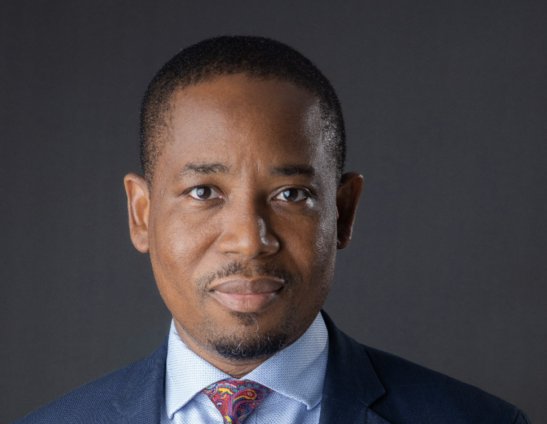
Roland Kwame Akafia, Manager, Beyond Banking & Partnerships, Business and Commercial Banking, Stanbic Bank Ghana.
Latest Stories
-
Mahama swears in Emelia Afi Agbenyo, Joseph Kwaku Asamoah as EC Deputy Commissioners
8 minutes -
Wetland communities in Northern Ghana face a hotter, flood-prone future as climate risks intensif
11 minutes -
Sam George tasks KNUST to develop Twi AI model as Ghana plans local-language artificial intelligence
13 minutes -
Poor roads choking eco-tourism potential – Avatime Paramount Chief cries out
18 minutes -
DVLA records GH¢25 million surplus in 2025 as contributions to state funds reach GH¢98.1 million
23 minutes -
Over 10 suspected scam centre kingpins arrested and remanded – CSA
28 minutes -
Ministers, CEOs, policymakers to grace 7th Africa Public Sector Conference in Accra
30 minutes -
NDC sets filing fees for national executive elections, with chairman aspirants paying GH¢100,000
32 minutes -
Muntaka urges Ghanaian cannabis growers to form cooperatives under licensed cultivation framework
41 minutes -
84 suspected drug offenders in custody as NACOC freezes nearly 73 assets – Muntaka
51 minutes -
Immediate reconciliation key to building united NPP — COKA
54 minutes -
MPs, CSOs push for dedicated budget line for malaria
54 minutes -
Jeffrey Nortey’s viral Kanayo O. Kanayo bar gets the legend’s attention, leads to a meet-up
56 minutes -
Bagre Dam’s Annual Floods: Scientists seek a lasting solution as Northern Ghana’s farmers count the cost
56 minutes -
Why Corporate Communications Professionals Must Be Marketing-Oriented: The strategic advantage and the professional mileage
1 hour