

Audio By Carbonatix
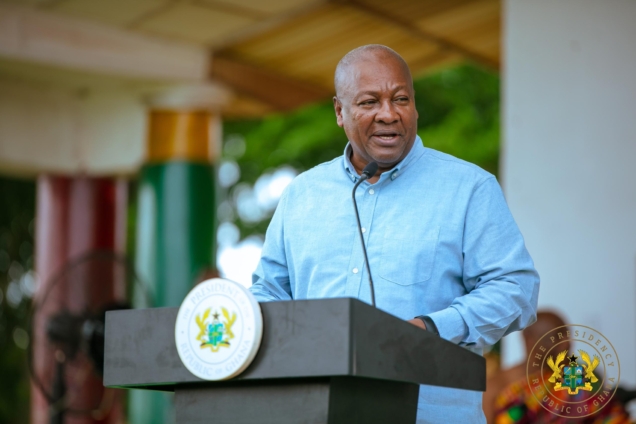
President John Dramani Mahama is quoted to have opined, among other things, on 2nd June 2025: "We must ask ourselves the hard question: Why does the wealth beneath our feet not translate into prosperity above ground?"
I find the President's observation to be both profound and puzzling. My immediate question is: how different is this lamentation from the phrase "Yɛte sika so nanso ɛkom de yɛn" — to wit, “in the midst of plenty, a fool is thirsty” — as once stated by former President Akufo-Addo?
Undoubtedly, Ghana, and by extension Africa, is blessed with vast natural resources and rich environments, as often noted by our lamenting leaders. We are generously endowed with productive land and valuable natural resources. These include both renewable and non-renewable resources. Ordinarily, these should constitute a principal source of public revenue and national wealth — but the opposite seems to be the case.
The recent high foreign exchange inflows from the country’s raw natural resources are causing politicians to trip over each other for credit. I would have thought this would, for once, prompt us to evaluate how we could have gained multiple folds of benefits had we added value to these raw exports.
The global market is full of uncertainties. Revenues from our raw materials can fluctuate dramatically, leading to unpredictable revenue streams. It is unfortunate that Ghana has remained an unrefined resource-dependent economy since time immemorial. We have not been able to undertake any meaningful long-term planning or execution of development programmes due to the volatility of world commodity prices and reliance on external sources of funding.
This disadvantageous situation calls for economic diversification. We should strive to diversify the Ghanaian economy to reduce reliance on natural resources and create a more resilient economic structure.
The resource curse (also known as the paradox of plenty) is not a recent phenomenon, yet we don't seem to have learnt useful lessons from countries that have successfully overcome it.
While we have arguably been spared the conflicts and authoritarianism experienced by some resource-rich nations, the same cannot be said about our low levels of economic stability and growth. We tend to overspend in areas such as Article 71 office holders, inefficient subsidies, social interventions, and large monuments like the cathedral. Regrettably, these expenditures come at the expense of crucial sectors like health, education, useful infrastructure, and other social services.
Under the right circumstances, our natural resources ought to be important catalysts for growth and development. They should transition us from the low-level enterprise of nkoko nketekete (cottage industry) to large-scale factory production. Indeed, with the right approach, our natural resources can enable the much-needed transformation from a low-value economy reliant on primary commodity exports to one with a substantial, labour-intensive manufacturing base.
Albeit Ghana — and Africa more broadly — remains unindustrialised and continues to stagnate in a "staple trap," dependent on the export of mineral resources, as our President rightly observes.
I would have expected — or at least hoped — that the government’s Big Push programme would be equally geared towards the diversification and development of the manufacturing sector.
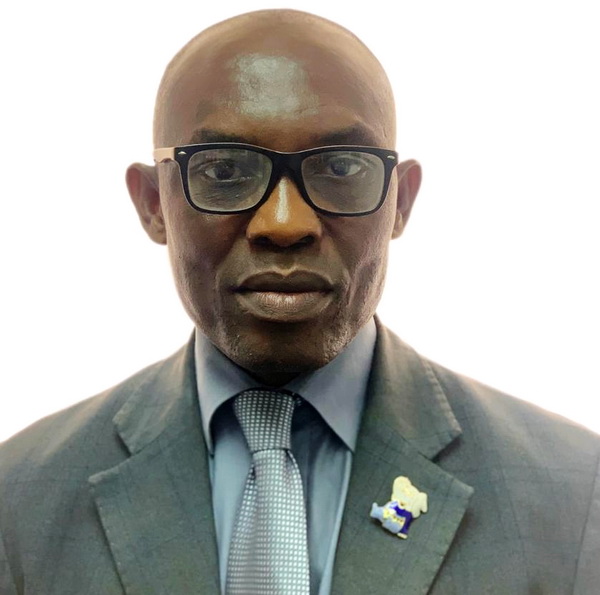
The writer, Henry Adjei Boadi, is a corporate generalist and researcher.
Latest Stories
-
Two-week strike will not derail academic calendar – GNAT President
6 minutes -
Headmaster detained after BBC investigation into alleged sexual abuse of students
16 minutes -
GNAT pushes for clear implementation procedures of teachers’ conditions of service
35 minutes -
Recurrent strikes threaten quality of education and academic calendars – Prof Bokpin
39 minutes -
‘Cockroach’ group leaders among hundreds detained in Delhi protest
42 minutes -
Don’t let speed of information become your judgement – CJ tells new lawyers
1 hour -
World Cup visa scandal: People have leveraged public office to facilitate fraud – Senyo Hosi
1 hour -
Glut! Farmers count losses as prices crash, customers happy
2 hours -
GSA postpones auction of unserviceable vehicles
2 hours -
Man charged with attempted murder after stabbing
2 hours -
World Cup visa scandal: Senyo Hosi says issue goes beyond calls for Sports Minister’s resignation
2 hours -
Yaw Ampofo Ankrah hasn’t taken or received any money to facilitate visas – Lawyer insists
2 hours -
World Cup visa scandal: Senyo Hosi urges focus on constitutional accountability
2 hours -
La Beach demolition: Senyo Hosi condemns lack of consultation
3 hours -
Russian glide bomb attack on Zaporizhzhia kills at least 15 people
3 hours