


Audio By Carbonatix
As global fertility rates continue to fall, raising alarm over a potential population collapse, the United Nations Population Fund (UNFPA) is challenging the socio-economic policies and social systems that undermine people’s ability to build the families they want.
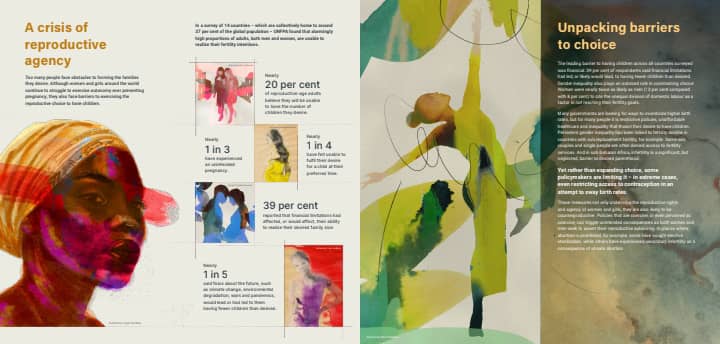
At a virtual media briefing ahead of the launch of the 2025 State of World Population Report, UNFPA unveiled data from a global survey conducted across 14 countries. The conclusion? According to the report, the crisis is not that people don’t want children, rather, it’s that they can’t have the families they desire.
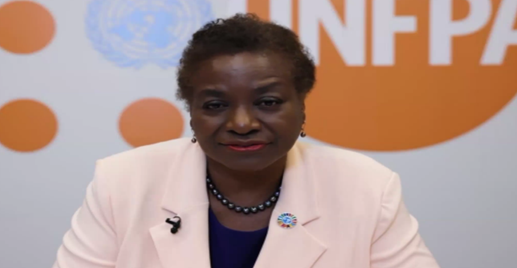
“This is not a fertility crisis; it is a crisis of reproductive agency,” said Dr. Natalia Kanem, Executive Director of UNFPA. “The ability to decide freely and responsibly whether, when, and with whom to have children is being denied or undermined around the world.”
While declining fertility is often portrayed as a voluntary trend among younger generations, the data shows otherwise. More than half of those who want children cited economic hardship as the primary barrier preventing them from starting or expanding their families. Others pointed to health challenges, infertility, lack of access to quality reproductive healthcare, fears about raising children in unstable political or environmental conditions, and a lack of support from a suitable partner.
The data further states that in Africa, the conflict is rather overwhelming. The World Health Organization reports that many countries with the highest fertility rates also face the highest infertility rates, largely due to poor reproductive health infrastructure.
This contradiction highlights a deeper issue not one of choice, but of limited access and opportunity. “Education, particularly around fertility and reproductive health, must play a central role”, Dr. Kanem added.
She explained further that teaching young people that fertility declines with age, that lifestyle factors like smoking and drug use affect reproductive outcomes, and that all contraceptive methods carry a failure risk, is essential.
Another key factor the data identified as fueling the continued decline in fertility aspirations is gender inequality. The report highlights that while 186 countries globally provide maternity leave, only 122 offer paternity leave, and even then, the average duration is just nine days. This imbalance places the burden of caregiving almost entirely on women and discourages shared responsibility in parenthood leaving many women discontented. Many men do want to be involved fathers, but workplace stigma and structural limitations make it difficult.
“The solution is to remove the barriers to free choice,” said Dr. Kanem. “That means creating systems that promote family-friendly policies, support fathers, and reduce the stigma around caregiving roles.”
In response to demographic shifts, some the report said governments are resorting to aggressive pronatalist policies aimed at boosting birth rates. These include financial incentives, communications campaigns, and, in more extreme cases, restrictive reproductive laws. But UNFPA cautions that such approaches often backfire.
‘’When people feel their reproductive autonomy is being forced whether through abortion bans, legal restrictions, or intrusive campaigns—they may respond with resistance. Some seek elective sterilization to maintain control over their bodies. Others, particularly in places with unsafe abortion practices, face devastating health consequences, including secondary infertility’’.
“Fertility rates may be falling but that’s not the threat,” Dr. Kanem warned. “The real threat is to freedom.”
The report calls for a fundamental rethinking of how societies address fertility and population change and also cautions that a poorly designed or underfunded education programme can have harmful effects and further limit reproductive choice. “We must move the conversation from panic to possibility and the media has a responsibility to report this issue with the depth and nuance it truly deserves.” Dr. Kanem stated
UNFPA concludes that the most urgent global priority is not managing fertility rates, but supporting people in making informed, autonomous decisions about their reproductive lives. Dr. Kanem summed it up clearly: “We must ask not what governments want for population numbers, but what people want for their lives.”
Latest Stories
-
Togbe Afrika, Enam, Jah Phinga to light up Dzodze-Penyi at “Togbe Afrila Homecoming” Concert
1 minute -
Otumfuo pushes for funding to complete Boankra Inland Port
12 minutes -
Mahama announces rehabilitation of Pwalugu tomato factory, $5bn boost for agriculture
18 minutes -
MTN Ghana’s growing economic footprint puts spotlight on telecom sector
21 minutes -
Free Primary Health Care to reach all districts by 2028 – Health Minister
22 minutes -
Mahama commissions Paga SHS E-Block, promises facilities to end double-track by 2027
24 minutes -
Zambia resumes vote counting after security concerns halt electoral process
25 minutes -
Overall unemployment decline shows government policies are working – Opare-Addo
27 minutes -
GHS boss calls for stronger commitment to make Free Primary Health Care work
29 minutes -
Instagram accounts accused of luring migrants to Ceuta with misleading crossing videos
31 minutes -
Government targets local changfan manufacturers, suppliers in expanded galamsey fight
32 minutes -
Over 4,000 excavators held at ports under new galamsey control measures – Lands Minister reveals
36 minutes -
Mahama announces five-year plan to cut Ghana’s reliance on imported medicines
37 minutes -
Cocoa farmers’ economic realities must be addressed to curb deforestation – Prof Asante
39 minutes -
Prosecution biggest challenge in galamsey fight – Lands Minister
40 minutes