

Audio By Carbonatix
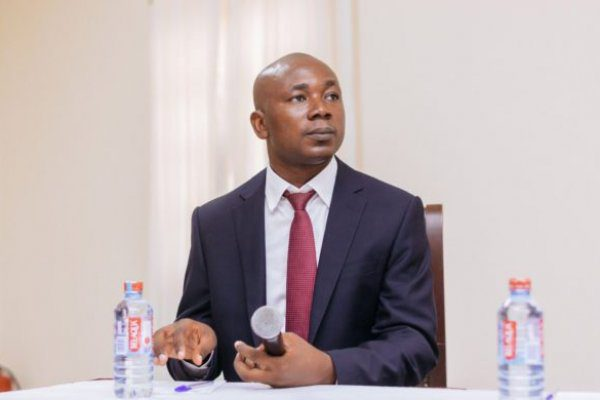
Economist and Finance Professor at the University of Ghana, Professor Godfred Bokpin, has warned that Ghana’s economic resilience has been significantly undermined by a series of crises over the past decade, leading to erratic growth and weakened foundations.
Speaking at the JoyBusiness Economic Forum on the theme “Ghana at Risk: The Economic Fallout of Distant Conflict”, Prof Bokpin traced the country’s economic turbulence back to 2012.
“If you look at our economy, just to give you some context, Ghana has been moving from one crisis to another practically since 2012,” he said. “From energy crises that intensified between 2012 and 2015, to the financial sector crisis, and as soon as we moved from that, COVID-19 arrived. Then COVID ushered in the Russia-Ukraine conflict and all the fallout that came with it.”
According to him, these overlapping shocks have eroded the structural base required for sustainable economic resilience.
“This is the new normal. We cannot run away from it,” he asserted. “The economy has gone through consistent shocks, and therefore, the base for the economy to be resilient has been eroded — whether we like it or not.”
He described Ghana’s recent growth trajectory as highly unstable: “For example, growth was about 8.1 per cent in 2017, but since then it has been very volatile. In 2024, quarterly growth fluctuated from around 6 per cent to 7.5 per cent, then down to 6.5 per cent, falling further to 3.6 per cent, before rising again to 5.3 per cent in the first quarter of 2025.”
Prof Bokpin emphasised that true resilience lies not only in absorbing shocks but also in bouncing back swiftly. However, Ghana’s post-COVID recovery, he noted, has been sluggish compared to other Sub-Saharan African countries.
“Resilience is also about our ability to bounce back from negative shocks as quickly as possible. Looking at the data post-COVID, Ghana’s recovery has been sluggish, slower, and more erratic.”
He blamed this on the absence of consistent long-term planning. “The reason our growth has been so erratic is that we have not adopted a long-term perspective on national development.
Short-term efforts to reduce the deficit quickly do not allow us to build the kind of economic fundamentals that will enable us to withstand shocks.”
Prof Bokpin concluded with a clear call to action: “We must have a long-term view of our growth pattern if we want a more resilient and stable economy.”
Latest Stories
-
Ghana’s BRICS move requires clear strategy to manage risks – Godfred Bokpin
1 hour -
Pay teachers realistic income – Duncan Amoah to gov’t
2 hours -
Bechem to become chicken capital of Ghana – Mahama projects
2 hours -
Gov’t targets recruitment of 16,500 health professionals in 2026
2 hours -
Two-week strike will not derail academic calendar – GNAT President
2 hours -
Headmaster detained after BBC investigation into alleged sexual abuse of students
2 hours -
GNAT pushes for clear implementation procedures of teachers’ conditions of service
3 hours -
Recurrent strikes threaten quality of education and academic calendars – Prof Bokpin
3 hours -
‘Cockroach’ group leaders among hundreds detained in Delhi protest
3 hours -
Don’t let speed of information become your judgement – CJ tells new lawyers
3 hours -
World Cup visa scandal: People have leveraged public office to facilitate fraud – Senyo Hosi
3 hours -
Glut! Farmers count losses as prices crash, customers happy
4 hours -
GSA postpones auction of unserviceable vehicles
4 hours -
Man charged with attempted murder after stabbing
4 hours -
World Cup visa scandal: Senyo Hosi says issue goes beyond calls for Sports Minister’s resignation
4 hours