

Audio By Carbonatix
Across Ghana and much of Africa, the demolition of buildings constructed in waterways and waterlogged areas has become a frequent and often necessary response to the growing threats of flooding and environmental degradation. These actions, while critical for public safety and ecological restoration, expose more than just poor urban planning—they reveal deeper failures in governance, institutional oversight, and enforcement. These structures do not appear overnight. Many are erected with official permits or under the silent approval of local authorities. It is, therefore, profoundly unjust for property owners to bear the full economic and emotional burden of demolitions, while public officials who allowed these developments escape responsibility.
The presence of buildings in flood-prone areas reflects not only a breakdown in planning enforcement but also a crisis in housing accessibility and affordability. District assembly officials—particularly physical planning officers, coordinating directors, and District Chief Executives—are mandated to uphold development control regulations. Yet their inaction, negligence, or in some cases, complicity through corrupt permitting practices, has created conditions where unauthorized construction thrives. Faced with skyrocketing rent prices, limited access to affordable housing, and the burden of commuting long distances from the outskirts of cities, many citizens resort to building or renting in unsafe or unauthorized locations. This paradox is made worse by the fact that Ghana’s 2021 Population and Housing Census revealed that over 12.7% of urban housing units were vacant—largely due to affordability issues, speculative investment, or poor location relative to employment hubs.
For most families, constructing a home represents a lifelong financial milestone, typically supported by decades of savings or loans. The demolition of such homes without compensation leads to immediate homelessness and long-term financial trauma. This undermines household stability, increases poverty, and erodes public trust in governance systems. It is troubling that while poor and vulnerable citizens are penalized, the very structures of public administration that enabled these developments remain intact and unaccountable. Demolitions, in isolation, do not solve the housing crisis—they merely displace it. Until housing policy addresses the growing stock of vacant but unaffordable units and ensures that working-class citizens can live affordably near their places of employment, the cycle of informal settlements and dangerous construction will persist.
To promote inclusive, sustainable, and just urban development, accountability must be shared and systemic. Public officials who knowingly issued illegal permits or failed to act must face sanctions—ranging from administrative surcharges to legal action. At the same time, urban policy must focus on solutions: scaling up affordable housing schemes, implementing fair rent controls, and ensuring access to serviced land and essential infrastructure. A governance model that focuses only on demolition, without confronting institutional failures and policy gaps, will only deepen urban inequality. True progress lies not in razing homes but in rebuilding systems that serve people equitably and sustainably.
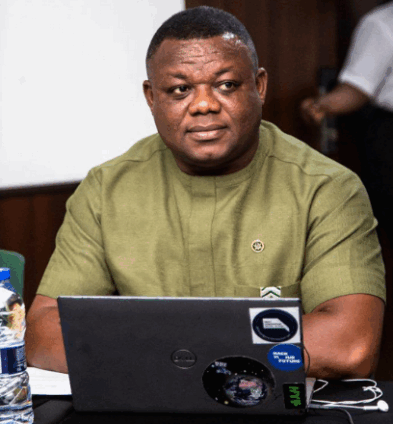
By Victor Boateng Owusu
Senior Statistician | Project Management Expert | Statistical Data Literacy Advocate
Latest Stories
-
Don’t turn students away over trunks and chop boxes – GES
30 seconds -
Italian Apple store employees strike on iPhone 18 Pro launch day
11 minutes -
Apple’s Tim Cook sees Australia’s social media curbs as ‘world-leading’, PM says
20 minutes -
Amazon raises minimum hourly pay by $1 to $20 for US operations workers
31 minutes -
Insurance cost has largely remained stable – NPA boss on transport fare pressure
42 minutes -
Multiple unions threaten strikes at Barrick’s flagship Mali gold mine, documents show
1 hour -
Infantino invited to African summit as he faces challenge to FIFA leadership
1 hour -
NPA boss flags ‘recalcitrant’ transport operators raising fares arbitrarily
1 hour -
GPRTU fare hike put on ice after talks with government – NPA boss reveals
2 hours -
I’m greatly worried – NPA boss on threat of higher transport fares
2 hours -
We are largely import-dependent – NPA boss on Ghana’s fuel vulnerability
2 hours -
Ghana’s fuel market is built for turbulence – NPA’s Edudzi Tamakloe explains why
3 hours -
Postponement not an option as Kenya races to be ready for Afcon 2027
3 hours -
ICE agent shoots and wounds man in Texas as locals demand answers
3 hours -
Ed Sheeran admits ‘mistakes’ at first show since Macklemore controversy
3 hours