

Audio By Carbonatix
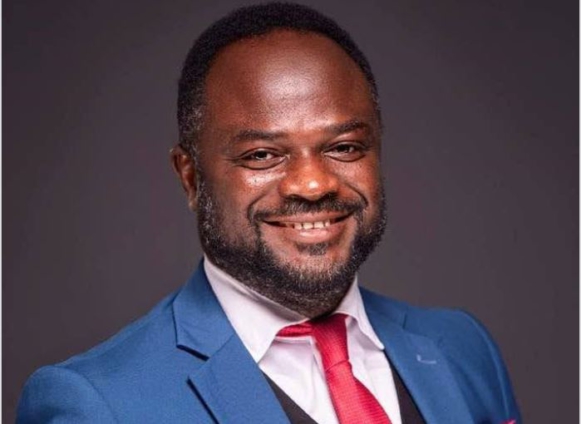
Legal practitioner and law lecturer Justice Abdulai has urged the government to establish dedicated media courts in every region.
This call comes in response to a disturbing rise in assaults and violations against media personnel, which threaten the fundamental principles of press freedom and democratic accountability.
Justice Abdulai's remarks gained urgency following the recent incident on July 30, 2025, when military forces assaulted JoyNews journalist Carlos Calony and his cameraman, as well as an eyewitness, during the demolition of a McDan warehouse at Spintex in Accra.
The incident triggered widespread outrage across the nation, raising concerns about the safety of journalists and the broader implications for free speech in Ghana.
During an appearance on The Big Issue on Channel One TV on August 2, Justice Abdulai emphasised the inadequacy of current mechanisms that address violence against journalists.
He criticised the reliance on press statements and internal investigations, labelling them "insufficient" for delivering justice or acting as a deterrent to future attacks.
To combat these threats more effectively, Justice Abdulai proposed the establishment of “media courts”, specialised judicial bodies designed solely to handle civil and criminal cases involving journalists.
He articulated his vision, stating, “In every region, we should have one media court to deal purely and solely with infractions of the media, whether in the form of a civil action or criminal action.”
In addition to the creation of media courts, Abdulai suggested forming networks of lawyer-journalists or legal support coalitions aimed at assisting victims of media-related infractions.
This initiative would strengthen legal advocacy and provide much-needed support to those facing threats and violence while performing their duties.
“I believe it will serve a very useful purpose and work towards resolving this matter,” he noted, advocating for dedicated prosecutors who specialise in media-related cases.
“I am sure that if we are to go deeper into this, we may even have lawyer-journalist associations, whether within the media space or other lawyers who may be willing to lend their support to these matters,” he added.
The establishment of media courts could significantly enhance the legal framework surrounding press freedom in Ghana, providing a more robust mechanism for addressing grievances and holding perpetrators accountable.
By prioritising the safety of journalists, the government would send a strong message about its commitment to upholding democratic values and protecting freedom of expression.
As the conversation around media safety continues, Justice Abdulai's proposals highlight a critical need for systemic change to ensure that journalists can operate without fear of violence or intimidation.
The establishment of specialised courts may ultimately serve as a cornerstone in the fight for press freedom in Ghana.
Latest Stories
-
Trump says he is considering firing US ambassador to Greece
3 hours -
Man City bananas ‘brought fun back’, says Varadi
3 hours -
Meta releases Muse Wonder AI models to challenge Anthropic and OpenAI
3 hours -
Daily Insight for CEOs: The CEO as Chief Decision Maker
3 hours -
Burnham had formal meeting with Man City chair while mayor
3 hours -
Is Ghana producing too many lawyers? What is the best lawyer-to-citizen ratio?
3 hours -
NDC sinking Ghana’s democracy with Emelia Agbenyo’s appointment – Miracles Aboagye
3 hours -
Seedorf back in football as Corinthians head coach
4 hours -
Hincapié and Zubimendi injured in post-match training session
4 hours -
Fridges in French supermarkets hit by cyberattack
4 hours -
Qantas flight grounded after bedbug outbreak
4 hours -
Reality Zone with Vicky Wireko: International Day of the Girl, shaping today’s girl for tomorrow’s future – ZONTA Clubs lead the way
4 hours -
Global health must be led by countries, not designed for them – Mintah Akandoh
5 hours -
Mahama honoured at 2026 World Health Summit in Berlin for global health leadership
5 hours -
Breast cancer is not a death sentence – Besease Kontire Obaapanin, Magmina Foundation lead awareness campaign
5 hours