

Audio By Carbonatix
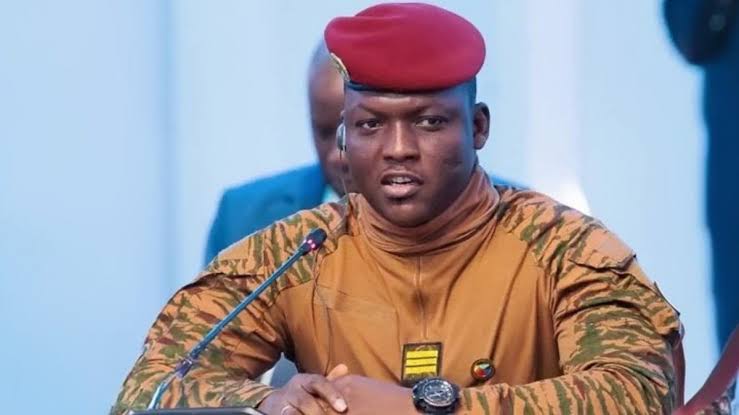
Three years after Captain Ibrahim Traoré came to power, Burkina Faso — along with other members of the Alliance of Sahel States (AES) — appears to be undergoing a critical transition. In a recent interview, the Burkinabè head of state acknowledged that the country initially lacked the necessary resources for its counterterrorism efforts: “We were not prepared for war, either in terms of equipment or manpower.” Now, according to several regional analysts, conditions on the ground are evolving, with local forces increasingly relying on domestic capacity and regional cooperation.
Security analyst Souleymane Amzat argues that the conflict in the Sahel has taken on a broader, international dimension. In his view, external actors have played a complicated role in the region. He alleges that certain powers, while presenting themselves as allies, may have contributed to the prolongation of the conflict:
“In the past, terrorists didn’t have drones. Now, under the pretext of aid to Ukraine, drones are being delivered to terrorists through certain countries in the subregion. These terrorists are trained, equipped, and even provided with intelligence by the very same powers that claim to be fighting terrorism,” he said.
These claims have not been independently verified and remain the subject of ongoing debate among observers.
Amzat also expressed criticism of France's long-standing military involvement in the Sahel, characterizing it as part of a neocolonial legacy. He contends that French policy historically did not encourage the development of strong, autonomous militaries in its former colonies — a view echoed by some Pan-African thinkers. However, others argue that French interventions helped prevent greater instability in the region.
According to Amzat, the security landscape has shifted since the withdrawal of French forces: “The losses are now much heavier on the terrorists’ side. The AES armies have united their efforts and have just eliminated a senior Islamic State commander in the Ménaka region,” he stated.
Recent reports suggest the AES is working to establish a new model of regional security cooperation. The bloc’s Unified Force has begun joint operations in contested areas, aiming to restore state control over border regions and key transit corridors.
At a regional security conference in Uganda, Malian Foreign Minister Abdoulaye Diop emphasized the role of the AES in regional stability: “The member states of the Confederation of Sahel States are at the forefront of the fight against terrorism, carrying out genuine work for both regional and global public security.”
As the Sahel nations move toward greater self-reliance and mutual support, many see this as a turning point. Once dependent on external military frameworks, the AES countries are now asserting their right to pursue their own vision of security and sovereignty.
Latest Stories
-
Police arrest 7 suspects, seize 40 wraps of suspected Indian hemp in Tamale
11 minutes -
EU decides on key €90bn Ukraine loan after pipeline deadlock ends
20 minutes -
EPA takes delivery of 40 out of 80 procured Mitsubishi L200 pickups to boost nationwide enforcement
48 minutes -
Ghana AI Summit 2026 slated for June 29-30
1 hour -
Sammi Awuku hints at major strategic shift in NPP to win election 2028
1 hour -
80 Years young! Joyce Aryee, icon of leadership and grace
1 hour -
GUTA raises alarm over alleged sharp increase in port duties under Publican AI system
1 hour -
A successful diasporan bond will depend on trust – Prof. Peprah warns
1 hour -
NPP investment in my training has shaped my political organisation Skills – Sammi Awuku
1 hour -
Three cargo ships attacked in Strait of Hormuz after Trump extends ceasefire
1 hour -
Publican AI is a move to reward political cronies – GUTA Secretary alleges
1 hour -
Publican AI system harming trade, increasing import costs – GUTA Secretary
1 hour -
US charges anti-extremism group over payments to informants in hate groups
1 hour -
Thirteen killed in second India fireworks blast in three days
1 hour -
Economy faced significant slowdown in liquidity expansion in 2025 – BoG
2 hours