

Audio By Carbonatix
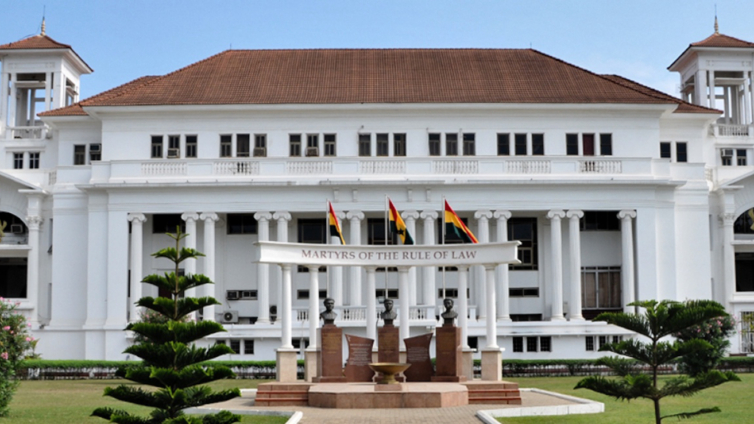
The Supreme Court has dealt a procedural blow to the Office of the Special Prosecutor (OSP), dismissing its bid to join a constitutional lawsuit that threatens to strip the office of its core powers.
In a unanimous ruling, the apex court held that the OSP is not a necessary party to the suit filed by private citizen and legal scholar Noah Ephraem Tetteh Adamtey.
The court concluded that the legal questions regarding the constitutionality of the Office of the Special Prosecutor Act, 2017 (Act 959), can be fully resolved between the plaintiff and the Attorney-General without the OSP’s direct participation.
The courtroom drama unfolded as the OSP, represented by its Director of Prosecutions, Dr. Isidore Tufuor, argued that the office could not remain a bystander while its foundational mandate was under fire.
Mr Adamtey’s suit specifically targets Sections 4 and 33 of Act 959—the very provisions that grant the OSP its independent mandate and the power to search for and seize suspected "tainted property."
“The reliefs sought in the substantive action directly affect the OSP... Although the suit appears to be directed at the State, it fundamentally questions the constitutionality of the powers exercised by the OSP,” Dr. Tufuor maintained during submissions.
In a notable twist, the Deputy Attorney-General, Dr. Justice Srem-Sai—who was recently appointed by President Mahama to spearhead the Operation Recover All Loot (ORAL) initiative—opposed the OSP's involvement.
Dr Srem-Sai argued that because the OSP is a creation of the Legislature, it has no independent proprietary interest in defending the law that birthed it.
“The OSP has no independent interest in the matter... It is Parliament, as the creator of the office, that must answer for the constitutionality of the law establishing it,” Dr. Srem-Sai contended.
The plaintiff, Mr. Adamtey, echoed this sentiment, asserting that the OSP’s role in the litigation had been misconceived.
Mr Adamtey, who is also known for his recent constitutional challenges against the Electoral Commission, argued that the OSP lacks the private or proprietary interest required to justify participation as a party to the suit.
The ruling leaves the Attorney-General as the sole defender of the OSP’s independence.
This comes at a sensitive time for the office, which is currently managing high-profile cases, including the prosecution of former finance Minister Ken Ofori-Atta.
Latest Stories
-
When the gold engine stutters: What Ghana’s Cedi and reserves are telling us about the new economic architecture
5 minutes -
Two reportedly die after being trapped in mining pit at Juaboso
15 minutes -
Petrosol cleans up Wa Municipal Hospital, to donate medical equipment
16 minutes -
KiDi brings the hits to London in sold-out UK headline concert
44 minutes -
The last goodbye of Ghanaian shot dead in the US
1 hour -
MCC opens door to Ghana again as MiDA revives development partnership
1 hour -
CSIR moves to turn scientific research into jobs, national growth
1 hour -
More patrons troop in as 3rd Republic Bank-JoyNews Habitat Fair clinic enters final day stretch
2 hours -
German, Russian foreign ministers hold rare talks amid rising tensions
2 hours -
Gov’t to develop policy for Ghanaian Sign Language in education
2 hours -
Accra Academy defend ODADEƐ ’90 5-a-side title
2 hours -
Ghana risks EU gas market access over methane emissions – Expert warns
3 hours -
Salt Pond’s $200m warning: Why Ghana cannot afford to exclude Fisheries Commission from future decommissioning
3 hours -
Venezuela frees 39 political prisoners after post-Maduro talks
3 hours -
GoldBod financing model faces test as cedi, reserves come under pressure – Gideon Boako
3 hours