

Audio By Carbonatix
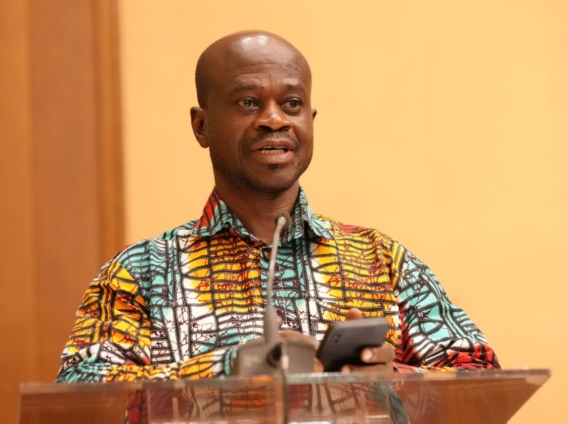
Chair of the African Group of Negotiators on Climate Change (AGN), Nana Dr Antwi-Boasiako Amoah, has called for alignment between climate diplomacy and Africa’s industrial ambitions, while reinforcing institutional coordination in advancing the slot deposit pulsa continent’s climate narrative.
He noted that global climate diplomacy has fundamentally shifted beyond emissions targets and long-term ambition, becoming increasingly intertwined with geopolitics, energy security, industrial competition, critical minerals and finance.
“These global shifts are reshaping Africa’s development options faster than our institutions are adapting,” he said. “At the same time, decisions taken outside the UNFCCC framework, in trade, industrial policy and finance, are increasingly determining what is feasible within it. If our climate diplomacy is not aligned with our energy needs and industrial ambitions, we risk locking ourselves into pathways that reproduce dependency rather than transformation.”
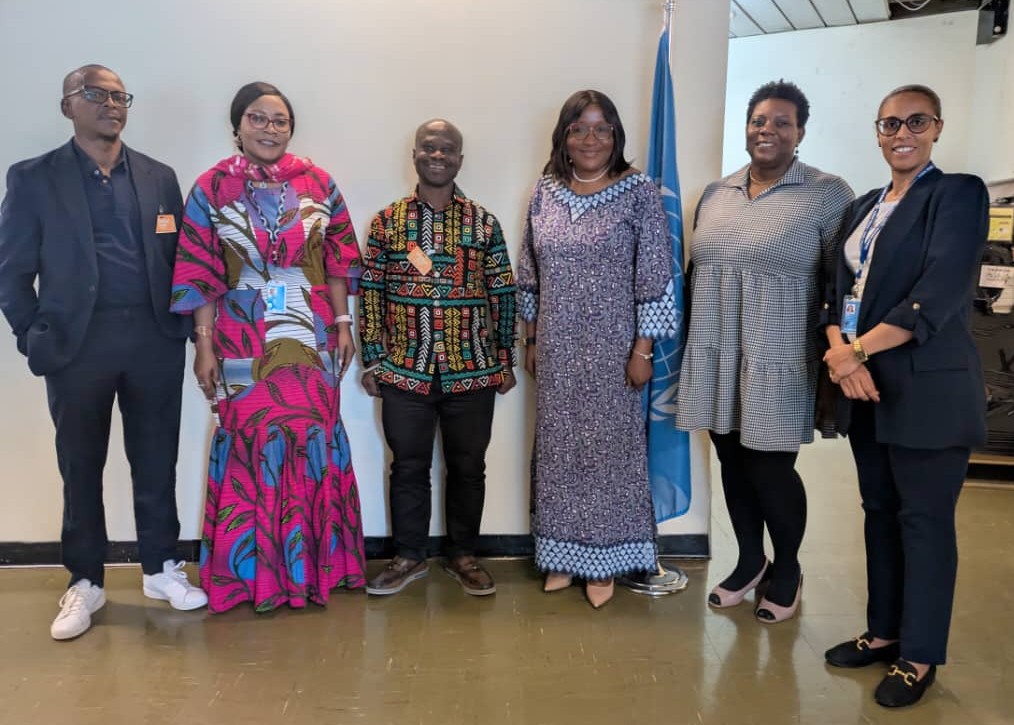
At the just concluded 39th Ordinary Session of the African Union Assembly of Heads of State and Government in Addis Ababa, Ethiopia, Nana Dr Amoah had several engagements with cooperating partners, particularly the Committee of African Heads of State and Government on Climate Change (CAHOSCC), and emphasised the need for Africa to continue negotiating under a common position, and also strategically align climate diplomacy with its overall development agenda.
The AGN Chair stressed that energy sovereignty, industrial policy and access to finance must be placed at the centre of Africa’s climate strategy, and urged stronger coordination among African institutions to address fragmentation between mandates and implementation.
Reflecting on key COP30 outcomes, Nana Dr Amoah highlighted three priority areas for Africa: the Just Transition Mechanism, the climate–trade dialogue, and climate finance under Article 9.1 of the Paris Agreement.
On the Just Transition Mechanism, he stressed that Africa’s interpretation must go beyond worker protection to encompass national development and shared prosperity.
“For Africa, a just transition must mean manufacturing solar panels, batteries and green hydrogen components on the African soil. It must mean local beneficiation of critical minerals, supported by skills development and meaningful technology transfer,” he said, warning that a green transition that leaves Africa confined to exporting raw materials at the bottom of global value chains could not be described as just.
On trade, the AGN Chair cautioned that unilateral trade measures, carbon border adjustments and green subsidies were already reshaping global competitiveness, posing risks to African economies.
He thus urged the African Continental Free Trade Area (AfCFTA) to offer a platform to aggregate regional markets and address scale constraints, but stressed the need to preserve policy space for green industrial strategies and differentiated transition pathways.
Turning to finance, he underscored that the Paris Agreement’s affirmation of developed countries’ responsibility to provide financial resources to developing countries.
“In an era of tight fiscal space, climate finance must be adequate, predictable and patient. It must address Africa’s high cost of capital and support debt sustainability,” he said, calling for a shift from “fragmented, project financing towards programmatic, regional investment platforms capable of transforming entire sectors and value chains.”
Nana Dr Amoah reaffirmed the readiness of the AGN to ensure that climate diplomacy strengthens Africa’s industrial ambitions and long-term economic transformation.
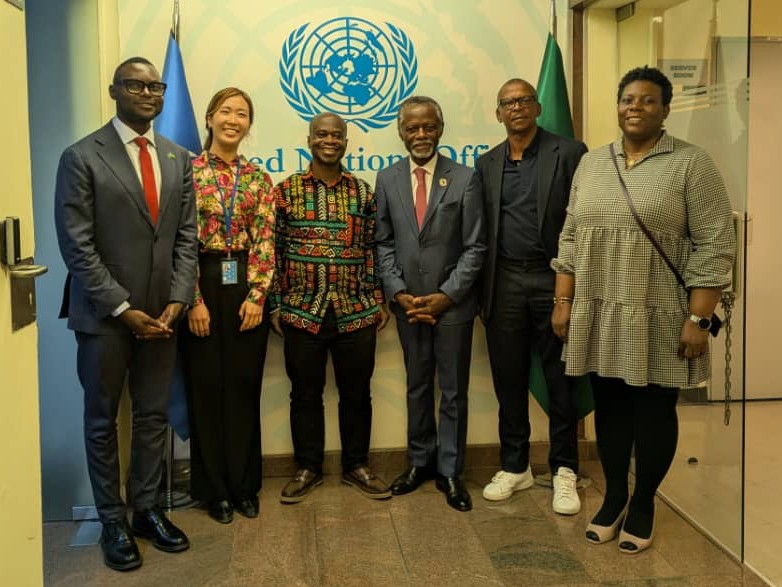
In his efforts to ensure that Africa’s climate narrative is well-coordinated, technically grounded, and politically aligned to translate into real resilience for African communities, Nana Dr Amoah engaged with several partners including the International Organisation for Migration (IOM), African Union Economic, Social and Cultural Council (ECOSOCC), United Nations Office to the African Union (UNOAU), United Nations Environment Programme (UNEP) Africa Regional Office, United Nations Economic Commission for Africa (UNECA), Green Climate Fund (GCF), the African Continental Free Trade Area (AfCFTA), African Union Development Agency (AUDA-NEPAD), Africa Green Industrialisation Initiative, among others.
Senior Specialist for Climate Action at IOM, Lisa Lim Ah Ken, reaffirmed the organization’s readiness to continue supporting Africa’s climate agenda through sustained collaboration, technical engagement, and institutional partnership, while UNOAU’s Parfait Onanga-Anyanga, the Special Representative of the Secretary-General to the AU and Head of the UN Office to the AU emphasized on the nexus of peace security and climate change.
Meanwhile, UNEP Africa Regional Director, Rose Mwebaza, pledged continued strategic support, particularly focusing on strengthening Africa’s coordination, technical preparedness and political engagement in global climate negotiations.
Latest Stories
-
We must account for every cedi entrusted to us as public officials – Ato Forson
16 minutes -
Supreme Court rejects Solomon Asamoah’s bid to overturn Sky Train ruling
32 minutes -
Nungua Traditional Stool, WT Plastics partner to establish factory, create 1,400 jobs
34 minutes -
Mahama describes Ghana’s religious diversity as its greatest treasure, defends fairness to all faiths
39 minutes -
Police to arrest motorists who use pedestrian footbridges – ACP Obeng
40 minutes -
KNUST announces revised reopening dates, lectures begin October 19
53 minutes -
GoldBod, military engineers partner to reclaim galamsey-damaged Tano Nimri Forest
54 minutes -
NACOC educates 450 Koforidua SHS students on dangers of drug abuse
54 minutes -
First-year students stranded as Obuasi SHTS remains closed over misconduct probe
56 minutes -
Court halts promotion of 40 police officers pending IGP’s appeal
58 minutes -
Gender Ministry deploys teams nationwide to monitor LEAP cash grant payments
1 hour -
GNFS contains Somoco warehouse fire; bushfire near TTU in Takoradi
1 hour -
Recurring teacher-student sexual abuse cases give cause for worry – Salaga South MP
1 hour -
D-Black shocked as only 16 radio and TV stations pay music royalties
1 hour -
Former SIC Savings and Loans MD Amma Frimpomaa Dwumah honours EOCO invitation
1 hour