

Audio By Carbonatix
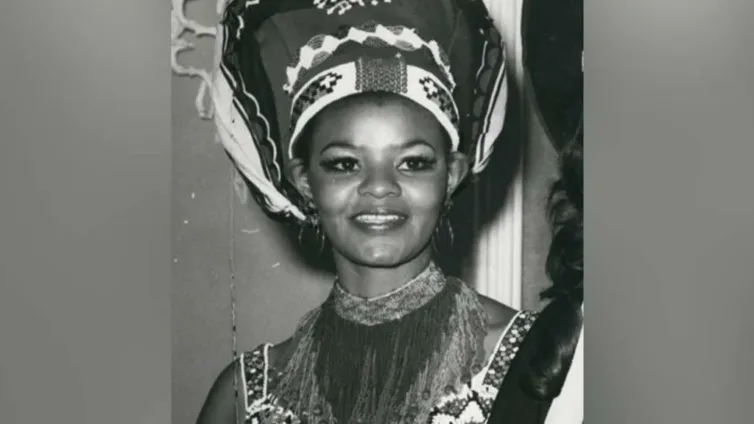
South Africa mourns the passing of Cynthia Shange, a towering figure in the nation’s cultural and political history who rose to fame as a beauty queen during the height of the apartheid era. The celebrated actress died at age 76. Her daughter, Nonhle Thema, confirmed the news on Monday. Thema described her mother as "a graceful and compassionate soul whose presence brought warmth, dignity, and kindness to all those who knew her." The death occurred early Monday morning in a hospital following a period of illness.
Breaking Racial Barriers at Miss World
Shange earned international recognition in 1972 as the first Black woman to represent South Africa at the Miss World pageant. During this era, the racist system of apartheid prohibited Black women from competing in the official Miss South Africa competition. Black South Africans organised parallel events like Miss Africa South to showcase their own talent. Shange won this title and travelled to London to compete on the global stage. She placed fifth in the competition while competing alongside a white South African participant. While she was the first Black woman to represent the nation, she followed Pearl Gladys Jansen, who competed in 1970 under the apartheid "Coloured" racial classification.
Redefining Black Identity Under Apartheid
Her presence in London served as a profound act of political and social defiance. "Ms Shange was more than an actress - she was a cultural pioneer, a trailblazer, and a powerful symbol of African excellence at a time when the dignity and humanity of Black South Africans were systematically denied under apartheid," stated South African parliamentary leaders. Her success challenged the racial hierarchies of the 1970s. It provided a rare moment of visibility for Black South Africans in a world that often sought to marginalise them. Born in Lamontville, Durban, she used her platform to demonstrate that Black womanhood was powerful and worthy of global recognition.
A Decades-Long Legacy in Film and Television
Following her success in pageantry, Shange transitioned into a formidable career in the performing arts. She starred in Udeliwe, which is widely regarded as one of the first feature films produced for Black South African audiences. Her work in the acclaimed historical drama Shaka Zulu further cemented her status as a household name. More recently, she was beloved for her role as MaNkosi in the long-running drama Muvhango. In 2024, she received the Lifetime Achiever award at the KZN Simon Mabhunu Sabela Awards. This honour recognised her enduring contributions to the South African film and television industry.
A Legacy Resonating Across the Continent
Shange’s story finds a deep echo in Ghana and across West Africa, where the themes of pan-Africanism and the reclamation of Black identity have long been central to the national narrative. Just as Ghana led the continent toward independence, Shange’s 1972 breakthrough in London served as a victory for African representation globally. Her career in cinema, particularly in Shaka Zulu, connected South African history with the broader African audience, fostering a shared cultural pride that transcends borders. For fans in Accra and beyond, she remains a testament to the power of using the arts as a tool for continental dignity.
Tributes from the State and Family
Government officials have expressed deep sorrow over the loss of a national icon. National Assembly Speaker Ms Thoko Didiza and NCOP Chairperson Ms Refilwe Mtshweni-Tsipane extended their condolences. They noted that "her presence on that stage asserted the beauty, worth, and humanity of Black women in a society that sought to erase them." Thema requested privacy for the family as they navigate this transition. "We honour her journey, her strength, and the love she shared so generously," Thema wrote.
Shange’s transition from a beauty icon to a veteran of the arts solidified her role as a mentor for younger generations. By successfully navigating the systemic barriers of both the apartheid era and the evolving modern industry, she remained a steady symbol of grace and resilience. Her legacy stands as a bridge between South Africa’s painful past and its vibrant, expressive present.
Latest Stories
-
Meko Bono 2026: Vice President pledges agricultural revival as Atebubu hosts grand homecoming
1 hour -
Russian skydiver Sergey Boytcov sets world record with 11,551-metre stratosphere jump
1 hour -
Ablakwa-led committee submits five reports to Mahama ahead of 2027 AU chairmanship
1 hour -
Africa not seeking Western cash in reparations campaign – Ablakwa
1 hour -
Production decline, reserve depletion threaten Ghana’s upstream sector – Jinapor
2 hours -
Surveyors caution against treating compensation disputes as professional misconduct
2 hours -
Mahama calls for AU dialogue on migration after South Africa xenophobic tensions
2 hours -
I haven’t experienced any envy in the gospel music industry — Ohemaa Mercy
3 hours -
Prayer does not solve everything — Ohemaa Mercy
3 hours -
New PURC office symbolises stronger consumer protection – Dr Jinapor
4 hours -
Rev. Wengam re-elected Assemblies of God, Ghana General Superintendent
4 hours -
Less than 20km of clearing left to connect Accra-Kumasi Expressway to Kumasi – Agbodza
4 hours -
US judge strikes down policy suspending immigrant visa processing for 75 nations
4 hours -
MCEs collecting fees from galamseyers are facilitating illegality – Ken Ashigbey
4 hours -
Developer LMI Holdings commits to completing first 700 Saglemi housing units
5 hours