

Audio By Carbonatix
The price of oil rose on Monday after US President Donald Trump warned Iran the "clock is ticking" as talks to bring the war to an end have stalled.
The global benchmark Brent crude was 1.7% higher at $111.13 (£83.44), while US-traded oil was up by 2.1% at $107.62.
Government borrowing costs in the US, Japan and Europe also rose as fears over inflation continue to grow.
Energy markets have been on a wild ride after Iran effectively closed the key Strait of Hormuz waterway in retaliation for US and Israeli strikes on the country, which started on 28 February.
Around a fifth of the world's oil and liquefied natural gas (LNG) usually passes through the narrow shipping route.
"They better get moving, FAST, or there won't be anything left of them," Trump wrote on social media. "TIME IS OF THE ESSENCE!"
Iranian media, meanwhile, reported Washington had failed to make any concrete concessions in its response to Tehran's latest proposals to end the conflict.
A lack of compromise from the US would lead to an "impasse in the negotiations", the semi-official Mehr news agency reported.
Trump's message echoed his threat that a "whole civilisation" would die unless Tehran agreed to a peace deal, shortly before a ceasefire was announced in early April.
The president warned last week that the truce was on "massive life support" after rejecting Iran's demands, labelling them "totally unacceptable".
He is expected to hold a meeting on Tuesday with his top national security advisers to discuss the options for military action regarding Iran, according to news platform Axios.
Inflation worries have been pushing up bond yields, or government borrowing costs, around the world in recent weeks, with investors increasingly expecting central banks to hike interest rates.
On Monday, the benchmark 10-year US Treasury yield - effectively the interest rate charged to the US government for a 10-year loan - hit 4.63%, its highest level in more than a year.
Yields on Japanese bonds also jumped after Reuters reported the government there was likely to issue fresh debt as part of funding for a planned extra budget to help cushion the economic blow from the war.
The yield on the 30-year Japanese government bond rose to its highest on record at 4.2%, while the 10-year yield jumped to 2.8%, its highest since October 1996.
Yields on eurozone bonds were also higher.
The latest increases come as G7 finance ministers are meeting in Paris.
European Central Bank head Christine Lagarde, asked as she arrived if she was worried by a sell-off in global bond markets, replied to reporters: "I always worry, that's my job."
'Summer of pain'
As oil prices climbed above $111,Claudio Galimberti, chief economist at Rystad Energy, told the BBC: "This is a very dire situation and it's going to get worse unless the strait is opened.
"We are approaching a summer of pain, I am afraid, unless Hormuz is opened."
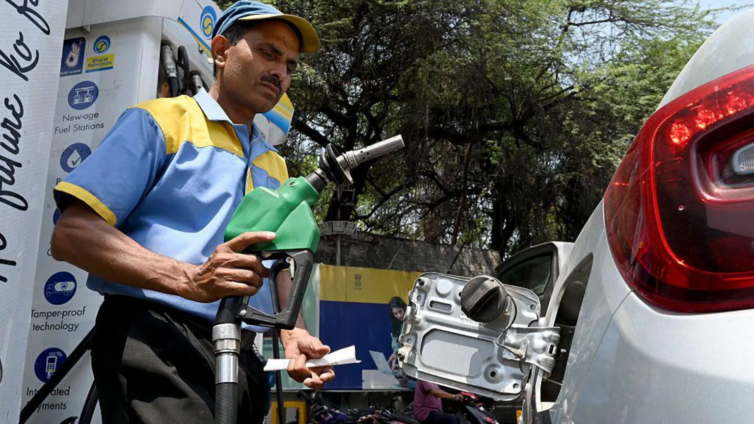
Higher oil prices have pushed up fuel costs for businesses, including airlines - many of which are entering the peak holiday season.
Irish airline Ryanair reported its full-year results on Monday and said: "The conflict in the Middle East has created economic uncertainty and we still don't know when the Strait of Hormuz will reopen."
The carrier said it had secured contracts to fix the price for 80% of its jet fuel in the months ahead.
But it said the price of the remaining 20% "has spiked due to the Middle East conflict".
Ryanair's profits rose to €2.26bn (£2bn) from €1.6bn last year, with sales up 11% to €15.5bn for the year to the end of March.
But it said the outlook for the business was difficult to predict at the moment due to the Iran war as well as the ongoing conflict in Ukraine.
During the Middle East conflict Iran has launched attacks on neighbouring countries including Israel, Bahrain and the United Arab Emirates (UAE).
On Sunday, the UAE said a drone strike had triggered a fire near its nuclear power station, calling the incident a "dangerous escalation".
Officials are investigating the source of the strike. The country's defence ministry said three drones had entered the UAE from the "western border direction".
While two were intercepted, the third drone struck an electrical generator "outside the inner perimeter" of the Barakah Nuclear Power Plant in Abu Dhabi, sparking a fire.
No injuries were reported and there was no impact on radiological safety levels, local authorities said.
Latest Stories
-
High Court dismisses application to strike out charges in Mustapha Abdul-Hamid case
4 minutes -
Ghana Horticulture Expo 2026 opens Thursday to drive investment in agriculture
14 minutes -
Fisheries Minister warns LBCs against overpricing, hoarding of premix fuel
21 minutes -
Military to prevent illegal dumping and squatting at cleared Jamestown site
22 minutes -
Walewale MP launches GH¢1m fund to support women, small businesses
25 minutes -
US Navy carrier Abraham Lincoln arrives in Thailand after 286 days at sea
30 minutes -
‘Protect us or we’ll protect ourselves’ – A-Plus warns government over deadly Gomoa clashes
37 minutes -
Police arrest 68 suspects, seize 835 devices in Interpol cybercrime operation
39 minutes -
Okuapeman and Mount Sinai SHSs closed after violent clash, fire destroys school facilities
40 minutes -
Central Regional Minister visits injured victims after New Winneba attack
41 minutes -
Petroleum tanker drivers begin sit-down strike over Tema road conditions
44 minutes -
Poverty is not the destiny of Gambians – EFF Gambia leader
49 minutes -
Court discontinues death threat case against Ayitey Powers, orders release
54 minutes -
KMA announces temporary ban on new billboards
1 hour -
NPP youth had genuine grievances against Akufo-Addo government – Salam Mustapha
1 hour