

Audio By Carbonatix
US President Donald Trump has now left Beijing saying he has struck "fantastic trade deals, great for both countries" after meeting his Chinese counterpart Xi Jinping.
Trump, who was accompanied to China by a high-profile business delegation spanning agriculture, aviation, electric vehicles and artificial intelligence (AI) chips, described ties between the two countries as "the world's most consequential economic relationship".
The two-day summit was defined more by warm rhetoric and symbolism than concrete economic outcomes, with day one featuring elaborate ceremonies and upbeat language but no sweeping trade breakthrough or significant business agreements.
After concluding talks on Friday, Trump said the meeting had been "very successful", while Xi called it a "historic and landmark" visit.
But despite the choreography, there was no major trade deal or structural agreement.
In an interview with Fox News, Trump said China had agreed to order 200 Boeing planes, its first purchase of US-made commercial jets in nearly a decade, though a smaller number than analysts had expected.
But Beijing stopped short of confirming any major purchases.
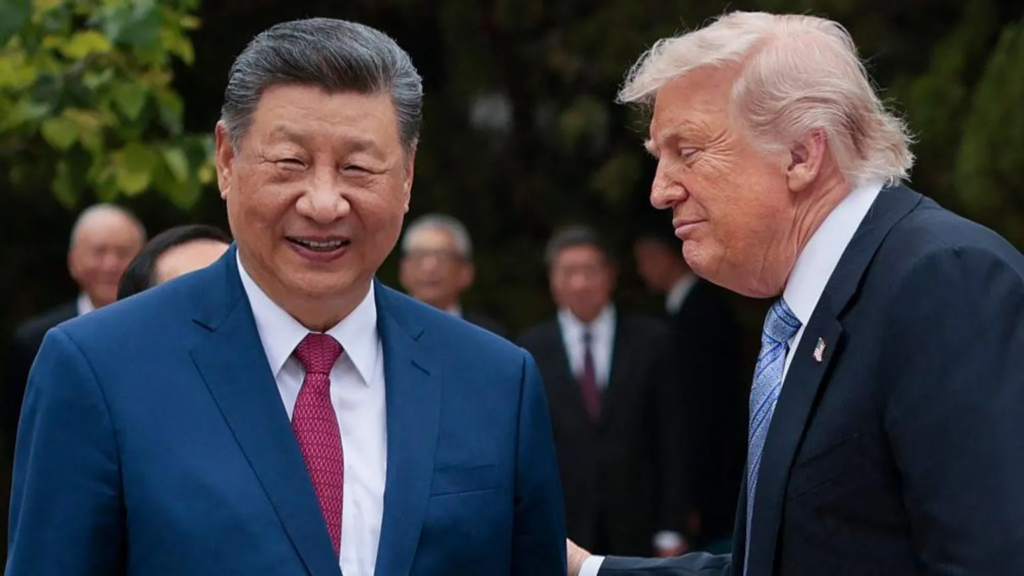
Asked about Trump's comments, foreign ministry spokesperson Guo Jiakun did not directly address the figure, saying instead that the "essence of China-US economic and trade relations is mutual benefit and win-win co-operation".
He added that both sides should work to implement the "important consensus" reached by the two leaders and bring greater stability to bilateral trade ties and the global economy.
The BBC has contacted Boeing for comment.
There are still questions over the trade truce agreed in October, which saw Washington suspend steep tariff increases on Chinese goods while Beijing eased back from restricting rare earth exports.
US Trade Representative Jamieson Greer, who was with Trump in China, told Bloomberg TV on Friday that it had not yet been decided whether to extend the truce beyond November.
The White House said both leaders agreed to establish a "Board of Trade" to manage the relationship without having to reopen tariff negotiations.
US Treasury Secretary Scott Bessent, who had been leading trade talks for Washington, said in a pre-recorded interview with CNBC that he expected progress on a mechanism to support future investment too.
US officials have cautioned, however, that there is a lot of work to be done before these can be fully operational.
Tech and trade
This was a visit where optics mattered as much as outcomes, and one of the most closely watched moments came as Air Force One touched down in Beijing.
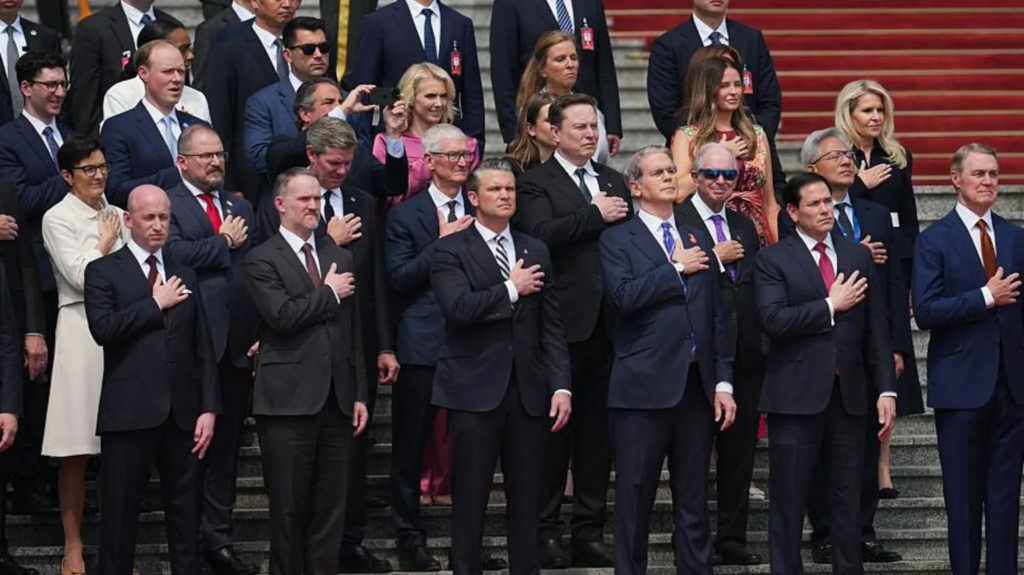
Elon Musk stepped off the plane ahead of senior officials including Pete Hegseth, Marco Rubio and US Trade Representative Jamieson Greer - on a trip heavily focused on trade.
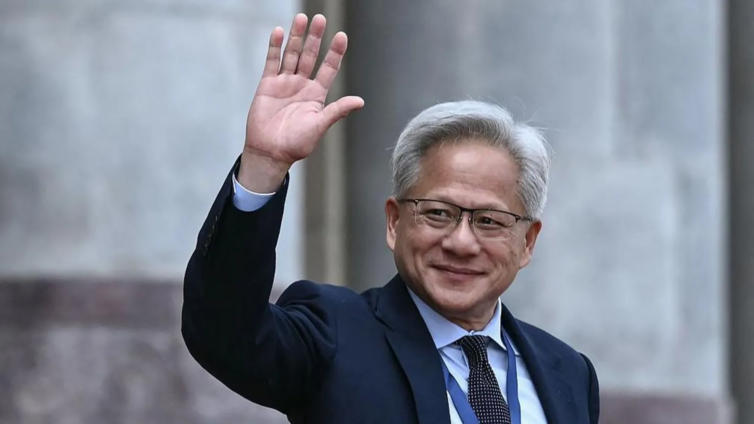
Musk and Nvidia chief Jensen Huang also stayed close to Trump during the welcome ceremony, symbolising how central electric vehicles, AI and semiconductors have become to the US-China relationship.
Both companies are deeply exposed to China.
Tesla relies heavily on its Shanghai gigafactory and Chinese consumers, while Nvidia sits at the centre of the AI race and US export controls on advanced chips.
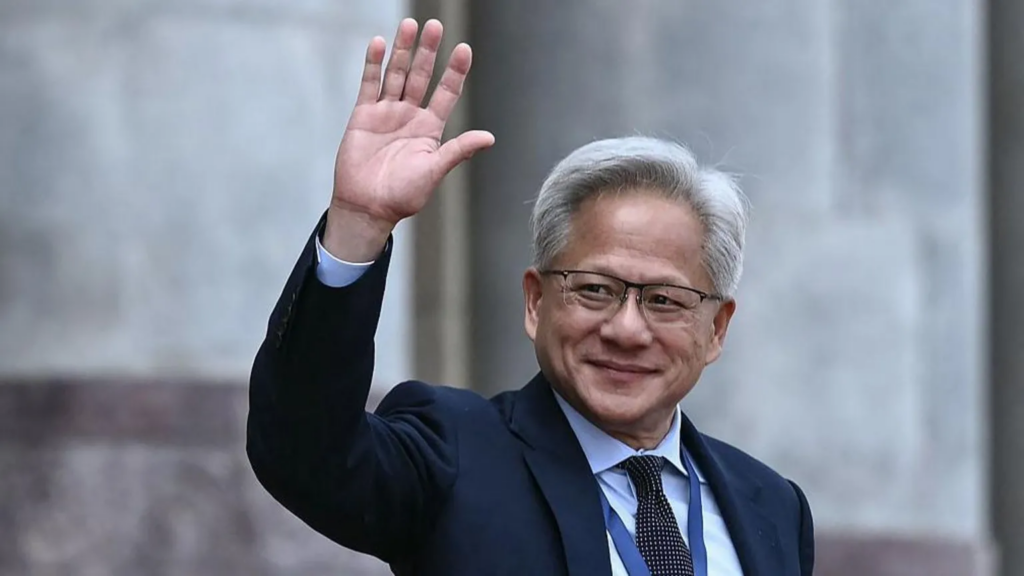
Huang's appearance was particularly notable because he was not on the original delegation list, fuelling speculation that AI and chip access featured more prominently in talks than expected.
Trump later told Fox News that "China is going to invest hundreds of billions of dollars with those people", without elaborating further.
Market access and co-operation
Farmers in the US have been seeking more Chinese access for soybeans, beef and poultry.
And according to Greer, deals on Chinese purchases of farm goods and beef have been firmed up.
But China's foreign ministry avoided confirming any new agricultural agreements, saying only that both sides had agreed to maintain stable trade ties and expand co-operation based on "equality, mutual respect and mutual benefit".
According to the White House, the talks included discussion of expanding Chinese market access for US companies and increasing Chinese investment into US industries.
Xi told US business leaders that China's "doors will open wider" and that American firms would have "broader prospects" in the Chinese market, according to news site Xinhua.
He also called for expanded co-operation in trade, agriculture, healthcare, tourism and law enforcement, describing bilateral ties as "mutually beneficial" and delivering "win-win results".
For US companies, China remains both a major market and a difficult operating environment due to regulation, red tape and geopolitical uncertainty.
The most sensitive issue
One of the clearest shifts emerging from the summit was how directly Beijing is now linking Taiwan to the broader economic relationship with the United States.
Over the past year of trade talks, Taiwan had largely been treated as one of several friction points between the US and China - particularly US collaboration with semiconductor companies, US-Taiwan trade ties, and arms sales to Taipei.
But Chinese messaging from the meeting suggested Taiwan is increasingly being framed as a condition for the US-China trade relationship.
According to Beijing's readout, Xi said the two sides had agreed to a "new positioning" for relations based on "constructive strategic stability", but warned that Taiwan remained the most sensitive issue.
"The Taiwan question is the most important issue in China-US relations," Xi warned during the talks, according to Chinese state media.
"If mishandled, the two nations could collide or even come into conflict," he said.
Unresolved fault lines
Technology remains the biggest divide between the US and China.
US export controls on advanced semiconductors and chipmaking equipment - aimed at limiting China's access to frontier AI capabilities - remain in place, with Greer saying they were not a major discussion at the talks.
Beijing continues to push for greater access to advanced technologies, while criticising what it sees as efforts to constrain its industrial development.
Artificial intelligence (AI) was expected to be a big part of conversations but there was no mention of it in readouts from the summit.
Bessent said that delegations discussed AI guardrails, adding that it was "of utmost importance" that the US maintain its lead over China in AI.
"What we don't want to do is stifle innovation. So our responsibility is to come up with the highest performance calculus where we can get the most innovation and the highest level of safety," Bessent said.
Trump also entered the talks hoping for Chinese co-operation on the Iran conflict and oil market stability.
"[Xi would] like to see the Hormuz Strait open, and said 'if I can be of any help whatsoever, I would like to help,'" Trump told Fox News.
The Chinese foreign ministry on Friday released a statement calling for "a comprehensive and lasting ceasefire".
"Shipping lanes should be reopened as soon as possible in response to the calls of the international community," it added.
Oil price volatility and repeated disruptions to supply routes have increased China's import costs and pushed up prices across the world.
Trump has said that China could use its influence to encourage Iran to stabilise flows through the Strait of Hormuz, a key global energy artery.
Chinese readouts indicated the Middle East was discussed, though again, details were limited.
At the state banquet held for Trump in Beijing on Thursday evening, the US president invited Xi to the White House on 24 September.
Further discussions between the two sides are expected ahead of that summit, with the hope that the world's two biggest economies can deliver a major breakthough on trade that proved elusive this time around.
Latest Stories
-
Sri Lanka’s ex-first lady arrested over alleged misuse of children’s hospital donations
6 minutes -
La Traditional Council kicks against redevelopment of La Pleasure Beach without consultation
8 minutes -
Some basic schools have just 2 or 3 teachers despite needing 9 – Right To Play
12 minutes -
Mahama to cut sod for SSNIT-funded Accra Convention Centre
14 minutes -
FAO calls for stronger REDD+ systems to unlock climate finance
15 minutes -
Illegal mining pushes Birim River turbidity to 50,000 NTU – Abuakwa South MP
15 minutes -
Bawumia’s opponent in 2028 will face nearly two decades of experience and preparation – Gabby Otchere-Darko
18 minutes -
Community 25 water shortage temporary, GWL assures residents
19 minutes -
‘Standing with teachers means supporting them in classrooms’ – NTC Registrar
22 minutes -
FAO urges innovation, technology to strengthen Ghana’s food security
22 minutes -
Haruna Iddrisu vows to resolve teachers’ strike within days
23 minutes -
Melcom serves 1,000 meals to children in selected orphanage homes
26 minutes -
Mohammed Polo vouches for Karim Zito to lead Black Stars
41 minutes -
Asthma Ghana donates over GH¢50,000 worth of aerochambers to Ho Teaching Hospital
41 minutes -
Inflation rises to 5.2% in September 2026 as prices in Services sector still high
48 minutes