

Audio By Carbonatix
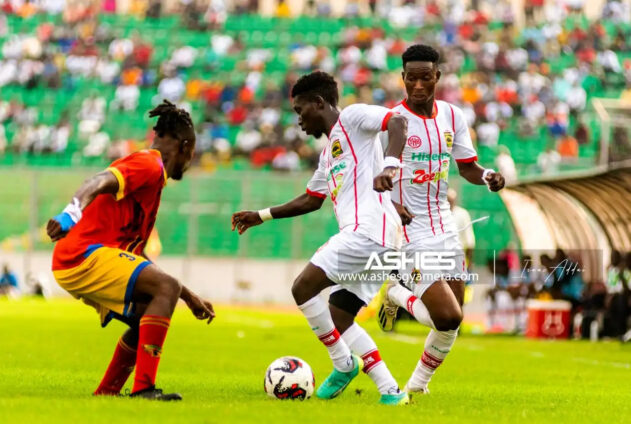
Football continues to be one of the most popular sports in Ghana, with many young talents emerging from local communities across the country.
However, despite the passion and potential surrounding grassroots football, many local clubs still struggle to gain the attention and support needed for growth.
This raises important questions about how these clubs are promoted and why grassroots football continues to be overlooked despite its importance.
The role of local clubs in talent development
Local clubs serve as the first platform for talent development in Ghanaian football.
Many professional players begin their journey on community pitches, where raw talent is first discovered and nurtured. At this stage, basic training takes place, allowing players to develop essential skills such as teamwork, discipline, positioning, and match awareness.
These early experiences help shape their understanding of competitive football. This pathway is evident in the careers of several professional footballers who have risen through the ranks to achieve international success.
Players such as Asamoah Gyan, Stephen Appiah, Michael Essien, and Mohammed Kudus serve as examples of how local football structures can produce world-class talent.
Their success reflects the importance of grassroots football as a foundation for player development in Ghana.
Grassroots football in Ghana also includes structured youth systems, often referred to as Colts football, which cover age categories such as U-12, U-13, U-15, and U-17.
These structures are designed to support player development from an early stage while preparing them for higher levels of competition.
At the same time, there have been growing discussions about the need to balance sports with education, ensuring that young players are developed both academically and athletically.
Local clubs also create opportunities for overlooked players who may not have access to elite academies. In this way, grassroots football serves as a bridge for untapped talent and highlights the importance of local clubs in developing future professionals.
Challenges facing local football clubs
Despite their important role, local clubs continue to face significant challenges, particularly in terms of visibility and support.
Media coverage in Ghana is largely dominated by international leagues and top-tier competitions, leaving grassroots football with limited exposure.
In addition, safety concerns have, in some cases, affected media coverage of local matches. Reports of journalists facing intimidation, attacks, or damage to equipment have made it difficult for consistent reporting to take place.
This not only limits the exposure these clubs receive but also discourages sustained media interest in grassroots football.
Limited sponsorship is another major challenge. Businesses often prefer to invest in more established clubs with higher visibility and commercial value, leaving local teams with inadequate financial support.
Concerns raised by stakeholders within Ghanaian football have also pointed to issues such as weak promotion, limited investment, and structural challenges that continue to affect grassroots development.
Improving visibility and support for local clubs
To address these challenges, stronger communication and promotional strategies are needed. Firstly, consistent storytelling around clubs and players can help build stronger connections with the public. Stories about players’ journeys, struggles, and development not only make fans more emotionally engaged but also highlight the hidden talent within local communities.
In addition, the effective use of social media platforms can significantly improve visibility. Regular match updates, highlights, player interviews, and interactive content can help clubs connect with wider audiences and build a loyal fan base.
Furthermore, improving branding and promotional efforts is essential for growth. This includes properly advertising matches, creating a clear and recognizable club identity, and developing strategies that attract both sponsors and supporters.
With the right approach, local clubs can position themselves as valuable contributors to Ghana’s football ecosystem.
Local football clubs play a vital role in the development of grassroots sports in Ghana, yet they continue to receive limited attention and support.
Strengthening these clubs goes beyond football development, as it also creates economic and social benefits such as employment opportunities, community pride, and fan engagement.
It further fosters a sense of belonging and emotional attachment among supporters who identify with their local teams.
Ultimately, increased attention and investment in grassroots football will not only develop players but also strengthen communities and contribute to the broader growth of Ghanaian football.
Latest Stories
-
Burnham had formal meeting with Man City chair while mayor
3 minutes -
Is Ghana producing too many lawyers? What is the best lawyer-to-citizen ratio?
6 minutes -
NDC sinking Ghana’s democracy with Emelia Agbenyo’s appointment – Miracles Aboagye
15 minutes -
Seedorf back in football as Corinthians head coach
28 minutes -
Hincapié and Zubimendi injured in post-match training session
37 minutes -
Fridges in French supermarkets hit by cyberattack
48 minutes -
Qantas flight grounded after bedbug outbreak
57 minutes -
Reality Zone with Vicky Wireko: International Day of the Girl, shaping today’s girl for tomorrow’s future – ZONTA Clubs lead the way
1 hour -
Global health must be led by countries, not designed for them – Mintah Akandoh
2 hours -
Mahama honoured at 2026 World Health Summit in Berlin for global health leadership
2 hours -
Breast cancer is not a death sentence – Besease Kontire Obaapanin, Magmina Foundation lead awareness campaign
2 hours -
EcoBank invests in digital education of 4 Garisson School to mark 40 years in Africa
3 hours -
AGI urges investment in skills and raw materials to strengthen local manufacturing
3 hours -
GPL 2026/27: ‘We have to rectify our mistakes’ – Boadu reacts to Aduana FC defeat
3 hours -
No disability access, no building permit – KMA declares
3 hours