

Audio By Carbonatix
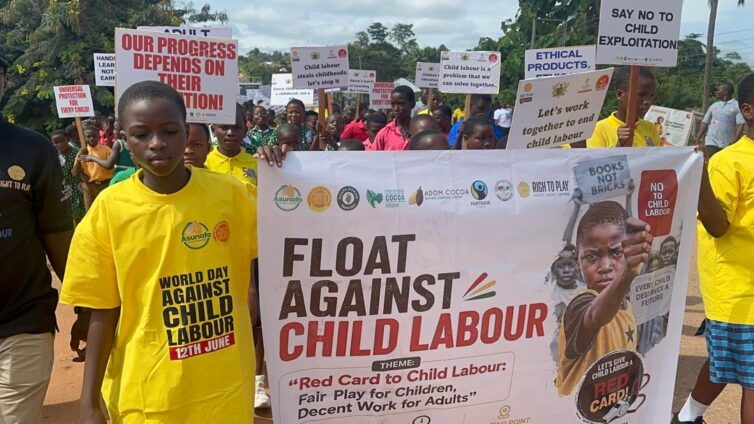
Key stakeholders gathered on June 12, 2026, at Bediako in the Asunafo North Municipality of the Ahafo Region to make a united and urgent call for strengthened institutional, legal, and community-level efforts to eradicate child labour.
The call was made during the commemoration of this year's World Day Against Child Labour, held under the theme, "Red Card to Child Labour: Fair Play for Children, Decent Work for Adults." The campaign seeks to address the root socio-economic causes of child exploitation.
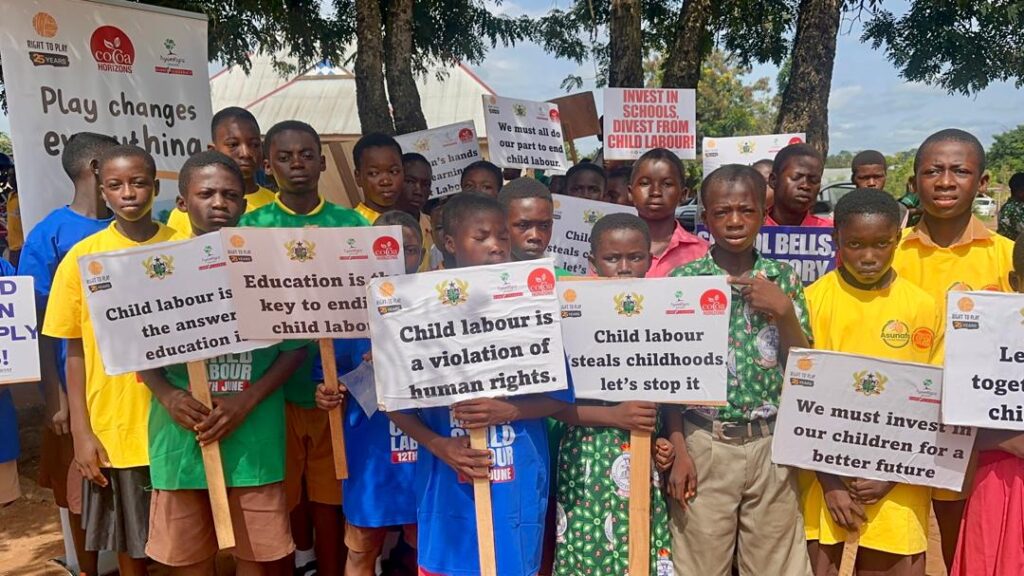
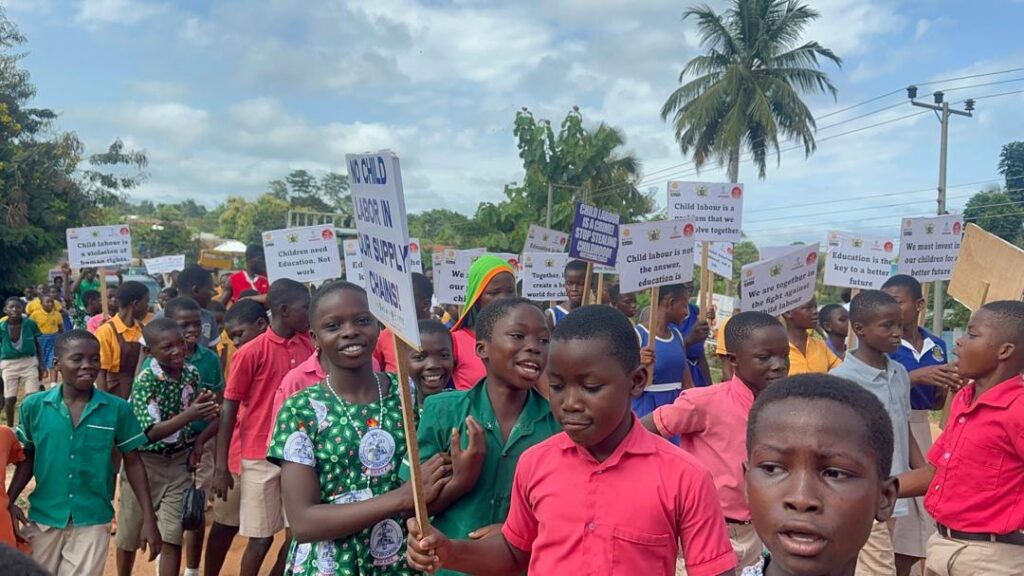
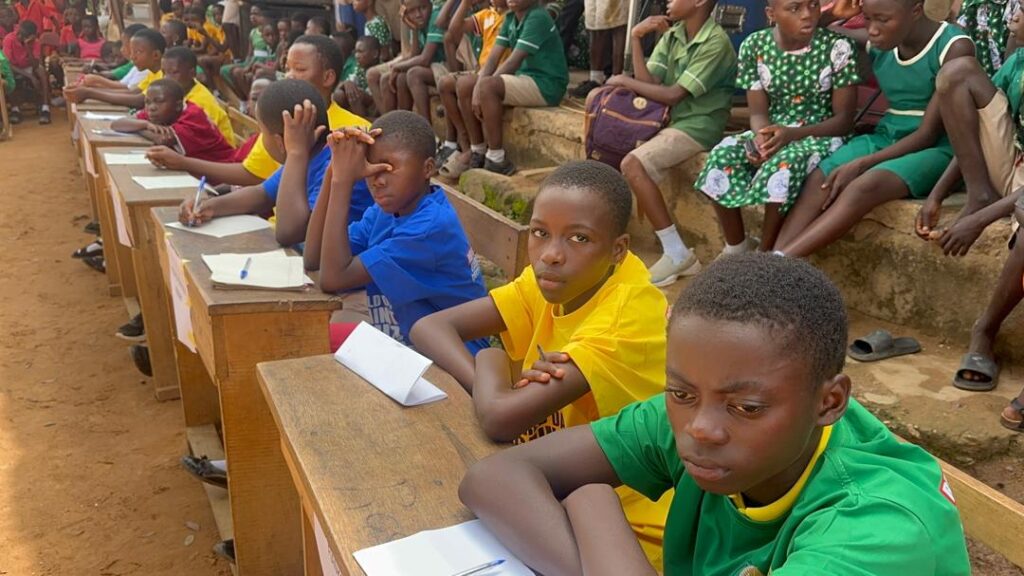
The day was marked by a series of public activities, including a route march through the principal streets of the Bediako community, a student spelling bee competition, football matches, educational role-plays aligned with the theme, and extensive media engagements aimed at highlighting the harmful effects of child labour on children.
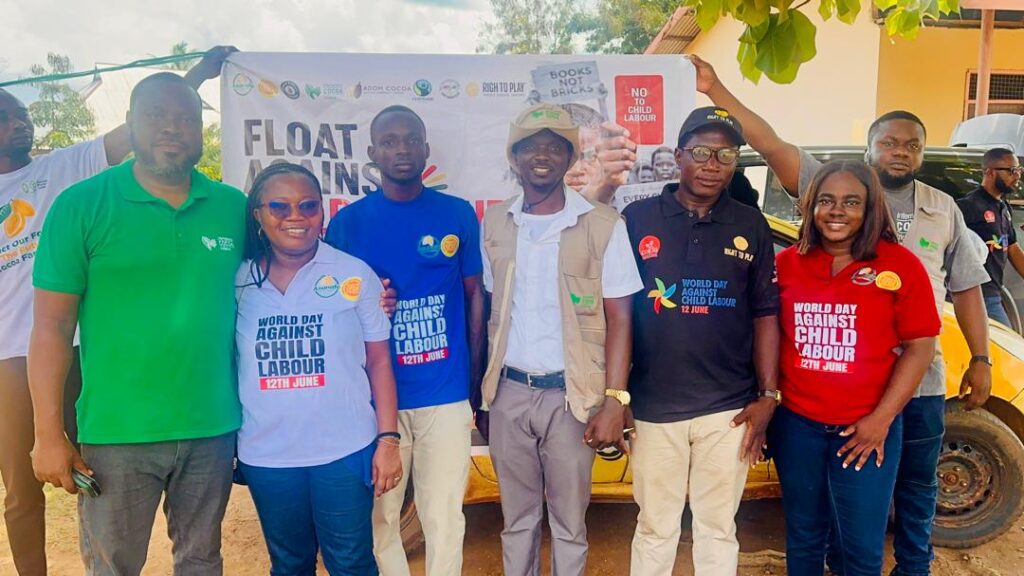
The event was organised by the Asunafo North Municipal Child Protection Committee in collaboration with local and international partners, including Fairtrade Africa, the International Cocoa Initiative (ICI), Kuapa Kokoo Farmers Union, Right To Play, Adom Cocoa LBC, Tony's Open Chain, and the Asunafo North Municipal Cooperative Cocoa Farmers and Marketing Union.
Speaking at the commemoration, Abena Fosua Amoako, the Asunafo North Municipal Director of the Department of Social Welfare and Community Development, revealed that her department identified 305 cases of child labour within the municipality in 2025 alone.
She attributed the increase to the emergence of commercial tricycle services, popularly known as Pragya, and commercial motorcycle operations, commonly referred to as Okada, among other factors.
According to her, this economic trend, coupled with persistent household poverty and inadequate parental supervision, has compelled many teenagers to abandon their education. Under the guise of seeking financial independence to support their livelihoods and schooling, many of these minors are engaging in hazardous forms of labour for quick income.
She clarified that while Ghanaian law does not prohibit children from assisting their families with age-appropriate household chores within their physical capabilities, the June 12 commemoration serves as an important platform for educating parents about the distinction between acceptable child work and child labour.
Samuel Jatong Laar, the Asunafo North Municipal Director of Education, observed that although illegal mining, popularly known as galamsey, is not widespread within the municipality, adults continue to exploit teenagers in other physically demanding sectors, including commercial lumbering, cocoa farming, and street trading.
Mr. Laar stated that child labour remains a harsh reality in the municipality and urged all stakeholders to use the World Day Against Child Labour as an opportunity to collectively reject such illegal practices and protect the rights and future of children in the Ahafo Region.
Emmanuel Sarpong, President of the Asunafo North Municipal Cooperative Cocoa Farmers and Marketing Union, noted that direct engagement with farming communities points to a worrying rise in child labour cases.
Mr. Sarpong explained that his union, together with its partners, has spent years organising community durbars, radio discussions, media campaigns, and capacity-building workshops aimed at dismantling exploitative labour practices.
He appealed to parents to view children as future leaders rather than economic assets, warning that exposing them to labour at an early age can permanently hinder their personal growth and development.
Article 28 of the 1992 Constitution of Ghana explicitly protects children from engaging in work that poses a threat to their health, education, or development. Similarly, the Children's Act, 1998 (Act 560), permits only light work that is not harmful to a child's well-being.
Globally, the statistics remain alarming, with an estimated 138 million children engaged in child labour, including nearly 54 million involved in hazardous work.
Research has consistently shown that hazardous child labour has severe consequences for children's education and health. Children engaged in such work are significantly more likely to repeat grades, leading to serious academic setbacks.
Furthermore, the physical consequences can be devastating. Studies indicate that 32 per cent of rural working children in Ghana have suffered work-related injuries or illnesses, including deep machete cuts, eye injuries, and chronic muscular strain from carrying heavy cocoa pods.
United Nations Sustainable Development Goal Target 8.7 calls on governments and stakeholders worldwide to take immediate and effective measures to eradicate forced labour, end modern slavery, and eliminate the worst forms of child labour.
Experts maintain that ending child labour requires comprehensive social protection systems, reliable local data to identify vulnerable households, and greater corporate accountability across global cocoa supply chains. Ensuring that adult farmers earn a living income is essential to keeping children in school, where they belong.
Latest Stories
-
Every year, the lawyers come out, and so does the nonsense! – Ace Ankomah writes
24 seconds -
Digital transformation without an ownership culture can digitise poor service
4 minutes -
Fishing communities demand revocation of offshore gold exploration licences over livelihood concerns
7 minutes -
How Ghanaian tycoon Manoj Lakhiani built a water and plastics empire from a $25,000 loan
8 minutes -
GoldBod recovers GH¢38.7m of GH¢55.8m outstanding receivables; remainder subject to legal action – Sammy Gyamfi
15 minutes -
GEXIM Bank donates GH¢200,000 worth of medical equipment to Korle-Bu Child Health Department
18 minutes -
Majority rejects Minority’s claims over GH¢49.7m South Africa evacuation
20 minutes -
GEXIM urges banks to support refurbishment of Korle-Bu Teaching Hospital’s Child Health Department
23 minutes -
Don’t appoint your cheerleader as referee
27 minutes -
Ghana needs stronger international cooperation to fight cybercrime – CSA
29 minutes -
CSA warns of growing cyber threats as Ghana’s digital dependence increases
36 minutes -
USTED dean warns GAUA strike could disrupt Ghana’s restored academic calendar
49 minutes -
Bechem meat processing factory 50% complete, set for March 2027 completion – Kwakye Ofosu
1 hour -
NDC can appoint whoever they want to EC, but Ghanaians will make a decision in 2028 – Titus Glover
1 hour -
GoldBod initiative has created over 1,300 public and private sector jobs – Sammy Gyamfi
1 hour