

Audio By Carbonatix
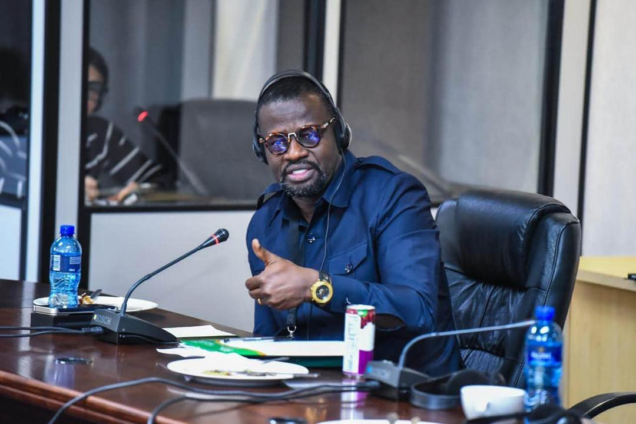
Minority Chief Whip and Nsawam-Adoagyiri MP, Frank Annoh-Dompreh, has urged African leaders to convert the continent’s vast natural resources into real economic development rather than allowing others to reap the greatest benefits.
Speaking during a high-level working lunch between the Pan-African Parliament (PAP) and the South African Institute of International Affairs (SAIIA), Mr Annoh-Dompreh said Africa’s enormous reserves of critical minerals, expanding trade opportunities and environmental assets must be transformed into industrial growth, jobs and prosperity.
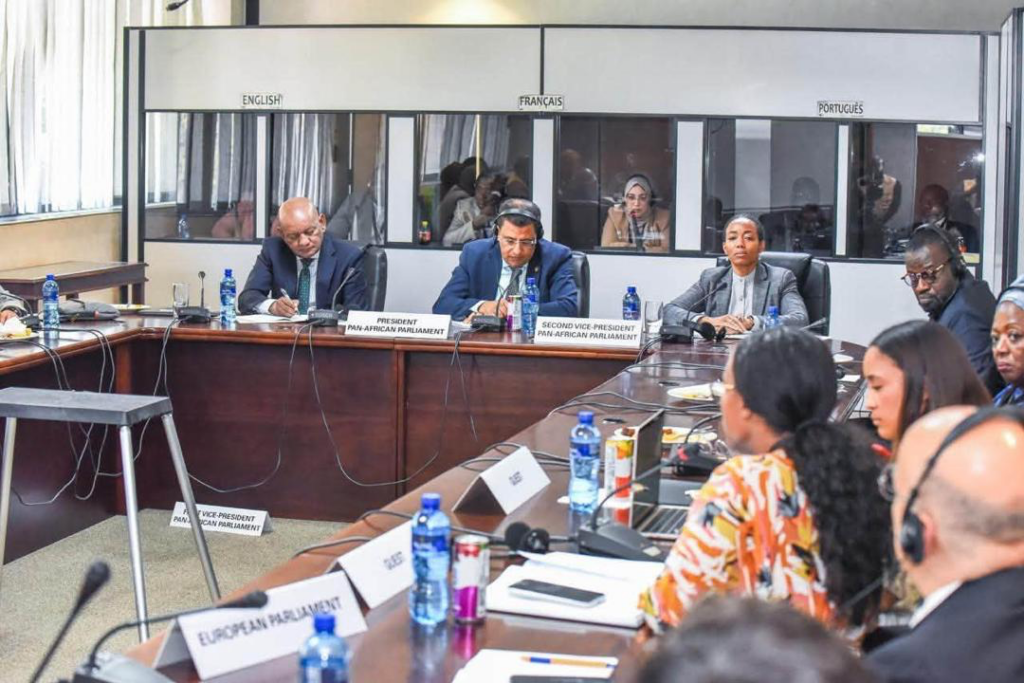
The meeting brought together the PAP Bureau and chairpersons of permanent committees to examine South Africa’s G20 Presidency, Africa’s role within the G20, and the implications of the incoming United States Presidency for the continent, particularly on debt, trade, climate finance and BRICS.
While commending the policy briefing, Mr Annoh-Dompreh said Africa had long articulated its position in the global order.
The greater challenge, he argued, was turning those aspirations into practical policies that improve the lives of ordinary Africans.
He pointed to Africa’s vast deposits of minerals needed for the global energy transition and said the continent should be using them as leverage.
“Africa has some of the world’s largest deposits of these critical minerals. That should give us considerable leverage in the global energy transition.”
He questioned whether Africa had developed a coherent continental strategy to govern, extract and commercialise these resources, warning that without greater coordination, African countries would continue exporting raw minerals while other economies captured the greater value through refining, manufacturing and technology production.
Responding to the concerns, Southern Transitions representative Jordan McLean highlighted the African Green Minerals Strategy and the work of the African Minerals Development Centre as foundations for a coordinated continental approach.
She noted that Africa holds about 30 per cent of the world’s reserves of key minerals and should use that position to negotiate stronger partnerships, promote value addition and participate across the production chain.
“External partners are not approaching Africa’s minerals only through the prism of the energy transition. They are also seeking to secure access to those resources.”
Mr Annoh-Dompreh also challenged what he described as inequities in global climate finance, questioning why promised financial support for developing countries had repeatedly failed to materialise.
“In the face of the vulnerabilities confronting our continent, how do we position ourselves when the polluter-pays principle is globally accepted, yet the promised support does not arrive?”
He observed that developed countries industrialised through carbon-intensive growth, while African countries are now expected to pursue cleaner development under stricter environmental rules.
“The developed world industrialised through pollution at a time when there was no comparable international climate regime. Africa is now moving towards industrialisation, but the global message is that we must rely on renewable and clean energy.”
The Ghanaian legislator also questioned the credibility of some carbon credit arrangements operating across Africa and called for common standards to ensure transparency and protect local communities.
“How do we position ourselves as a continent when questions are being raised about the credibility of carbon-credit declarations and arrangements?”
Turning to trade, he said the African Continental Free Trade Area (AfCFTA) remained one of the world’s most ambitious trade agreements, but its benefits were yet to be fully felt by ordinary Africans.
“We have signed the African Continental Free Trade Area Agreement, one of the largest trade arrangements beyond the World Trade Organisation (WTO), but it is still not being felt by the people.”
He further urged policymakers and researchers to communicate continental policies in simpler language so citizens could better understand and benefit from them.
“How do we simplify this framework beyond theory so that the average African can recognise it as a continental instrument and understand the direction in which we are collectively moving?”
Latest Stories
-
Chief of Staff directs ecological restoration of reclaimed Kpeshie Lagoon
32 seconds -
Driver convicted over concrete spill on Madina-Adenta Highway
4 minutes -
Photos: Prospective homeowners turn up in numbers for final day of JoyNews–Republic Bank Habitat Fair
8 minutes -
Aggrieved teachers demand payment of unpaid four-year legacy arrears
40 minutes -
Skipping breakfast bad for your health?
54 minutes -
Kpeshie Lagoon reclamation linked to first-ever flooding at Tse Addo – ISD
1 hour -
GRA announces major policy proposal under Modified Taxation Scheme initiative
1 hour -
TCL sues Samsung for false advertising over ‘Mini LED’ televisions
1 hour -
US embassy child abuse images suspect flown from UK before police interview
2 hours -
Payment dispute led to murder of Dr Jesse Amuah and wife at Asylum Down – Court told
2 hours -
COPEC calls for GH¢1 petrol, continuation of GH¢2 diesel subsidy amid price surge
2 hours -
Petrol to sell at GH¢16.26, diesel GH¢19.07 from Wednesday – COPEC
2 hours -
Massive crowds flock to JoyNews–Republic Bank Habitat Fair on final day to explore mortgages and seek expert advice
2 hours -
Ghana’s Alice Banaaza spotlights fugu weaving at 2026 CHAN Festival in UK
3 hours -
Russia’s Youth Festival could unlock business partnerships and scholarships for Ghanaian youth – John Aggrey
3 hours