

Audio By Carbonatix
The Conference of Heads of Special Schools (COHESS) is calling on the government to introduce stronger incentives and support systems to attract, train and retain specialised teachers in special schools across the country.
The organisation says about 70% of teachers currently working in special schools are regular teachers who require additional training to effectively respond to the unique educational needs of learners with disabilities.
COHESS, which serves as a bridge between special schools and institutions including the Ghana Education Service (GES) and the Ministry of Education, says the shortage of specialised teachers remains one of the major challenges confronting education for persons with disabilities.
While acknowledging government efforts to improve education for persons living with disabilities, including the introduction of free tertiary education for eligible students, the organisation says more needs to be done to address the critical human resource gap.
Speaking to the media, National Chairperson of COHESS, Rosaline Fimpomaa Adjepong, said the situation was becoming increasingly difficult as experienced special educators leave the system.
“The special educators that we have in our schools, most of them are now moving out. We have regular teachers who are not special educators in our schools, and in fact, it’s difficult because before they are even able to learn to sign or learn Braille or learn to communicate with children with intellectual and developmental disabilities, it takes time,” she said.
She appealed to the government to introduce specific measures to motivate teachers working in special schools.
“I’m pleading that teacher motivation is put in place,” she added.
According to COHESS, specialised educators require skills such as sign language, Braille and other specialised communication techniques to effectively teach learners with different disabilities.
The organisation says the time required to train regular teachers in these skills can affect the delivery of education, particularly where schools are already understaffed.
Ms Adjepong also raised concerns about the limited availability of allied health professionals who support learners with intellectual and developmental disabilities.
“When you come to schools for the IDD, we need speech therapists, we need occupational therapists, we need physiotherapists, and we don’t have these in our schools,” she said.
She said the absence of such professionals further limits the ability of special schools to provide comprehensive support for learners.
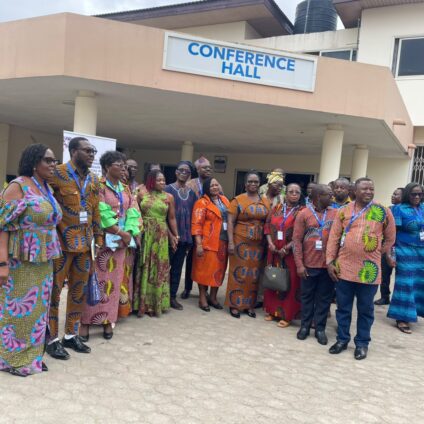
The concerns were raised at the 43rd Annual Conference of the Conference of Heads of Special Schools in Ghana, where COHESS presented key challenges facing special schools and called for urgent government intervention.
Responding to the concerns, Deputy Director-General of the Ghana Education Service, Professor Smile Gavua, assured COHESS that steps would be taken to address staffing challenges in special schools.
She said the GES was committed to providing the resources required by special schools and improving the recruitment of persons with disabilities into the education system.
“We are not joking with whatever resources that they need. Recently, we have met with the association of persons with disabilities. The concerns that they have with their recruitment, we are addressing it,” she said.
Professor Gavua said the GES also wanted to make the education system more inclusive by employing more persons with disabilities.
She explained that their presence in schools could provide children with disabilities with role models and mentors who understand their experiences.
“We want to make them very comfortable. We want to absorb them into the system so they’ll be good role models, good mentors for other children with a disability as well,” she said.
COHESS is now hoping that the GES assurance will translate into concrete measures to close the staffing gap, strengthen specialised teaching and ultimately improve learning outcomes for students with special educational needs.
Latest Stories
-
20% digital tax is not E-Levy – GRA boss
8 minutes -
Defence Minister calls for intelligence-sharing and regional cooperation to tackle maritime insecurity
12 minutes -
Afenyo-Markin failed to comply with procedural rules in defamation suit – Sammy Gyamfi’s lawyers
22 minutes -
GRA recovered GH¢1.3bn out of about GH¢1.4 bn unpaid VAT from ECG – Anthony Sarpong
25 minutes -
KMA to extend daily toll collection to nights and weekends
26 minutes -
Ghana secures second consecutive term on UN Human Rights Council
31 minutes -
KATH Catheterisation lab targets December completion amid specialist staffing concerns
31 minutes -
Government working to address economic challenges driving youth into galamsey – Mahama
41 minutes -
Domestic Capital Africa campaign targets US$600bn pension funds for SME growth
42 minutes -
Women leaders’ wisdom and work deserve recognition – Mahama
52 minutes -
NRSA to refund surplus from auctioned vehicles of non-subscribers after deducting towing costs
53 minutes -
Ghana must integrate AI into mainstream education – DigiMarkt Project Board
54 minutes -
Armwrestling: Ghana unveils World Armwrestling Championship squad, appeals for travel support
54 minutes -
NPRA cites pensions college, data bank to justify 10-storey building project
59 minutes -
16 arrested as security team recovers guns, ammunition at Gbane mining site
60 minutes