

Audio By Carbonatix
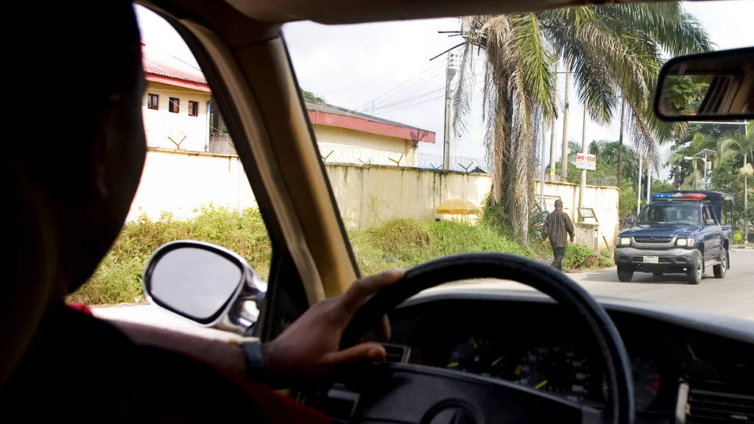
It is exactly 52 years since Ghana made the bold decision to ditch some inherited legacy of the British colonial system by switching from driving on the left to driving on the right. Almost at the same time, the country also changed to the metric system of weighing.
These were both major decisions made by the then-military government under General I. K. Acheampong. The questions on people’s minds at the time were many. However, the most prominent concerns were whether we would succeed and whether the military government was throwing the country into unnecessary chaos.
Legacy
Determined, however, to leave a legacy behind, the Government of the day went ahead with its plans, and the move came to pass on August 4 1974.
With independence from our British colonial masters achieved on March 6, 1957, followed by the achievement of republican status on July 11, 1961, the country had already begun packing away those British systems that were not necessarily beneficial to our republican status.
A lot was done by the affable first President, Dr Kwame Nkrumah. Others who followed him thankfully saw the need for us to switch into a faster gear when it came to shedding some of the colonial practices that were at variance with our governance system and our culture. At the same time, we needed to stay aligned with our West African neighbours as a starter.
Across the West African region, for example, our neighbours drove on the right. They had also changed their system of measurement to the metric system. It made sense, therefore, that we in Ghana got in tune to facilitate the free movement of people and free trade. One may even say that those were perhaps the early beginnings of paving the way for the much-talked-about intercontinental free trade of recent times.
And so, on August 4, 1974, dreams became reality, and the historic change to driving on the right, away from the decades-old driving on the left, was born. There was excitement as people gathered at “demonstration” points in major cities and towns to watch the changeover and how it would pan out.
As it turned out, the day came with loads of joy and, of course, some trepidation too, especially for drivers, since the majority of vehicles on our roads had their steering wheels on the right. How were they going to manoeuvre?
Publicity
For months prior to the changeover, publicity aimed at educating citizens was at its peak. Unlike today, when social media, the internet and digital communication have overcrowded our space, there were not many such things at the time, but education and public awareness went far.
Visible road signs, directing and alerting drivers and pedestrians, were everywhere to notify and dispel confusion. The catchy communication slogan used at the time - “Nifa, Nifa, enoaa ne no. Benkum, benkum, yaagyae”, literally meaning we have stopped driving on the left; right is the right way”, still rings a bell when one talks about the switch over to driving on the right.
The Information Services department across the country did some marvellous work disseminating information on the changeover. The electronic and print media bombarded us with publicity on the changeover. School children were not left out of the education and awareness programmes.
The police and other safety personnel were, for a time, on the road to monitor and provide directions as needed.
Admittedly, and as may have been expected in an exercise of that nature, there were reports of confusion and chaos on the roads. These were reported daily, but because there were very few vehicles on our roads at the time, compared to now, managing cars during the period was not too complicated.
The excitement surrounding the whole changeover and the fact that we were going to be at par with others in the sub-region, with some boost to economic movements, was in the air.
Over half a century later, one can look back and admit that the decision to switch driving from the left to the right and to change our measuring system has served our country well. We have moved forward with the rest of the world.
Now, the success and excitement that characterised the period will always be remembered as one of the legacies of the late Army General, General Kutu Acheampong.
Above all, the whole process in achieving a smooth changeover would remain a measure of how well the situation was managed, in the absence of heightened technology like today.
We were able to, somehow, pursue a flawless execution of a marketing communication to accomplish “Benkum, benkum yaagyae, Nifa, nifa enoaa ne no”.
*******
The writer can be reached via email at: vickywirekoandoh@yahoo.com
Latest Stories
-
Fuel, taxes and loans are driving up airfares – Prof Quartey
13 minutes -
Ghana, Côte d’Ivoire mark major border milestone with 37 new pillars
33 minutes -
Almost everything in Ghana is expensive – CUTS Director on airfare debate
43 minutes -
NAFCO builds GH¢100m food buffer as Ghana moves to strengthen food security
59 minutes -
Oil heads higher as US-Iran peace talks in stalemate
1 hour -
GAF sets Sept. 28–30 for Documentation, Body Selection Exercise
1 hour -
I resigned five months ago – BoG Governor Asiama explains GoldBod Board exit
2 hours -
Trump says men arrested at UK air base used by US were looking to do ‘big damage’
2 hours -
Trump confirms meeting with Anthropic’s Amodei, repeats dismissal of AI fears
2 hours -
China pushes back against US on Iran and Cuba in UN speech
2 hours -
OpenAI, Anthropic CEOs called to appear at Australian AI probe
3 hours -
We are taxing, overtaxing the industry – Prof Quartey on high domestic airfares
4 hours -
No land is worth a human life – Sissala West MP mourns 2 dead in Buo-Tiwii clashes
5 hours -
GCAA explains why some prospective airlines fail to complete certification
5 hours -
WHO says Congo Ebola outbreak spreads to two new health zones
5 hours