

Audio By Carbonatix
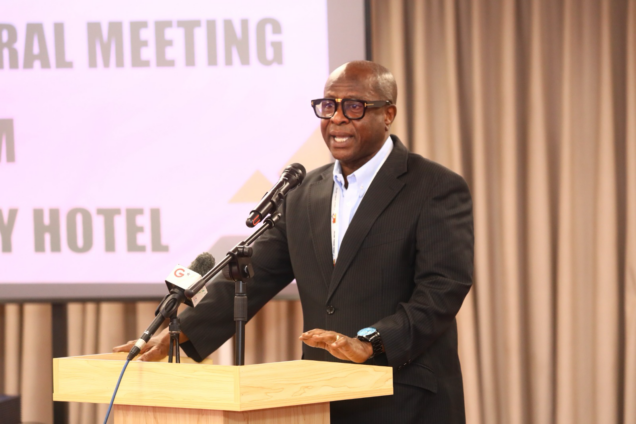
The National Food Buffer Stock Company (NAFCO) has revamped its National Food Reserve Programme with an initial GH¢100 million government funding to strengthen Ghana’s ability to respond to food crises and price pressures.
The programme was introduced in response to reported gluts of grains, particularly rice and maize, in some parts of the country.
According to NAFCO Chief Executive Officer, George Abradu-Otoo, the company had, by December 31, 2025, stocked 36,597 bags of maize, 21,287 bags of rice and 5,982 bags of gari in warehouses across Tamale, Badu, Kumbungu, Dzodze, Wenchi and Kumasi.
“Under this program, NAFCO is required to keep or hold some quantity of food as a buffer for the nation and release it when necessary, including emergencies, disasters and high food cost seasons,” he said.
He said the programme would help keep inflation in check, reduce post-harvest losses and support government interventions in agriculture.
The development forms part of broader measures by NAFCO to strengthen Ghana’s food security architecture, including the rehabilitation and expansion of storage facilities across the country.
Abradu-Otoo said many of the company’s warehouses had deteriorated and become unfit for purpose.
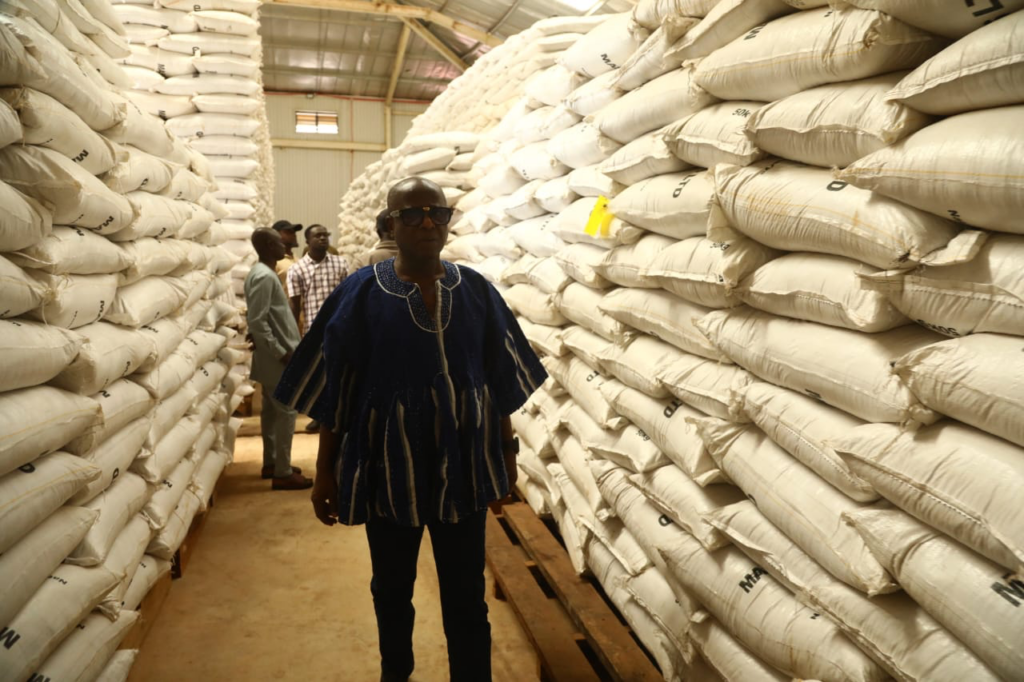
NAFCO has therefore commenced an aggressive programme to rehabilitate and expand its storage facilities, with support from the Ministry of Food and Agriculture, ECOWAS and the World Food Programme.
The programme also includes the provision of laboratories, testing equipment, tracking and digital devices, as well as training and retraining of personnel.
NAFCO’s regional operations have also been strengthened, with all 16 regional offices now operational.
The CEO said the company’s 2025 performance marked a major turnaround.
NAFCO recorded a net profit before tax of GH¢91.7 million, its highest since its establishment, after posting a GH¢19.4 million loss the previous year.
The company also paid GH¢20.3 million in taxes to the state in 2025, the highest annual tax contribution in its 16-year history.
Abradu-Otoo attributed the turnaround partly to structural reforms, including the establishment of a dedicated Procurement Department, a strengthened Internal Audit Department, a fortified Food Safety Department and the reconstitution of the Board and its sub-committees.
He said the company also improved payments to suppliers and resourced its regional offices.
“The year 2025 was a turning point. We recorded our highest profit in 16 years. We improved payments to our suppliers. We resourced our regions. We paid the highest tax to the state,” he said.
“We have consolidated. We have shown what is possible. Now we build.”
Latest Stories
-
Ghana, Côte d’Ivoire mark major border milestone with 37 new pillars
23 minutes -
Almost everything in Ghana is expensive – CUTS Director on airfare debate
33 minutes -
NAFCO builds GH¢100m food buffer as Ghana moves to strengthen food security
49 minutes -
Oil heads higher as US-Iran peace talks in stalemate
1 hour -
GAF sets Sept. 28–30 for Documentation, Body Selection Exercise
1 hour -
I resigned five months ago – BoG Governor Asiama explains GoldBod Board exit
2 hours -
Trump says men arrested at UK air base used by US were looking to do ‘big damage’
2 hours -
Trump confirms meeting with Anthropic’s Amodei, repeats dismissal of AI fears
2 hours -
China pushes back against US on Iran and Cuba in UN speech
2 hours -
OpenAI, Anthropic CEOs called to appear at Australian AI probe
2 hours -
No land is worth a human life – Sissala West MP mourns 2 dead in Buo-Tiwii clashes
4 hours -
GCAA explains why some prospective airlines fail to complete certification
5 hours -
WHO says Congo Ebola outbreak spreads to two new health zones
5 hours -
Nigeria come from benhind to win in AFCON 2027 qualifier
5 hours -
South African white genocide does not exist, new ambassador to US tells BBC
5 hours