


Audio By Carbonatix
Caught between modernity and 20,000 years as hunter-gatherers, the San people sit at a crossroads.
An indigenous people in Southern Africa, they are our oldest human ancestors, DNA testing proving the San are direct descendants of the first Homo sapiens. But today their culture, traditions and heritage are at risk of being lost forever.
The San live across South Africa, Botswana, Angola and Namibia. In Botswana they're known as the Basarwa, where they live a largely nomadic lifestyle that has remained undisturbed for millennia.
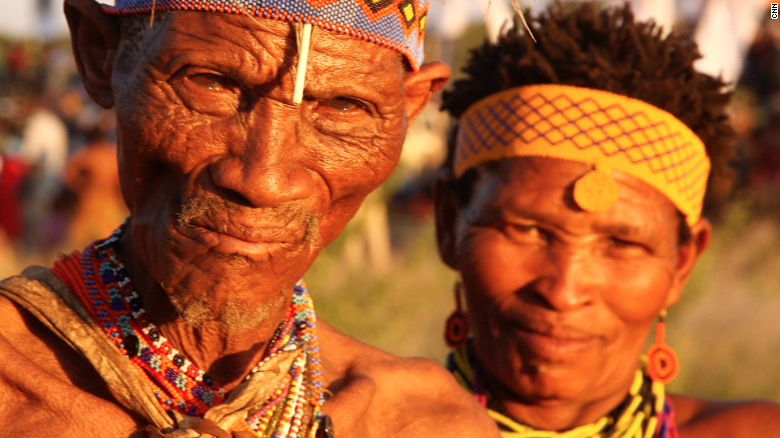
"Culture is something that can die and we should understand that culture is dynamic," says Bihela Sekere, part of the indigenous population who previously worked at the Botswana High Commission in London.
Sekere grew up in the Central Kalahari Game Reserve, the second largest of its kind in the world, hunting as his father had done before him. But in 1997 the government began removing the Basarwa from the reserve, ostensibly to protect the area and integrate the community into mainstream society.
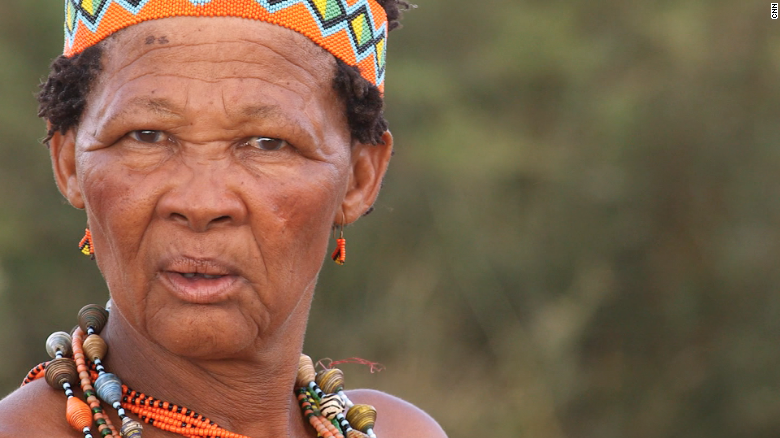
Now based in a resettlement village, passing on age-old traditions has become harder and harder for the Basarwa.
"Some of the kids, Basarwa kids, are taken to schools (and) they can lose their culture because they are taught other ways of living," explains Sekere. "To start with the language -- if they are taught Setswana and English, it means the language will suffer."
Sekere also cites the famous trance dance, a stalwart of Basarwa culture, as something that could one day suffer at the hands of modern music, played on radios and mobile phones by youths.
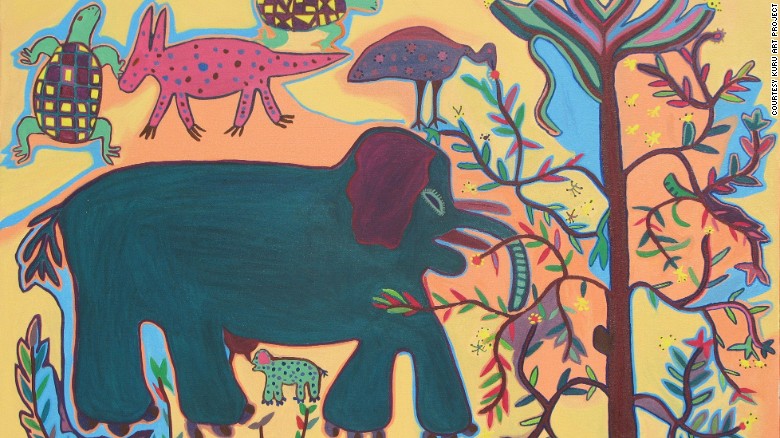
Hope is not lost, however, while there are those willing to preserve indigenous culture. Local man Xontae guides the curious around some of his people's greatest heritage sites, including the Tsodilo Hills, where 4,500 rock paintings dating back to the Stone Age can be explored. Meanwhile the Kuru Art Project seeks to revive art making among the Basarwa once more.
British-Caribbean artist Ann Gollifer, who is part of the initiative, says that the work the Basarwa create mainly depicts a hunter-gatherer lifestyle of yesteryear. Using modern mediums to paint ancient traditions, these artworks have sold all over the world.
It's proof that culture is dynamic, malleable and susceptible to change -- for better or for worse. But with will and determination, the likes of Sekere believes the Basarwa have what it takes.
"Culture on its own, it is what makes you who you are... It's upon us, the youth, to learn from these old people to promote our culture and to preserve it while they are still alive."
Latest Stories
-
Zoomlion begins post-flood disinfection exercise in West Gonja to curb health risks
27 minutes -
When Lady Justice Counted Eight Years
27 minutes -
SIGA reporting should distinguish commercial performance from public service – Yaw Appiah Lartey
29 minutes -
SOEs must hold AGMs, not just submit audited accounts – Deloitte Partner
35 minutes -
There are errors in SIGA report that affected its conclusions – Miracles Aboagye
48 minutes -
Joy FM Back-to-School Fair gains momentum as Day 2 gets underway
1 hour -
Bright Simons fires back, rejects claims he used AI to critique SIGA report
1 hour -
SIGA did not conjure or manufacture figures – Prof Kpessa-Whyte
2 hours -
Government just put a spin on SIGA report – Miracles Aboagye
2 hours -
Gideon Boako: Cocoa farmers deserve better support
2 hours -
Big Chef Season 5: Two contestants face exit in Jollof Challenge
2 hours -
SIGA’s ‘massive turnaround’ claim not borne out by data – Bright Simons
2 hours -
Nhyiaeso Chief assures support to end encroachment on utility corridors in Kumasi
2 hours -
Two lorry station masters arrested over alleged plot to kill creditor over ₵91k debt
3 hours -
SIGA’s claim on highest audited proportion inaccurate – Bright Simons
3 hours