

Audio By Carbonatix
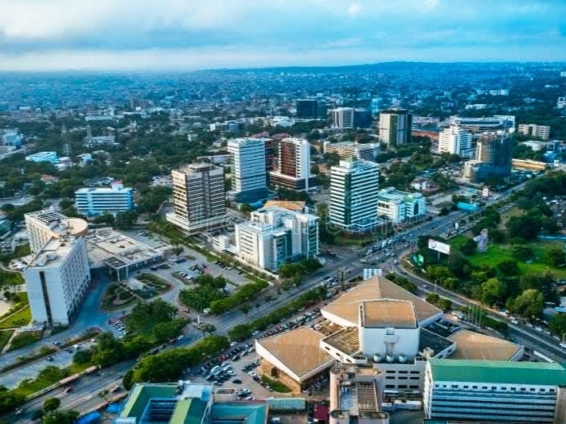
Accra has been ranked the eighth most expensive city in Africa in 2026, highlighting the persistent cost-of-living pressures facing Ghana despite ongoing macroeconomic stabilisation efforts.
New data from Numbeo’s 2026 Cost of Living Index places the capital 8th out of 22 major African cities, with a cost of living index of 36.6, positioning it ahead of several North and East African capitals.
Although Accra does not top the continental list, it sits firmly within the upper tier, reflecting elevated household expenses relative to average income levels.
Globally, Accra remains far below major cities in Europe, North America and parts of Asia, but within emerging and frontier markets, it continues to be a costly city for residents earning local wages.
Abidjan leads the African ranking with a cost of living index of 45.2, followed by Addis Ababa at 42.6. South Africa’s major cities, including Pretoria, Johannesburg and Cape Town, also dominate the higher end of the table.
Accra’s position ahead of cities such as Nairobi, Tunis and Cairo underscores the structural cost challenges confronting urban households in Ghana.
A breakdown of the components reveals the main sources of pressure. Accra’s groceries index of 42.4 is among the highest in Africa, surpassing many larger economies and pointing to persistent food inflation, supply chain constraints and currency pass-through effects.
Restaurant prices are likewise elevated, with a restaurant price index of 39.1, comparable to Abidjan and Johannesburg.
Rent costs, however, remain relatively moderate. Accra’s rent index stands at 11.4, lower than cities such as Kigali, Addis Ababa and Cape Town.
This suggests that housing is not the primary driver of the city’s overall expense levels. Instead, everyday consumption and food-related costs are placing a heavier burden on households.
One of the most striking indicators is Accra’s purchasing power index of 12.7, among the weakest on the continent.
This means incomes in Ghana’s capital buy significantly less than in peer cities. In contrast, purchasing power indices in South Africa exceed 100.
The gap explains why cost pressures are felt more acutely in Ghana, even as headline inflation shows signs of easing.
Within West Africa, Accra ranks as the second most expensive city, behind only Abidjan. While Abidjan’s higher costs reflect stronger domestic demand and industrial activity, Accra’s position is more closely linked to currency depreciation, high import dependence and lingering inflationary effects following Ghana’s recent debt crisis.
Other West African capitals fall much lower on the index, reinforcing Accra’s status as one of the region’s costliest urban centres.
For businesses, this has implications for wage negotiations, operating costs and consumer purchasing power. For policymakers, it sharpens the focus on food supply chains, transport costs and productivity-enhancing reforms.
Across the continent, the Numbeo data reveal wide variations. Cities such as Cairo, Alexandria and Giza sit at the lower end of the cost spectrum, partly due to subsidised food and energy.
Southern African cities, while more expensive, are cushioned by higher purchasing power.
For Ghana in 2026, Accra’s ranking presents a mixed picture. The capital is not among the world’s most expensive, but within Africa and particularly within West Africa, it remains a high-cost city with limited income buffers.
As economic recovery continues, lowering the cost of essentials and boosting real incomes will be critical to translating macroeconomic gains into improved living standards.
Latest Stories
-
Health Ministry engages Ga Mantse ahead of Free Primary Healthcare launch
1 minute -
We can tackle multiple priorities – Sam George defends Anti-LGBTQ Bill push
36 minutes -
Statement: Ghana Chamber of Mines’ Response to Claims in Joe Jackson’s “Ananse Stories about the Economy of Ghana”
37 minutes -
GES opens 2026 teacher recruitment for licensed B.Ed graduates
40 minutes -
Ghana must value skilled trades, build resilient learners — Ibn Chambas
48 minutes -
Ghana must rethink education around relevance, resilience and responsibility — Ibn Chambas
51 minutes -
Prince Harry faces defamation lawsuit from charity he co-founded
53 minutes -
South Korea deploys thermal cameras to track escaped zoo wolf
54 minutes -
Calls for royal meeting with Epstein survivors grow ahead of US visit
58 minutes -
Ibn Chambas advocates blend of technology and human values in education
59 minutes -
UMA improves healthcare access in Asutifi North with GH₵700k ‘Kim Taylor Legacy’ Walkway
1 hour -
Scholarships Authority and Fanaka University offer sponsorship for procurement and supply chain studies
1 hour -
Bisa Kdei drops new single ‘Go N Look’ featuring Medikal
1 hour -
Benin facing rising terrorism in north as French military presence faces growing criticism
1 hour -
UEW Public Lecture Series 2026: Education debate ‘about the soul of Ghana’s future’ — Dr Ibn Chambas
1 hour