

Audio By Carbonatix
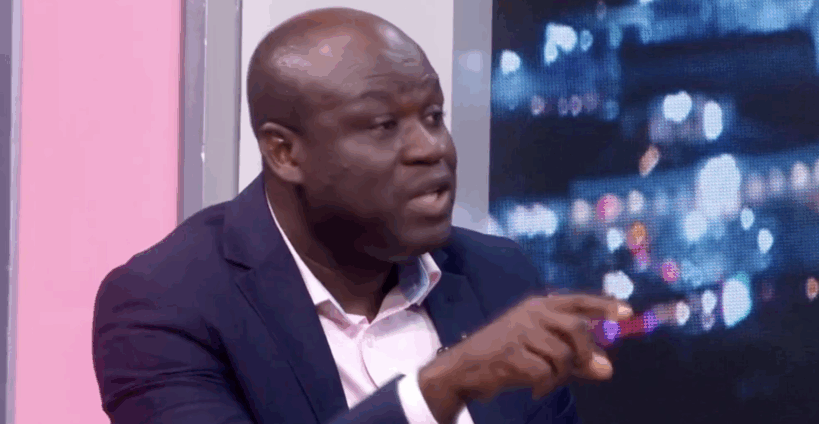
Chief Executive Officer of the Ghana National Chamber of Commerce and Industry (GNCCI), Mark Badu Aboagye, says the African Continental Free Trade Area (AfCFTA) is struggling because the continent largely produces what it does not need.
Speaking on JoyNews’ PM Express on October 15, he said Africa’s trade structure is too dependent on raw materials, making the benefits of AfCFTA difficult to realise.
His comments follow China’s zero-tariff agreement with Ghana and several African countries.
“If you are trading, you are trading either a product or a service. In fact, only a few countries produce things that we need in Africa, because we import finished goods and export raw material,” he said.
“You cannot export cassava to any of our countries around. They don’t need it, either you use it for fufu gari. But if you are adding value, that is when the African countries around us will need our products.”
According to him, the challenge lies in the type of goods and services African countries produce.
“AfCFTA in itself is challenged with the products and services that we have, because everything that we have is in its raw form,” he explained.
Citing Ghana’s trade with China, Mr Aboagye noted that the country has no choice but to continue exporting raw cocoa since it lacks processing capacity.
“If you don’t export the cocoa to China, you either export to other countries, because the cocoa will be here and nothing will happen to it because we cannot add value to it,” he said.
He added that the low value of unprocessed exports leaves African countries vulnerable.
“What are you going to do, chew the cocoa raw? You have to export. And the value on these raw, unprocessed goods is very, very low,” he stated.
Mr Aboagye argued that while African countries may have options in terms of imports, competitiveness makes Chinese goods irresistible.
“Chinese products are very competitive in terms of price, low cost of production, cost per unit, and other things,” he said.
“Your people also would want to import because of the price levels. Now they are of high quality as compared to any other country, but in terms of pricing, you have it at a lower price, and your people, looking at their purchasing power, will prefer to go in for this low-price product.”
He said this situation leaves Ghana and other African countries “pushed in such a way that we don’t have an option, because the goods that we have to export, we have not added value to them.”
The GNCCI CEO pointed to limited intra-African trade as evidence.
“Go and look at the guided trade, and look at the goods that are being traded among ourselves. The countries that are importing from Ghana are not importing your cocoa; they are not importing your gold. They are importing some of the finished products that you have. Go to Burkina Faso — our pharmaceuticals are going there, our rubber-related products are going there. Those are the things they need from us.”
He stressed that value addition is the only way African countries can make AfCFTA work.
“If African countries are adding value to some of these raw materials… we export rubber to China. If you have added value to the raw rubber, in fact, we could have responded to a lot of the countries around. That is where we make money,” he said.
Mr Aboagye also warned African governments to be cautious in signing trade deals.
“If anybody wants to enter into any trade agreement with you, don’t think that they love you,” he cautioned.
“Their focus is to export their products to Ghana. They come and discuss how you can import from them. Only a few of them are looking at how they can partner with you to manufacture the product.”
He lamented that Ghana has “resigned itself to importing,” adding that the structure of the economy has been broken for years.
“We’ve been talking about the structure of the economy, import-dependent — that’s been broken a long time ago. If 10 years ago you called a professor here, he would still talk about that,” he said.
Mr Aboagye’s remarks highlight a growing concern that, despite grand ambitions, AfCFTA may not yield its promised transformation unless Africa moves from exporting raw materials to producing and trading in value-added goods.
Latest Stories
-
President Mahama ends Resetting Ghana tour of Ahafo Region
2 hours -
African negotiators seek delivery of climate commitments at COP31
2 hours -
BoG develops AI rules for financial sector
2 hours -
‘Big Push’: Government assures contractors of prompt payments
2 hours -
Court fines miner for breaking into gold buying shop
2 hours -
Tarkwa court jails labourer for three years over GH¢123,000 theft
3 hours -
GAEC must retain nuclear scientists for Ghana’s nuclear ambitions – Minister
3 hours -
Man reportedly mistaken for game and shot by hunter dead in forest
3 hours -
19-year-old mason jailed 15 years for defiling seven-year-old pupil
3 hours -
Ghana’s banking sector assets rise 20.47% to GH¢500.2bn – BoG Governor
3 hours -
22 injured as Sprinter bus overturns at Sege after tyre burst
4 hours -
UN housing expert urges Ghana to strengthen Rent Control Department amid housing affordability concerns
4 hours -
Delta-BCI partnership reaches 166,000 people with breast cancer education
4 hours -
Power restoration fault suspected in Kumasi Central Market fire
9 hours -
The 7-foot giant of Ngleshie Amanfro: Seven-foot Ghanaian Ephraim Saawa dreams of joining the national basketball team
10 hours