

Audio By Carbonatix
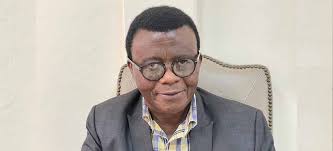
Former UN Senior Governance Advisor, Prof Baffour Agyeman-Duah, has called for a thorough reassessment of Africa's democratic systems.
He argues that the current form of democracy practiced in many African countries fails to deliver true independence and freedom, essential components of a genuine democracy.
In an interview with Joy News on Monday, Prof Agyeman-Duah reflected on the optimism that swept across Africa in the early 1990s following prolonged periods of dictatorship and military rule. “We were euphoric about the democratic changes that began in the early 90s, not just in Ghana but across the continent," he recalled. However, he noted that after three decades, significant challenges have emerged that require urgent attention.
“After 30 years of practicing democracy, we face serious challenges that need to be addressed. We must inject new energy and vigour into our democratic processes,” Prof Agyeman-Duah stated.
He stressed that while democracy is not a perfect form of government, it remains the best available option. Therefore, the focus should be on improving the practical aspects of democracy rather than questioning its principles. “The principles of democracy, such as liberty and freedom, are universally cherished. However, we need to rethink how we practice democracy in Africa,” he said.
Prof Agyeman-Duah pointed out that the practice of democracy in Africa has been undermined by both monetary and political corruption. “You have leadership that is insensitive to the people's needs; to certain critical development element that we need to address and you are not getting attention, “he explained.
He cited recent events in Kenya as an example, noting that many young people have grown disillusioned with their leaders, who they feel have compromised their future through reckless policies.
Looking ahead, Prof Agyeman-Duah urged Ghanaians to critically review their democratic practices by 2025 to ensure sustainable stability in the country.
He concluded by reflecting on the changing threats to democracy, “In the early 90s, we feared the military would be the main threat to democracy. Today, it is our political practices that pose the greatest risk.”
Latest Stories
-
A source of excellence across generations – Vice President Opoku-Agyemang lauds Mfantsipim
36 minutes -
(Photos) Mfantsipim School launches historic 150th anniversary
59 minutes -
Knights and Ladies of Marshall group backs Catholic Bishops’ stance on anti-LGBTQ+
2 hours -
Bright Simons writes: All the Filla in the Ibrahim Mahama/E&P – Gold Fields Saga
2 hours -
Monetise Idiocy In Ghana
2 hours -
The Ghanaian prophet and the mysterious death of his scottish wife Charmain Speirs
3 hours -
Nearly 400 sentenced in Nigeria for links to militant Islamists
4 hours -
Ghana’s recovery supported by gold strength despite global oil price pressures – Standard Bank Research
4 hours -
Methodist Church hails Mfantsipim@150; calls for “fresh consecration” to excellence
4 hours -
‘Excellence is our inheritance’ – Nana Sam Brew-Butler hails Mfantsipim’s 150-year reign in leadership
4 hours -
Kwaku Azar writes: A-G vs OSP
4 hours -
Mfantsipim–Adisadel rivalry built excellence, not division – Sam Jonah
5 hours -
Vice President launches Mfantsipim’s 150 years of shaping Ghana’s greatest mind
5 hours -
I assure Otumfuo, Mahama will join him to commission KNUST Teaching Hospital by end of this year – Haruna Iddrisu
6 hours -
Barcelona dominate derby to extend La Liga lead
6 hours