

Audio By Carbonatix
Project Lead for the Artificial Intelligence for Sustainable Development (AI4SD) initiative, Prof. Jerry John Kponyo, has underscored the importance of equipping young Ghanaians with Artificial Intelligence (AI) skills to drive innovation and achieve the Sustainable Development Goals (SDGs).
He said Ghana must prepare its youth to take advantage of emerging technologies that are shaping the global future.
“AI has come to stay, and we need to build our fluency in it to secure the future. AI4SD and RAIL are working with researchers to develop AI solutions in agriculture, health, energy, assistive technology, clean water, and education. We believe Africa can take its rightful place in emerging technologies by building talent from the basic level upwards,” he said.
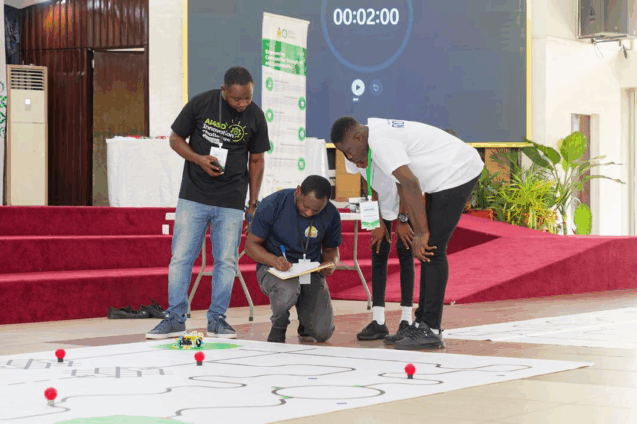
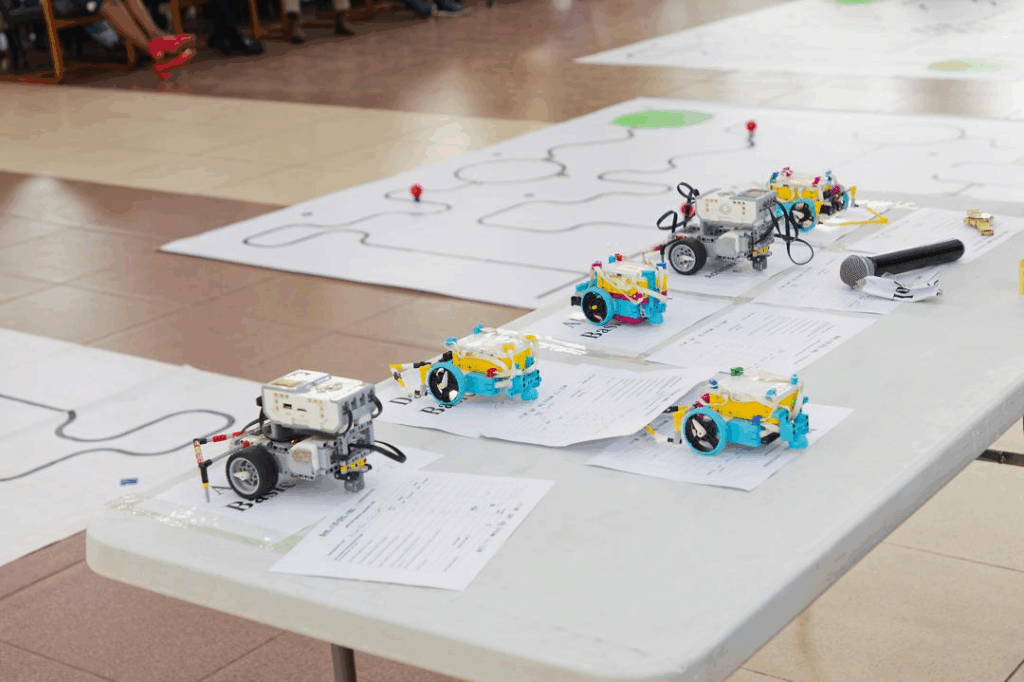
As part of efforts to promote innovation through education, Avenor Senior High School and Dagbamate Basic School emerged winners of the AI4SD RAIL Robotics Challenge, held at the Kwame Nkrumah University of Science and Technology (KNUST).
The competition brought together 14 schools from across Ghana, including OLA Girls’ SHS (Ahafo), Peki SHS, Achimota Basic School, Wlitey Basic School, Holy Child Girls’ School, Nkonya SHS, Uthmaniya SHS, Akuetteh D/A Basic School, Tamale SHS, St. Hubert Seminary SHS, Avenor SHS, Dagbamate Basic School, and Bolgatanga Girls’ SHS.
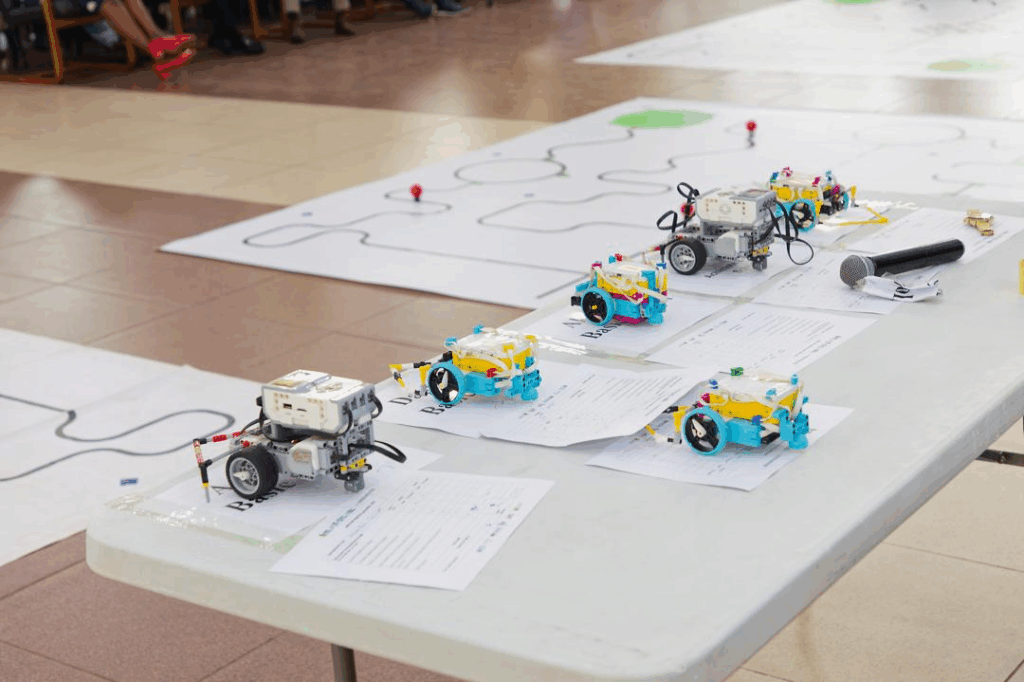
Dagbamate Basic School won in the Junior High School category, while Avenor SHS took the top spot in the Senior High School division.
The Robotics Challenge forms part of the Artificial Intelligence for Sustainable Development Project, funded by the French Embassy in Ghana and supported by the Foreign, Commonwealth and Development Office (FCDO), the UK International Development, and the International Development Research Centre (IDRC).
Prof. Kponyo added that AI4SD and RAIL have established AI robotics clubs in 22 schools across the country, providing training, mentorship, and robotics kits to support teaching and innovation.
He also presented 45 laptops to the participating schools, with each receiving two.
AI in Education Lead, Prof. Eunice Akyereko Adjei, described the event as a quiet but powerful transformation.
“What we witness today resembles the quiet transformation of a cocoon, but within that cocoon lies the promise of a butterfly — one that will soar high like an eagle. Let’s continue to nurture these seeds of innovation and excellence,” she said.
Representing the French Embassy, Miss Elisabeth Morzadec, AI4SD Project Coordinator, encouraged students to take advantage of opportunities presented by emerging technologies.
“New technologies like AI and robotics are changing the world faster than anyone can keep up with. But that also means you have more tools, more information, and more opportunities than any generation before you. What you’re doing here is not just a competition — it’s a glimpse into your future,” she said.
Provost of the College of Engineering, Prof. Kwabena Biritwum Nyarko, highlighted the value of teamwork and critical thinking in robotics.
“When you build a robot, it’s not just about assembling motors and sensors. It’s about learning to think creatively, solve problems critically, and work as a team — the exact skills needed to succeed in today’s world,” he said.
He added that KNUST believes innovation should begin early, encouraging students to invent and explore while they are full of energy, curiosity, and bold ideas.
National STEM Coordinator, Mr. Emmanuel Omang Ocquaye, who represented the Director of the STEM Resource Unit, Mrs. Olivia Serwaa Opare, also urged students to channel their creativity into developing solutions that align with national and global development goals.
“Your energy and creativity are the lifeblood of our future. Stay curious, collaborate, and push the boundaries of what is possible,” he advised.
Prof. David Asamoah, Pro Vice-Chancellor of KNUST, commended the French Embassy and its partners for their continuous support.
“We are grateful for this partnership that continues to shape young minds. The participating schools have shown resilience and innovation, proving that academia can design and drive technologies that solve society’s problems,” he noted.
The AI4SD RAIL Robotics Challenge stands as a strong symbol of innovation and hope — celebrating the creativity of young Ghanaians embracing Artificial Intelligence to create real-world solutions and shape a brighter, technology-driven future.
Latest Stories
-
Trump administration seeks $200bn in military funding in wake of Iran war
15 minutes -
Precious International School and God Reigns Academy secure semifinal spots in 2026 Luv FM VitaMilk primary schools quiz
30 minutes -
Parliament ratifies Ghana–Barari DV lithium deal amid minority rejection
49 minutes -
Decency, modesty, and legality: National Chief Imam issues Eid-Al-Fitr 2026 guidance
1 hour -
No more extravagant funerals: Tema Traditional Council sets tough new rules
1 hour -
World Cup 2026: Litina Travels secures Sports Ministry endorsement to facilitate Ghanaian fan travel
1 hour -
Perform or be dissolved: Gov’t bans bonuses for loss-making SOEs
1 hour -
Photos: Mahama cuts sod for 24-hour economy market at Dormaa Ahenkro
2 hours -
Vera Couch partners with Opokua Ahwenee Foundation to donate food items to Awoshie orphanage
2 hours -
Mahama defends new SIM card registration
2 hours -
Tragedy at Effutu A.M.E Zion Girls: Final-year student killed in campus bee attack
2 hours -
DR Congo and Rwanda agree to ease tensions after talks in US
2 hours -
GCNM holds first induction by examination, urges shift towards specialist-led healthcare delivery
2 hours -
Government to interrogate Burkina Faso tomato export ban further – Dumelo
2 hours -
Lancaster University calls for reforms to Ghana School of Law admission system
2 hours