

Audio By Carbonatix
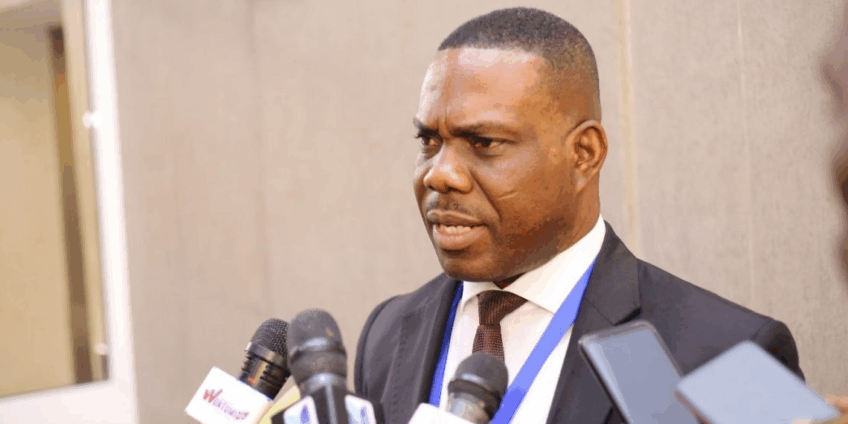
Governance expert and public financial management specialist, Dr. Eric Oduro Osae, has called for firm action against technical officers in government institutions, following revelations of massive financial irregularities in the latest Auditor-General’s report.
Speaking on Newsfile on Saturday, Dr. Oduro Osae stressed that political officeholders are not the only ones to blame for the deepening mismanagement of public funds.
He argued that entrenched technical officers, including finance officers and chief directors, must also be held accountable for the worsening state of public financial governance.
“When you look at these figures, it tells you that there is something fundamentally wrong with our system. This is not the issue of politicians,” he said.
“If we want to fight corruption, prevent abuse, misuse and the loot, we should balance our energies.”
Dr. Osae explained that while politicians approve decisions at the policy level, the execution — including authorisation of financial transactions — lies squarely with civil servants.
“No politician signs checks. The politicians give approval, but the checks are signed by the finance officers and the chief directors who manage this system. So I think we have to purge the system,” he stated.
He took aim at what he termed the "permanent government" — career civil servants who remain in place regardless of the political administration in power and, in many cases, he suggested, pass on unethical practices to incoming officials.
“The politicians have a maximum of eight years. But these are people who call themselves permanent government. Every government will come and go. They are there, and they teach some of them how to do these things,” Dr. Osae added.
His comments follow the 2024 Auditor-General’s report, which revealed a 109% surge in financial irregularities in the operations of public boards, corporations, and statutory institutions. The total jumped from GH¢8.8 billion in 2023 to GH¢18.4 billion in 2024, reversing a previously improving trend.
The bulk of the flagged amount, GH¢15.57 billion, is considered recoverable, covering unpaid taxes, locked-up investments, outstanding loans, inter-agency debts, and unretired imprest.
The remaining GH¢2.84 billion was attributed to administrative lapses, including procurement breaches and procedural inefficiencies.
While the Auditor-General noted that 84% of the flagged amounts are recoverable, Dr. Osae insists recovery alone is not enough.
“The Auditor-General said 84% is recoverable. He should be able to tell us how he is going to recover and the recoveries for the previous years. But I think that heads must roll,” he asserted.
Latest Stories
-
Ghana’s recovery supported by gold strength despite global oil price pressures – Standard Bank Research
6 minutes -
Kwaku Azar writes: A-G vs OSP
39 minutes -
Mfantsipim–Adisadel rivalry built excellence, not division – Sam Jonah
1 hour -
Vice President launches Mfantsipim’s 150 years of shaping Ghana’s greatest mind
1 hour -
I assure Otumfuo, Mahama will join him to commission KNUST Teaching Hospital by end of this year – Haruna Iddrisu
2 hours -
Barcelona dominate derby to extend La Liga lead
2 hours -
Gov’t to roll out free special education for persons with disabilities from July 1 – Education Minister
2 hours -
Importers and Exporters Association declares full support for Publican AI port system
3 hours -
“We used it to test our officiating officials’ readiness” – Bawah Fuseini after CAA Athletics event
3 hours -
Volleyball emerges as Ghana’s fastest rising sport
3 hours -
National Sports Fund needs strong leadership from the top – Administrator David Wuaku
3 hours -
JoySports Exclusive: Steve McLaren in talks with GFA after expressing interest in Black Stars job
3 hours -
Fire guts auto parts warehouse at Bubuashie, one fire officer injured
3 hours -
I owe my victory to coach Ofori Asare – Allotey after winning WBA Africa Gold Super Flyweight belt
4 hours -
Church of Pentecost supports over 2,000 BECE candidates in Obuasi with career guidance seminar
5 hours