

Audio By Carbonatix
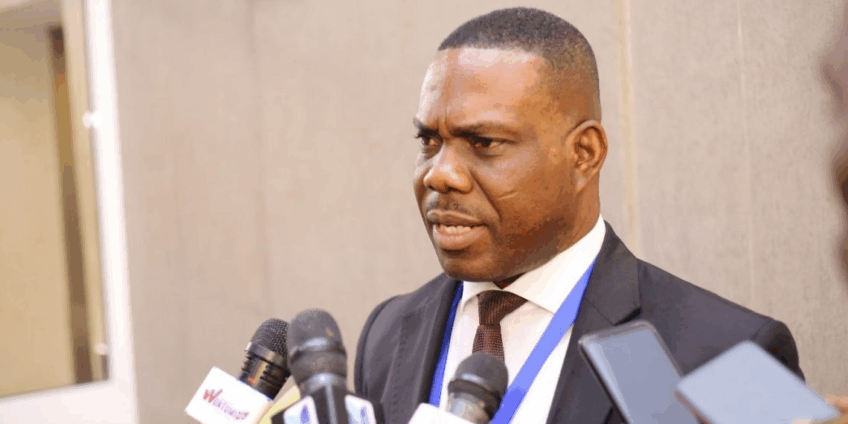
Governance expert and public financial management specialist, Dr. Eric Oduro Osae, has called for firm action against technical officers in government institutions, following revelations of massive financial irregularities in the latest Auditor-General’s report.
Speaking on Newsfile on Saturday, Dr. Oduro Osae stressed that political officeholders are not the only ones to blame for the deepening mismanagement of public funds.
He argued that entrenched technical officers, including finance officers and chief directors, must also be held accountable for the worsening state of public financial governance.
“When you look at these figures, it tells you that there is something fundamentally wrong with our system. This is not the issue of politicians,” he said.
“If we want to fight corruption, prevent abuse, misuse and the loot, we should balance our energies.”
Dr. Osae explained that while politicians approve decisions at the policy level, the execution — including authorisation of financial transactions — lies squarely with civil servants.
“No politician signs checks. The politicians give approval, but the checks are signed by the finance officers and the chief directors who manage this system. So I think we have to purge the system,” he stated.
He took aim at what he termed the "permanent government" — career civil servants who remain in place regardless of the political administration in power and, in many cases, he suggested, pass on unethical practices to incoming officials.
“The politicians have a maximum of eight years. But these are people who call themselves permanent government. Every government will come and go. They are there, and they teach some of them how to do these things,” Dr. Osae added.
His comments follow the 2024 Auditor-General’s report, which revealed a 109% surge in financial irregularities in the operations of public boards, corporations, and statutory institutions. The total jumped from GH¢8.8 billion in 2023 to GH¢18.4 billion in 2024, reversing a previously improving trend.
The bulk of the flagged amount, GH¢15.57 billion, is considered recoverable, covering unpaid taxes, locked-up investments, outstanding loans, inter-agency debts, and unretired imprest.
The remaining GH¢2.84 billion was attributed to administrative lapses, including procurement breaches and procedural inefficiencies.
While the Auditor-General noted that 84% of the flagged amounts are recoverable, Dr. Osae insists recovery alone is not enough.
“The Auditor-General said 84% is recoverable. He should be able to tell us how he is going to recover and the recoveries for the previous years. But I think that heads must roll,” he asserted.
Latest Stories
-
Power restoration fault suspected in Kumasi Central Market fire
2 hours -
The 7-foot giant of Ngleshie Amanfro: Seven-foot Ghanaian Ephraim Saawa dreams of joining the national basketball team
3 hours -
Government promises support for Kumasi Central Market fire victims
3 hours -
Vibes The Movie: Big Ghun’s Ghanaian film earns five nominations at 2026 REFFA
4 hours -
MamaCare CEO warns unresolved conflicts among health workers could undermine maternal and neonatal care
4 hours -
Health professionals urged to translate medical knowledge into practice to save mothers
4 hours -
Conflicts among care providers linked to maternal, neonatal deaths – Expert
6 hours -
GIS marks 10th TIME conference, champions improved teaching practices
6 hours -
BRICS Or Balance? What Ghana’s bid really means
6 hours -
GPRTU wants full TRAFFITECH-GH implementation to start in 2027
7 hours -
Mahama announces plans to import electric wheelchairs for PWDs
7 hours -
KGL U17 Colts 2026: Western beat Prempeh Elite Academy to set up final final with Greater Accra Region
7 hours -
Late Solanke strike salvages 10-man Spurs draw at Man United
7 hours -
Gender Ministry to monitor welfare of Nana Akua Addo’s children amid domestic violence case
7 hours -
Benedict Okyere Yeboah: Ghana’s football problem goes beyond sacking a coach
7 hours