

Audio By Carbonatix
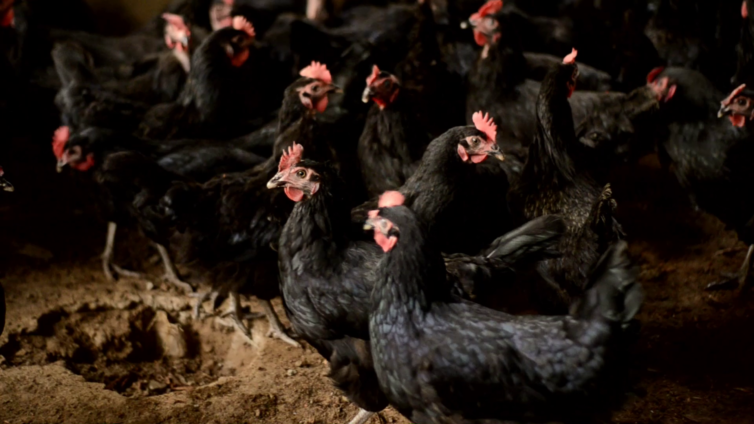
The World Animal Health Information System (WAHIS) has urged its members to maintain enhanced disease surveillance in domestic and wild birds in order to prevent the spread of Avian influenza by implementing strict biosecurity measures in poultry holdings.
"In particular, step up the biosecurity around mink farms to avoid the introduction of the virus. Control movements of susceptible domestic animals and their products to avoid disease spread. Protect humans in close contact with, or handling poultry or sick domestic or wild animals," a statement from WAHIS said.
According to the statement, people who have been exposed should always take precautions, including wearing personal protective equipment (PPE), especially when investigating die-offs or outbreaks.
They should also monitor vulnerable domestic and wild animals and look into any unusual increase in mortality events in wild animals (die-offs).
Cases of avian influenza in all species are expected to be reported to the World Organization for Animal Health (WOAH) via WAHIS in accordance with international standards.
"Timely and transparent reporting is key to maintain a good knowledge of the disease situation and to prevent any type of misinformation or disinformation. SHARE genetic sequences of avian influenza viruses in publicly available databases."
Concerns have been expressed by the international community about the current avian influenza situation. Since October 2021, an unprecedented number of outbreaks have been reported in several regions of the world, reaching new geographical areas and causing devastating impacts on animal health and welfare.
The disease jeopardises global food security as well as the livelihoods of those who rely on poultry farming. It has also resulted in an alarming rate of wild bird extinctions, as well as effects on other wildlife such as sea and land mammals.
While avian influenza primarily affects poultry and wild birds, it can occasionally be transmitted to mammals, including humans. A growing number of H5N1 avian influenza cases have been reported in both terrestrial and aquatic mammalian animals, causing morbidity and mortality.
This raises concerns about the threat to domestic and wild animal health, biodiversity, and, potentially, public health.
The current situation highlights the danger of H5N1 avian influenza adapting to mammals and spreading to humans and other animals.
According to WOAH, some mammals, such as mink, may act as mixing vessels for various influenza viruses, resulting in the emergence of new strains and subtypes that are potentially more dangerous to animals and/or humans.
"…….. some mammals, such as mink, may act as mixing vessels for different influenza viruses, leading to the emergence of new strains and subtypes that could be more harmful to animals and/or humans. Recently reported infections in farmed mink are a concern because infections of large numbers of mammals kept in close proximity of each other exacerbate this risk. Several studies are currently on-going to further explore the virulence and transmissibility (including between mammals) of these viruses."
The World Organization for Animal Health (WOAH) is closely monitoring the situation in collaboration with its expert network to assess the risks to animals and humans.
WOAH stated that it is fully committed to assisting its members in mitigating the impact of avian influenza.
It will also continue to collaborate with its expert networks as well as public and private partners, most notably the One Health Quadripartite Alliance and the Global Framework for Transboundary Animal Diseases (GF-TADs), to provide technical updates as new information becomes available.
Latest Stories
-
Youth Olympic Games in Africa: policy, regulation, and perspectives on shaping youth lives
2 minutes -
Contractors move to site for construction of 120-bed trauma hospital in Bole – Kwakye Ofosu
10 minutes -
Poor institutional leadership hindering Ghana’s creative industry – Oscar Provencal
22 minutes -
CSA demands faster sharing of cyber threat intelligence among financial institutions
38 minutes -
CSA warns Ghanaians to verify money requests as AI makes online fraud harder to detect
43 minutes -
NEIP CEO urges Africa to build systems that turn ideas into businesses
45 minutes -
Global Organised Crime Index says cybercrime is undermining Ghana’s digital sector
45 minutes -
Global Organised Crime Index says fraud and tax evasion are widespread across Ghana’s economy
48 minutes -
Threats to journalists limit coverage of cocaine trade in Ghana – Global Organised Crime Index
51 minutes -
Kumawu MP commissions 4-unit nurses’ quarters at Bodomase
51 minutes -
Two arrested after suspected narcotics intercepted at Kasoa
52 minutes -
Our pipes stock are all gone — Duraplast Marketing Manager counts losses after Avenor fire
56 minutes -
Ntim Fordjour calls for cancellation of Ghana-Colombia maritime deal over drug trafficking concerns
58 minutes -
Daily Insight for CEOs: The CEO’s Q4 leadership priorities
1 hour -
Cybersecurity is a business risk, not just an IT issue – CSA Director-General
1 hour