

Audio By Carbonatix
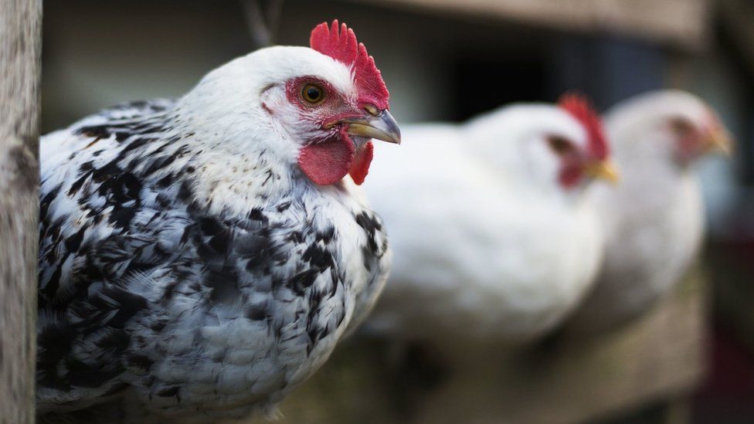
Hens, turkeys and other captive birds in Britain will have to be kept indoors from 14 December to prevent the spread of bird flu, the government has said.
The chief vets for England, Scotland and Wales made the decision after a number of cases were detected among both captive and wild birds.
All captive birds in Britain to be kept indoors amid bird flu outbreak
— BBC News (UK) (@BBCNews) December 5, 2020
The risk to humans is "very low" and should "not affect the consumption of poultry products", the government sayshttps://t.co/zB8Zf50yHx
The risk to humans is "very low", the government said, and should "not affect the consumption of poultry products".
But in a joint statement, veterinary chiefs said "swift action" was needed.
"Whether you keep just a few birds or thousands, from 14 December onwards you will be legally required to keep your birds indoors, or take appropriate steps to keep them separate from wild birds," read the statement.
"We have not taken this decision lightly but it is the best way to protect your birds from this highly infectious disease."
There are numerous strains of bird flu. Most either do not affect humans, or are not easily caught and spread by humans.
Deaths have been recorded outside of the UK related to some strains, but the H5N8 strain - which makes up the bulk of the UK's current cases - has not infected any humans worldwide to date, the NHS said.
A turkey farm in Norfolk is among those to found to have had an outbreak of the H5N8 bird flu strain. The birds will now be slaughtered to prevent the spread.
While the news will be of particular concern to poultry farmers in the run-up to Christmas, the new rules will apply to all bird owners in Britain.
However, despite the concern, the Department for Environment Farming and Rural Affairs said poultry products - including eggs - are still safe to consume.
Poultry includes chickens, ducks, turkeys, geese, pigeon (bred for meat), partridge, quail, guinea fowl and pheasants.
No end date for the measures has been given, but Defra said they would be kept under "regular review".
Latest Stories
-
Mobile Money Merchants are driving fraud
10 minutes -
Alban Bagbin declines minority’s motion to investigate sale of gold reserves at BoG
10 minutes -
NACOC leadership tours drug testing centres in Accra
12 minutes -
OSP’s power to prosecute without AG’s authorisation unconstitutional – AG files at Supreme Court
15 minutes -
Seven African referees selected for World Cup 2026 as Ndala, Issa Sy miss out
33 minutes -
Why diaspora investors are using Accra real estate to hedge against global uncertainty in 2026
55 minutes -
GWL urges public support to stem water thefts
57 minutes -
Fire guts 2-storey apartment at Ashaley Botwe
58 minutes -
Come down and account, it’s a constitutional requirement – Martin Kpebu to Ofori-Atta
1 hour -
The power of the private courtyard: How regalia is redefining resort-style living in Accra
1 hour -
Beyond roads and bridges: Understanding the true role of your MP
1 hour -
UK says Russia ran submarine operation over cables and pipelines
1 hour -
NPRA recovers GH¢27m in 2025, 30% of defaulted pension contributions
1 hour -
Power fluctuations slash Ashanti region water production by 959,000 cubic metres in March
1 hour -
Beyond the festivities: Gomoa must turn visibility into development
2 hours