

Audio By Carbonatix
The world's first routine vaccine programme against malaria has started in Cameroon, in a move projected to save thousands of children's lives across Africa.
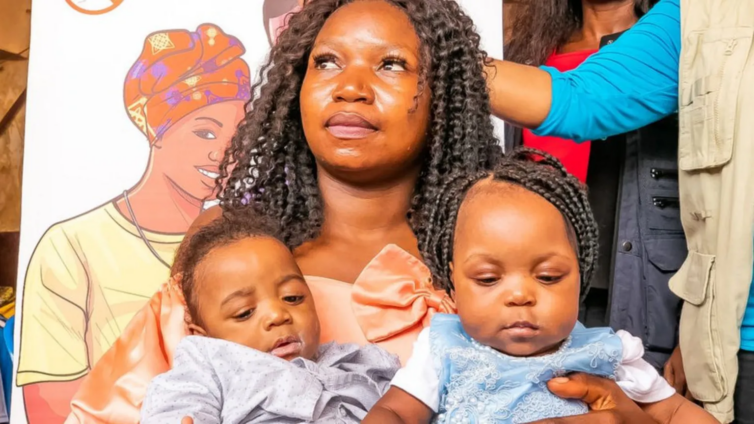
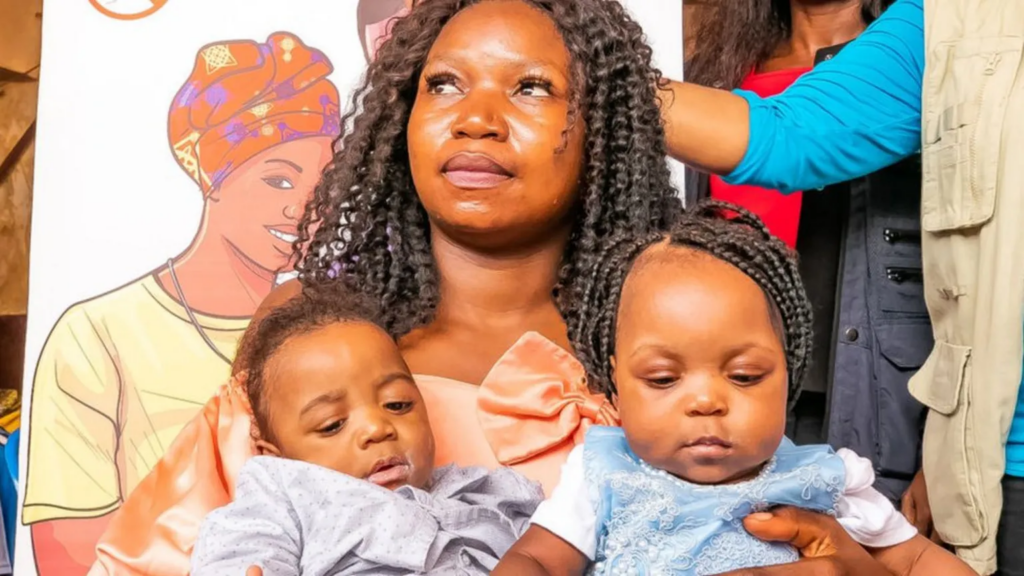
The symbolic first jab was given to a baby girl named Daniella at a health facility near Yaoundé on Monday.
Every year 600,000 people die of malaria in Africa, according to the World Health Organization (WHO).
Children under five make up at least 80% of those deaths.
Cameroon is offering the RTS,S vaccine free of charge to all infants up to the age of six months old.
Patients require a total of four doses. Health officials say these will be given at the same time as other routine childhood vaccines to make it easier for parents.
It comes after successful pilot campaigns in Kenya, Ghana and Malawi - where the vaccine caused a 13% drop in malaria deaths in children of eligible age, says Unicef.
The jab is known to be effective in at least 36% of cases, according to US researchers, meaning it could save over one in three lives.
While the rollout is undoubtedly a relief and a life-saver, its relatively low efficacy rate means that it is not a "silver bullet", argues Willis Akhwale at End Malaria Council Kenya.
But for medics it is an important additional tool in the fight against malaria alongside mosquito nets and malaria tablets. Using all three together potentially gives children 90% protection from malaria, one UK-led study estimates.
"We have a capacity to considerably reduce the number of cases and deaths from malaria and accelerate the elimination of the disease," Cameroonian doctor Shalom Ndoula, who helped to lead the rollout in his country, told BBC Newsday.
Development of the RTS,S vaccine has taken 30 years of research by the British drug-maker GSK.
The World Health Organization, which approved the vaccine, hailed the launch in Cameroon as a historic moment in the global fight against the mosquito-borne disease.
'Safe, effective and free'
Fears and doubts among some Cameroonians about the safety and efficacy of the doses have raised concerns about vaccine hesitancy.
"When people say we are being used as guinea pigs, that's not particularly true," Wilfred Fon Mbacham, who is a Cameroonian king and also a professor of public health biotechnology specialising in malaria, told BBC Newsday.
"We as scientists have to do much more on what it is, and the benefits it has, so that we can calm their fears."
Vaccination official Daniele Ekoto at Monday's launch told the BBC she was reassuring mothers after administering doses to their children, insisting that "it's a vaccine that's safe, effective and free".
But for others the benefits are obvious.
"I decided to vaccinate my child to avoid malaria. It's a bad thing and when it affects a child, they can easily die," one mother told the BBC at the same vaccination centre in Soa, near Yaoundé, where Monday's launch happened.
In 2021, Africa accounted for 95% of malaria cases globally and about 96% of related deaths.
"I have prayed and waited all my life for this vaccine", Mr Mbacham told the BBC.
The WHO says Cameroon records about six million malaria cases every year, with 4,000 deaths in health facilities - most of them children below five.
Six-month-old children in 42 districts with the greatest rates of morbidity and mortality will receive four doses until the age of two.
Twenty other countries aim to roll out the programme this year, according to the global vaccine alliance, Gavi. Among them are Burkina Faso, Liberia, Niger and Sierra Leone.
There is already a big demand for doses, but only about 18 million are available for allocation before 2025, according to Gavi, the vaccine alliance.
It falls short of what is needed by the countries the alliance has recommended for approval.
The anticipated rollout of a second vaccine - R21 - developed by Oxford University, is expected to significantly increase the number of doses available for use.
This is to be manufactured by the Serum Institute of India, which aims to make 100 million doses per year, so long as it successfully passes the regulatory approvals following its recommendation for use by the WHO last year.
Latest Stories
-
New York Times executive fatally shot allegedly by elderly in-laws
2 hours -
Teacher Payment Crisis: GES races to protect academic calendar
2 hours -
US prosecutors reopen case of alleged gang rape at Cornell University
2 hours -
Journalist to be crowned king in Uganda after bitter succession dispute
2 hours -
OpenAI scraps rollout of new model over safety concerns
3 hours -
Nigerian attempts to break world record by dancing non-stop for seven days
3 hours -
GES urges government agencies to end blame game over teacher payments
5 hours -
GES sets Oct. 5 deadline to resolve teachers’ payment dispute
5 hours -
GES working around the clock to get teachers back to class, says Daniel Fenyi
5 hours -
French PM warns against escalation of school protests after 164 arrested
5 hours -
UK tries to stop Trump’s diesel export ban
6 hours -
Late Olise goal gives France win over Belgium
6 hours -
Mancini enjoys first win since return as Italy boss
6 hours -
Interest payments to average a high 20% of government revenue over next 4 years
6 hours -
Anthropic warns AI may pose ‘existential risks to humanity’ in IPO filing
6 hours