

Audio By Carbonatix
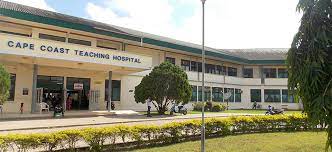
The Cape Coast Teaching Hospital (CCTH) has successfully performed its first set of cornea transplants to restore the sights of some eight patients on the verge of blindness.
The surgeries were conducted in two days at no cost to the patients under a partnership between the hospital and Himalayan Cataract Project (Cure Blindness), a US-based foundation working to cure blindness across the world.
A cornea transplant is an operation to remove all or part of a damaged cornea (tissues from the eye) and replace it with healthy new tissues from a donor (a recently dead patient).
The procedure is used to cure conditions such as corneal ulcer, corneal dystrophy (inherited eye diseases), Keratoconus (thinning disorder in the cornea) and complications from cataract surgeries.
Three doctors from the United States of America (USA) and three cornea surgeons from the korle-Bu Teaching Hospital (KBTH) in Accra and the Komfo Anokye Teaching Hospital (KATH) in Kumasi trained by the Foundation took between 60 to 90 minutes to operate on each patient.
The surgeries were performed as part of the Foundation and the hospital’s regular cataract treatment sessions done every month.
In this session, 439 patients from the Gomoa East and Gomoa Central Districts were treated.
So far, this is the second ever set of cornea surgeries conducted in Ghana, the first of which was recently done at KBTH by the same Foundation, ‘Cure Blindness,’.
Dr Geoffery Tabin, the Chairman and Co-Founder of Himalayan Cataract Project, who led the procedures, explained that unlike cataract surgery, cornea transplant was a bit uncomfortable until the body tissues healed completely.
“But of all the transplant surgeries you can get, this is the best. It’s much better to get a cornea transplant than a kidney or heart transplant. But it takes about one month to see perfectly,” he said.
He indicated that the success rate of cornea transplant was about 90 percent due to issues such as rejection of the new tissues by the patient’s immune system and transportation of the tissues from one place to the other.
The rejection, he however, explained could be treated with antirejection medicine but that sometimes had a side effect of causing glaucoma in certain patients.
“The biggest reason why one in 10 cornea transplants in Ghana would fail is because of lack of follow up. But compared to a heart transplant or a kidney transplant, it is a much successful procedure,” he explained.
However, he said the procedure could not be used to cure glaucoma, describing it as a very tough disease with high pressure in the eye.
Dr Tabin, who is also a professor of Ophthalmology and Global Medicine, intimated that the Foundation was able to bring 22 corneas from USA to be used in KBTH, CCTH and KATH even though there was a backlog of more than 1,000 patients waiting to undergo operation.
He observed that it was difficult to get cornea in Africa due to cultural issues as the people would not want to have the bodies of their loved ones tampered with before burial.
He said there was only one ‘eye bank’ functioning in sub-Sahara Africa which was in Ethiopia but it barely supplied enough tissues for transplant.
Consequently, he said, the Foundation was taking steps to engage religious and traditional authorities to sensitise the people to have them donate the cornea of their dead relatives, saying it would not alter their looks.
Dr Tabin noted that the focus of the Himalayan Cataract Project was to restore sight to Ghanaian patients and improve the skills of Ghanaian doctors.
Dr Salifu Bawa, the Acting Medical Director of CCTH, who described the exercise as historic attributed the feat to the healthy partnership between CCTH and Cure Blindness.
He said the partnership continued to expose the staff of the hospital, especially their ophthalmic nurses, to new knowledge and technology.
He indicated that the hospital was committed to conducting more of the surgeries with the foundation to reduce the cases of blindness in the country.
“The result of what has been done will be a very good example of how people’s donation of their corneal tissues for transplant will help other people.
“If we add education to it, we will be able to overturn some of the cultural notions that people have on donating their cornea tissues to help others,” he said.
One of the patients, Madam Doreen Ayisi, who could not hide her joy, expressed gratitude to the Project and the hospital for intervening in her condition, which she had endured for the past 30 years.
“Even though it is a little discomforting, I can see now and I am exceedingly grateful to them. May God richly bless them in all they do,” she said.
Latest Stories
-
MamaCare CEO warns unresolved conflicts among health workers could undermine maternal and neonatal care
2 minutes -
Health professionals urged to translate medical knowledge into practice to save mothers
8 minutes -
Conflicts among care providers linked to maternal, neonatal deaths – Expert
2 hours -
GIS marks 10th TIME conference, champions improved teaching practices
2 hours -
BRICS Or Balance? What Ghana’s bid really means
2 hours -
GPRTU wants full TRAFFITECH-GH implementation to start in 2027
3 hours -
Mahama announces plans to import electric wheelchairs for PWDs
3 hours -
KGL U17 Colts 2026: Western beat Prempeh Elite Academy to set up final final with Greater Accra Region
3 hours -
Late Solanke strike salvages 10-man Spurs draw at Man United
3 hours -
Gender Ministry to monitor welfare of Nana Akua Addo’s children amid domestic violence case
3 hours -
Benedict Okyere Yeboah: Ghana’s football problem goes beyond sacking a coach
3 hours -
GPL 2026/27: Darkwah Wiafe’s winner sees All Blacks beat Kotoko
3 hours -
ITF World Tour : Patel Wins Boys’ Singles Final at J100 Accra
4 hours -
Ghana must pursue BRICS partnership if it brings economic benefits – Kpebu
4 hours -
Success and Wright Claims J100 Accra Girls’ Doubles Championship
4 hours