

Audio By Carbonatix
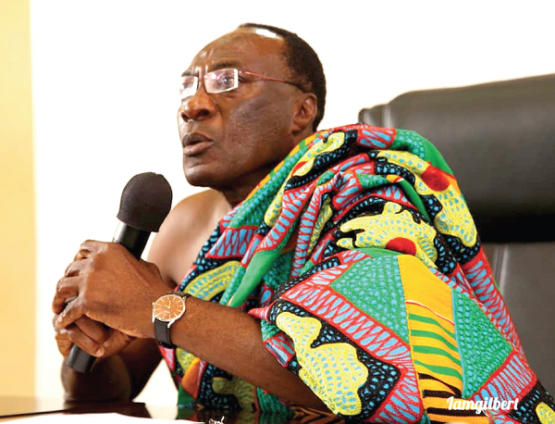
A Paramount Chief of the Anfoega Traditional Area, Togbe Tepre Hodo IV is lauding the Supreme Court’s ruling against chiefs engaging in partisan politics.
According to him, the ruling clarifies what chiefs can and cannot do when politicians visit their area.
“Basically, I think it was a terminal decision by the Supreme Court which ought to be commended,” he said in an interview on JoyNews’ The Probe on Sunday, June 4.
In a unanimous ruling this week, the Supreme Court established that any chief who publicly or covertly urges his subjects to support a specific political party, has violated Article 276(1) of the 1992 Constitution of the Republic of Ghana by engaging in "active party politics."
The verdict was rendered in response to a request from an LLM student requesting that the Apex Court use its original jurisdiction to clarify what is meant by active party politics by a Chief under Article 276 Clause 1.
According to him, the provision of the Constitution in Article 276 Clause 1 was ambiguous.
He added that for this reason, most chiefs were unable to ascertain what was constitutional or not.
But Togbe Hodo IV added that he could be confident that the recent decision from the Supreme Court will prompt the members of the various Houses of Chiefs to read the verdict and familiarise themselves with where to draw the line when dealing with politicians.
He also emphasised there is a difference between a chief endorsing the candidature of a politician and a chief lauding the policy of a government or a politician.
He then contended that the Supreme Court’s current interpretation of what chief participation in active politics means was very clear and void of ambiguity.
As the country prepares for elections, he emphasised the importance of intensifying education about the many circumstances that could come off as a chief taking part in active politics.
This, Togbe Hodo IV explained, will help chiefs become more aware and prudent.
The paramount chief further pointed out that the essence of the verdict is to guide and regulate the conduct of chiefs in order to avert unnecessary conflict.
He, therefore, advised that “chiefs, as leaders of the community, need to be guarded in what they say.”
Latest Stories
-
GPL 2025/26: Dreams FC stage stunning comeback to hammer Eleven Wonders
2 hours -
Livestream: The Probe examines Kumasi’s looming water crisis
2 hours -
MTN Ghana gears up to lead Africa’s AI revolution
2 hours -
Philanthropist Alhaji FuZak donates Da’wah bus to Ambariya Sunni community
2 hours -
GUTA calls for suspension of Publican AI system over trade disruptions
2 hours -
TTAG raises alarm over proposed recruitment of 7,000 teachers, demands national posting roadmap
2 hours -
Civilians feared killed after reports of air strike on Nigerian market
3 hours -
Bishop Simon Kofi Appiah installed as new Jasikan Diocese Bishop
3 hours -
Trump’s Strait of Hormuz blockade threat raises risks and leaves predicaments unchanged
3 hours -
US Court backs extradition of former MASLOC CEO Sedina Tamakloe-Attionu to Ghana
3 hours -
Seven arrested as NAIMOS dismantles illegal mining camp, seizes firearms at Boin River
3 hours -
Fire erupts at Madina Ritz Junction, destroys multiple wooden structures and containers
3 hours -
Daniel-Kofi Kyereh returns from long-term injury, registers assist for Freiburg U23
3 hours -
Knifeman calling himself ‘Lucifer’ slashes three at NYC’s Grand Central
4 hours -
Brands are built from within to without
4 hours