


Audio By Carbonatix
Colombia's constitutional court has decriminalised abortions within the first 24 weeks of pregnancy.
Under the new rules, no one will be prosecuted for having an abortion within that time frame.
Since 2006, abortions have been allowed in Colombia in cases of rape, when the woman's life is at risk, or if the pregnancy is not viable.
The ruling was welcomed by pro-choice groups, who called it "a historic achievement".
But Archbishop José Luis Rueda said the Catholic Church would "continue to proclaim, defend and promote human life from gestation until natural death".
Pro-choice activists say it is the latest in a series of victories in recent years, including a similar ruling by Mexico's Supreme Court in September and the legalisation of abortion up to the 14th week in Argentina.


This is a massive step for Latin America, a Catholic region and one with deeply conservative values.
But the fact that Mexico, Argentina and now Colombia have decriminalised abortion feels like there is momentum growing.
The activist movement in the region has been huge these past few years and that has definitely influenced change.
But the fight is not over yet. Many Latin American countries still severely limit abortion rights, namely Brazil, the region's biggest nation by far.
And in several Central American states abortion is banned outright, even in the case of rape and incest.
There are women in prison serving long sentences, many of whom say that they suffered miscarriages. But with so few reproductive rights in some countries, women who need medical help are instead abandoned by the state.
The ruling came about as a result of a lawsuit filed by the umbrella group Causa Justa (Just Cause) whose aim is to have abortion removed from the penal code.
Causa Justa argued that because abortions were defined as a crime outside of the three cases allowed under the 2006 ruling, doctors who performed abortions and their patients were often stigmatised.
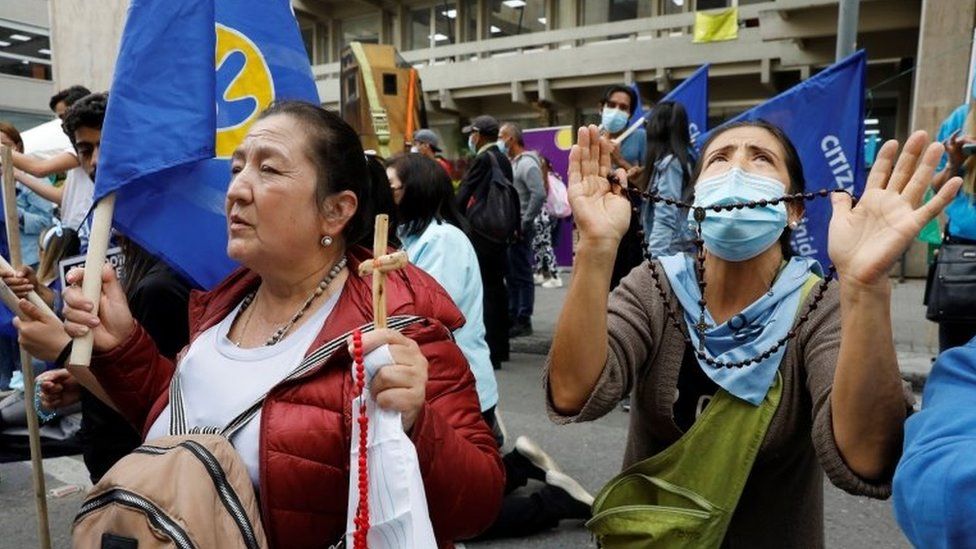
The group estimates that 90% of abortions in Colombia are carried out clandestinely, putting the health and life of women at risk.
While Monday's decision has not removed abortion from Colombia's penal code entirely, it is seen as a victory in the battle to widen access to the procedure.
Following its 5-4 ruling, the court urged the Congress and the government to come up with legislation which will protect the rights of pregnant women, including providing family planning services, eliminating obstacles to abortion care and helping with adoptions.
Latest Stories
-
Only 14% of the world’s cities breathed safe air in 2025, new global report finds
46 minutes -
Ghana’s air quality improves for the first time since 2021; country places 11th in Africa – IQAir 2025 report
51 minutes -
Chad, DR Congo have dirtiest air in Africa; Réunion, Canary Islands cleanest, IQAir 2025 report
59 minutes -
Divine Mission Academy advances to finals of 2026 Luv FM VitaMilk Primary Schools Quiz
2 hours -
University of Ghana beat UENR to reach 2026 Honda Football Championship final
2 hours -
President Mahama urges international partners to respect Ghana’s position on LGBTQ issues
2 hours -
UDS edge UBIDS to reach 2026 Honda Football Championship final
2 hours -
Gender Minister holds first quarter ministerial advisory board meeting
3 hours -
Yirenkyi, Adjetey score lowest as Ayew tops ratings in Austria annihilation
3 hours -
Mahama courts diaspora support, highlights $7.8bn contribution to Ghana’s economy
3 hours -
President Mahama honoured with International Statesperson Award in US
3 hours -
Biggest winners from Ghana’s defeat to Austria
3 hours -
Gov’t working to address salary arrears of 2024 teachers – Education Minister assures
4 hours -
‘Democracy Is Not for Sale’ forum ends with strong calls to tackle vote buying, reform political financing
4 hours -
Parliament rejects Minority motion to investigate GoldBod losses
4 hours