

Audio By Carbonatix
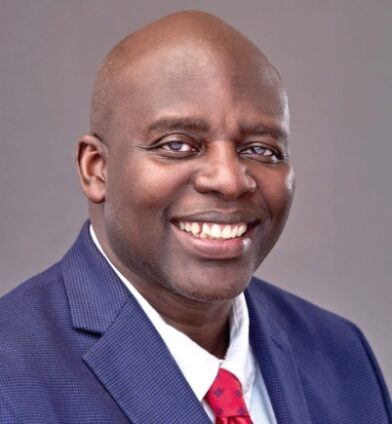
A Fellow at the Centre for Democratic Development, Dr John Osae-Kwapong, has described the constitution of policy committees by the New Patriotic Party as a positive step toward strengthening party unity and developing coherent policy alternatives ahead of the 2028 general elections.
According to him, the move signals a growing recognition within the party that elections must go beyond political competition and focus more on practical ideas capable of addressing Ghana’s socio-economic challenges.
Speaking on Joy FM’s Top Story programme on Friday, May 8, 2026, Dr Osae Kwapong said modern democratic contests are increasingly driven by policy proposals and governance alternatives rather than rhetoric and campaign messaging alone.
He noted that political parties must present clear and workable policy solutions that respond to the needs of citizens and tackle pressing national concerns.
“And so to get or to arrive at a place where you can put together a coherent public policy that addresses all the different challenges that the country faces or will face at some point, for me, decentralizing that work and having groups that may focus on particular policy sectors to coordinate ideas across the party, to arrive at a policy that says this is what we are putting forward as a party to contest on the 2028 election, I believe is a step in the right direction,” he stated.
The comments come after the NPP announced the formation of several policy committees as part of efforts to reorganise and prepare the party’s agenda ahead of the next election cycle.
Dr Osae Kwapong explained that decentralising policy formulation through sector-based committees could help the party build more comprehensive and informed policies while creating room for broader stakeholder participation.
He added that the involvement and co-chairing roles of some leading figures within the party also send a strong signal of unity and shared purpose despite internal political ambitions.
“Their participation and co-chairing these committees is a step in the right direction. I believe that it signals unity, it signals a common sense of purpose, and it signals the fact that individuals, regardless of their ambitions at some point, can suspend those ambitions and put the interest of the party first,” he added.
The CDD Fellow further stressed that political parties must prioritise internal cohesion after internal contests if they hope to build strong and competitive structures ahead of national elections.
His comments come at a time when political parties in Ghana are increasingly under pressure to provide concrete policy alternatives on issues such as unemployment, economic recovery, governance, and public sector reforms ahead of the 2028 polls.
Latest Stories
-
Parliament questions continued detention of Baffour Awuah by EOCO, demands due process
12 minutes -
Baffour Awuah did not report to EOCO voluntarily; an arrest warrant forced him – Theophilius Dzimega
21 minutes -
Baffour Awuah case risks looking like a display of state power – Sulemana Braimah
29 minutes -
Campaign posters, billboards take over Kumasi as NPP goes to polls
37 minutes -
‘I’ve been told I’m also involved’ – John Darko says he’ll cooperate with EOCO if invited over Baffour Awuah case
48 minutes -
Follow the evidence, not assumptions, in Baffour Awuah case – Victoria Bright
1 hour -
48-hour detention rule is not an automatic entitlement for EOCO – Victoria Bright
1 hour -
Baffour Awuah’s arrest is a political witch-hunt – Kofi Bentil
2 hours -
MT Asharami Ghana arrives in Tema as government pushes stronger LPG infrastructure
2 hours -
Weweso JHS wins 5th edition of Otumfuo Reading Competition 2026
2 hours -
‘Criminal law can’t turn every poor commercial judgment involving state entity into an offence’ – Victoria Bright
2 hours -
Baffour Awuah has shown willingness to cooperate, qualifies for self-recognisance bail – Kofi Bentil
2 hours -
NPP elections: Here are the 46 candidates seeking votes of 7,163 delegates
2 hours -
EOCO is only carrying out its mandate, not violating Baffour Awuah’s rights – Dzimegah
2 hours -
Heavy security at Baba Yara Stadium as NPP elects national officers today
2 hours