

Audio By Carbonatix
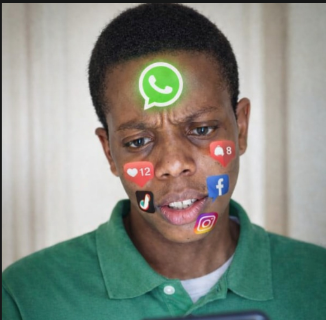
A short video. A dramatic voice note. A screenshot with no source. Someone in a family WhatsApp group asks, “Is this true?” Another replies, “I saw it somewhere.” Before anyone checks, the message is forwarded again and again. By the end of the day, nobody is sure what is real—but everyone has an opinion.
This is where Ghana finds itself today: caught in a digital space where fiction, satire, and fact increasingly blur together, all in the name of “content creation.”
When Everything Looks the Same
Not long ago, it was easy to distinguish between them. News came from newsrooms. Comedy came from skit makers. Fiction was clearly labelled.
Now, everything arrives on the same screen, in the same format, with the same urgency. A staged skit can look like breaking news. A parody account can sound authoritative. A joke, stripped of context, can become “evidence.”
I have watched people argue passionately over stories that were never meant to be true in the first place.
Content Confusion Isn’t Ignorance
This situation is not about ignorance or gullibility. Confusion has become an unintended by-product of the system. Content that triggers laughter, fear, or anger spreads faster than content that slows down to explain. Creators know this.
Many are talented, creative, and genuinely entertaining. Satire has long played an important role in Ghanaian society—from concert party to radio and TV comedy—helping us question power and laugh at ourselves. But something has shifted.
In the race for views and virality, some creators leave things deliberately unclear. They know confusion drives engagement. People share first and ask questions later. And then some don’t ask any questions at all.
A skit might be posted without a clear label. A fictional quote presented like a real statement. By the time someone says, “Oh, it was just a joke,” the damage is already done. Reputations suffer. Fear spreads. Trust erodes.
Audiences and Media Share the Load
Audiences are part of the story, too. We forward messages because they sound convincing, not because they are verified. We believe content that confirms what we already think. Critical thinking becomes optional in moments of excitement or outrage.
Even traditional media is not immune. Under pressure to compete with content creators, some media houses adopt sensational headlines and rushed reporting. When journalism starts to sound like performance, the line becomes even harder to see.
If everything feels like ‘content,’ then nothing feels authoritative. And that is dangerous.
Why It Matters in Ghana
In a country where rumours can inflame political tensions, damage livelihoods, or cause panic around health and security issues, unclear information is not harmless entertainment. It has real consequences for real people.
This is not a call to silence creativity or police humour. It is a call for responsibility.
A Call to Responsibility
- If content is satire, say so clearly.
- If it is fiction, label it boldly.
- If it is news, report it with care and context.
Creators must understand that influence comes with responsibility. Audiences must slow down and verify. Media institutions must resist trading trust for clicks.
The problem is not content creation—it is content confusion. When a society can no longer tell the difference between what is true and what is merely entertaining, the cost is not just misinformation. It is trust slowly slipping away, one forwarded message at a time.
Latest Stories
-
Power restoration fault suspected in Kumasi Central Market fire
3 hours -
The 7-foot giant of Ngleshie Amanfro: Seven-foot Ghanaian Ephraim Saawa dreams of joining the national basketball team
4 hours -
Government promises support for Kumasi Central Market fire victims
4 hours -
Vibes The Movie: Big Ghun’s Ghanaian film earns five nominations at 2026 REFFA
4 hours -
MamaCare CEO warns unresolved conflicts among health workers could undermine maternal and neonatal care
5 hours -
Health professionals urged to translate medical knowledge into practice to save mothers
5 hours -
Conflicts among care providers linked to maternal, neonatal deaths – Expert
6 hours -
GIS marks 10th TIME conference, champions improved teaching practices
7 hours -
BRICS Or Balance? What Ghana’s bid really means
7 hours -
GPRTU wants full TRAFFITECH-GH implementation to start in 2027
7 hours -
Mahama announces plans to import electric wheelchairs for PWDs
7 hours -
KGL U17 Colts 2026: Western beat Prempeh Elite Academy to set up final final with Greater Accra Region
8 hours -
Late Solanke strike salvages 10-man Spurs draw at Man United
8 hours -
Gender Ministry to monitor welfare of Nana Akua Addo’s children amid domestic violence case
8 hours -
Benedict Okyere Yeboah: Ghana’s football problem goes beyond sacking a coach
8 hours