

Audio By Carbonatix
Recently, a patient of mine came to clinic with a new cough and shortness of breath.
Though I was already treating him for stage 4 colon cancer that had studded his lungs, his acute symptoms made me even more concerned about Covid-19.
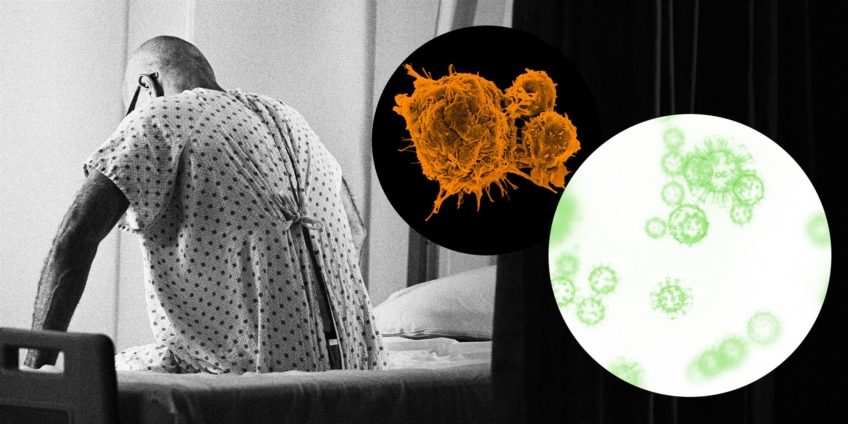
Tragically, he died the next day as the coronavirus easily overpowered an immune system neutered by cancer and chemotherapy.
Almost one year into the pandemic, many of the fears harbored by oncologists like me have been fully realized in clinical practice.
Apart from felling scores of cancer patients, the virus has upended cancer diagnosis, treatment and research.
Covid-19 attacks the lungs, of course, but it also disrupts other organs — and really, entire health systems.
By now, Covid has been linked to heart disease, diabetes, stroke, low blood cell counts and psychiatric conditions.
Cancer patients possess little resistance against Covid-19. The older you get, the higher your cancer risk.
But advanced age is also a risk factor for coronavirus.
Metabolic disorders associated with cancer, like obesity, high blood pressure and diabetes, add further vulnerability.
A study in the JCO Global Oncology journal examined how patients diagnosed with Covid-19 during the early portion of the pandemic fared in Asia, Europe and the United States.
It showed that patients with cancer had worse outcomes (greater need for ICU admission and higher mortality) than those without cancer.
Based on data from the United Kingdom, an analysis published in Nature found that a Covid-19 infection within the first year of a cancer diagnosis was especially lethal.
Compared to those without cancer, patients with a solid organ cancer (e.g., breast, lung and colon) had 1.8 times the risk of death, while those with a blood cancer had a fourfold greater risk.
And unfortunately, the results of a recent University of Pennsylvania study show that even those whose cancer is in remission and who are not currently requiring any therapy remain prone to severe Covid-19 infections.
As Nathan Berger, a professor and oncologist at Case Western Reserve School of Medicine recently told STAT News: “The combination of the virus and cancer is synergistic and leading to mortality. The death rates are much higher than they are for either of the diseases alone.”
Yet even those cancer patients who avoided direct infection could not entirely escape the coronavirus’ seismic effect on health care systems.
As health care resources were reallocated to the pandemic response, staple treatments such as elective cancer surgery and radiation were deferred, while systemic therapies like chemotherapy were delayed.
In cancer, time is exceedingly precious.
A study in the British Medical Journal found that even a four-week delay in cancer treatments caused an uptick in mortality for seven different cancers, including breast, lung and colon.
Routine screenings for cancers of the breast, cervix and colon also nosedived during the pandemic due to insurance issues or fears of contracting Covid-19 from health care facilities.
Last year, these screenings were down more than 90 percent when compared to previous years.
Though the full impact of these missed or delayed colonoscopies and mammograms hasn’t registered yet, it is possible — likely, even‚ that many preventable or early stage cancers were simply missed.
As William Cance, chief medical and scientific officer of the American Cancer Society, grimly told The Wall Street Journal, “We undoubtedly will have delays in diagnoses, and more advanced cancers.”
Research trials that blaze new trails and possibilities for cancer treatment have also been scuppered by lockdowns and dwindling recruitment.
Given that cancer remains the second-leading cause of death in America and is only expected to increase due to rising life expectancy and exposure to risk factors, the new drugs and therapies unearthed through trials are critical.
Oncologists like myself feel the weight of Covid-19’s daily interference in our patients’ cancer care.
Any unexplained fever, cough or vague symptom in a patient now compounds concerns and adds an additional layer of paranoia, risk and complexity.
Unsurprisingly, oncologists have reported a surge in their personal anxiety and depression during the pandemic.
Though the ongoing vaccine rollout offers hope, it is fraught with uncertainty.
Like so many gray areas surrounding Covid, it is unknown whether an immunocompromised cancer patient can mount a sufficient immune response to vaccination.
But even a diminished benefit from the vaccine will add some armor against the virus’ spike protein.
From diagnosis and beyond, the fate of many cancer patients is now tied closely to the contagion’s trajectory.
Latest Stories
-
GBA raises concerns over arrests of social media commentators
23 seconds -
Gov’t to take over child marriage bill to speed up passage – Gender Minister
54 seconds -
Why healthcare innovation needs more than startup enthusiasm
4 minutes -
GTP pays homage to Asantehemaa Nana Yaa Akyaa II
6 minutes -
Kanayo Dambu declares bid for Northern Region NDC Youth Organiser
11 minutes -
Sammi Awuku welcomes Kojo Brace into NPP, says he will make a ‘fine politician’
13 minutes -
Ghana, we need to talk: Who will feed us tomorrow?
19 minutes -
Fameye marks birthday with orphans at Village of Hope
34 minutes -
Language barrier limiting opportunities for Ghanaian youth in Russia – Opare Addo
35 minutes -
Mr Isaac Baah Ashun
35 minutes -
Critical thinking essential to counter misinformation in AI era – Putin aide
43 minutes -
Princess Ocansey named among Top 100 Iconic Female World Leaders, set to be honoured at UNGA81 Powerlist reception
43 minutes -
William Plange recounts healing from depression in forest
44 minutes -
Trump seeks to rebuild support among 2024 voters in North Carolina
1 hour -
The Merqury Quaye Effect: How one man put DJs on Africa’s entertainment map
1 hour