

Audio By Carbonatix
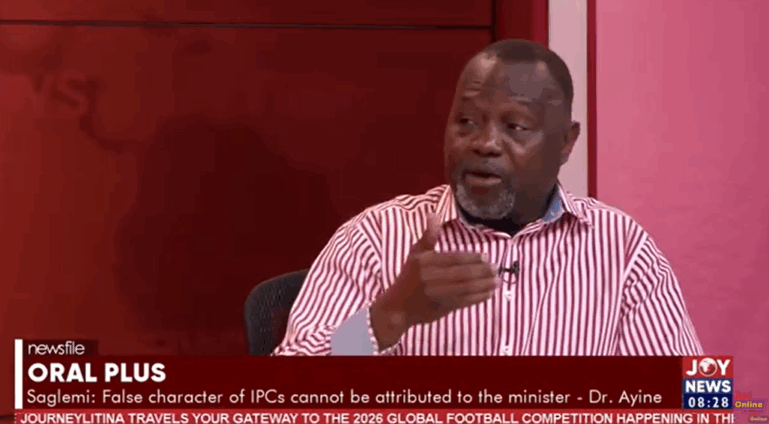
The Attorney-General and Minister of Justice, Dr Dominic Akuritinga Ayine, says that prosecution of criminal trials is largely controlled by the judiciary and not solely by the prosecuting authorities.
Speaking on JoyNews’ Newsfile on Saturday, January 10, Dr Ayine said he remains unable to proceed to court over matters relating to the National Cathedral project until he receives a forensic audit report, which he described as critical to any potential prosecution.
“And even the National Cathedral, for instance, I am still waiting for the forensic report. I cannot proceed to court on the National Cathedral unless the forensic report is given to me,” he stated.
His comments come after former Auditor-General Daniel Domelevo stated that the credibility of the anti-corruption fight now rests largely on how the Attorney-General handles high-profile cases submitted under the Operation Recover All Loot (ORAL) initiative.
Dr Ayine expressed surprise at criticisms from some individuals, including the former Auditor-General, who has called for quicker action on high-profile cases.
He argued that such criticisms often overlook the realities of criminal litigation.
“For people like Domelevo, I am a bit surprised that they know that even when I have filed a case in court, the speed of the case does not depend exclusively on me,” he said.
The Attorney-General explained that once a matter enters the courts, the conduct and pace of proceedings fall under the authority of the judiciary.
“What we have to understand is that, first of all, a criminal trial is a judiciary-controlled process,” he noted.
To illustrate his point, Dr Ayine cited the issue of adjournments, which are at the discretion of the presiding judge.
“If a judge says, ‘I am giving an adjournment of one month or two months’, and I plead with the judge or my lawyers plead with the judge to give a shorter adjournment and the judge refuses, what do I do in that case?” he asked. “I cannot compel the judge to give a shorter adjournment.”
While acknowledging public demands for swift justice, Dr Ayine said he is committed to expediting cases where possible, but cautioned against rushing prosecutions at the expense of thoroughness and legal soundness.
“And so if people like him say I should speed up, yes, I will speed up,” he said.
“But I don’t want to speed up and then trip along the line, and the same people will say, ‘well, Ayine didn’t do his work well; that is why he is tripping.’”
The Attorney-General stressed that his approach is guided by the need to build strong, defensible cases that can withstand judicial scrutiny, particularly in complex and high-profile matters such as the National Cathedral project.
Latest Stories
-
Joy FM was birthed over a bowl of fufu’ – Tommy Annan-Forson shares interesting story
5 minutes -
World Athletics to introduce standalone World Marathon Championships from 2030
10 minutes -
Africa’s voice in global journalism grows as funding, AI and misinformation shape newsrooms
12 minutes -
First Atlantic Bank holds Annual General Meeting, reports strong growth and bold 2026 outlook
14 minutes -
Ghanaian-founded fintech WeWire secures Canadian PSP license to bridge African, global payments
17 minutes -
Uganda confirms 2027 AFCON dates
25 minutes -
40 convicted in Northern Region crime crackdown
25 minutes -
‘We’re days away from parts of the world experiencing actual shortages:’ Eric Nuttall on energy
35 minutes -
‘I’m Obroni in every country’ – Coco Blasian on music, survival and making Accra home
36 minutes -
IMANI wants NIC to probe possible conflicts of interest in reinsurance arrangements
48 minutes -
First Atlantic Bank strengthens balance sheet as net interest income surges 67%
52 minutes -
Choplife Gaming donates to Korle Bu Radiotherapy unit for Women’s Week 2026
54 minutes -
Would President Mahama have reduced cocoa prices if this were an election year ? – Annoh Dompreh asks
57 minutes -
Passion, not survival, should drive career choice – Dr Kofi Annan
57 minutes -
Climate change, pollution and overfishing push White Volta fishermen to the brink
57 minutes