

Audio By Carbonatix
The Attorney-General, Dr Dominic Ayine, has defended his decision to discontinue several high-profile cases, insisting that many of them were poorly investigated and lacked the evidential strength required to sustain criminal trials.
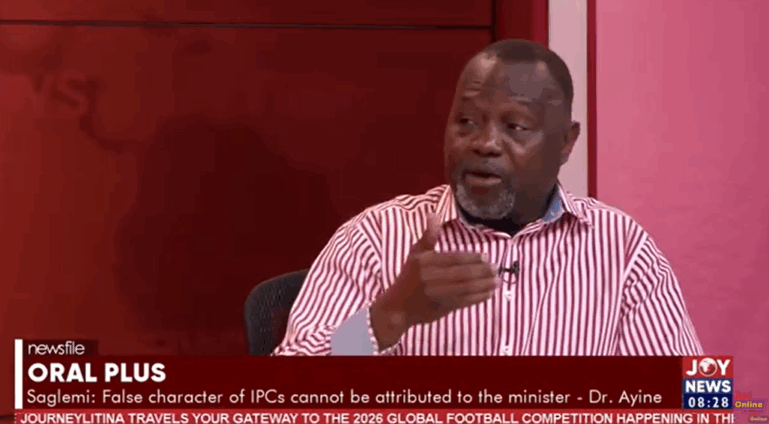
Speaking on JoyNews’ Newsfile on Saturday, January 10, Dr Ayine said his actions were guided strictly by an objective assessment of the evidence available to his office and not by political considerations.
“I do not want to sound offensive, but I think that most of the cases, as I said earlier, were poorly investigated,” he stated. “That is the assessment that I came to...”
Dr Ayine referenced a commentary by private legal practitioner Thaddeus Sory, who had written in defence of the Attorney-General’s use of nolle prosequi. According to Dr Ayine, the article captured the essence of prosecutorial discretion.
He recalled that Mr Sory had argued that where an Attorney-General objectively evaluates a case and concludes that it is not worth proceeding to trial, it would be unreasonable to expect that matter to be pursued in court.
“If you have an Attorney-General who objectively assesses a matter and comes to the conclusion that it is not worth proceeding to trial, you don’t expect him to take that matter to trial,” Dr Ayine noted.
Responding to criticisms that he is being lenient towards members of the National Democratic Congress (NDC), Dr Ayine firmly rejected the accusation, describing it as unfounded.
He urged the public to judge his tenure by future actions rather than political speculation.
“I keep telling people that they should watch this space,” he said. “They should watch when there is malfeasance by a minister, a chief executive, or other appointees of this government. That is when they will see that the allegation that I am treating NDC people with kid gloves is not well-founded.”
The Attorney-General emphasised that in cases where he has proceeded with prosecution, the evidence has clearly demonstrated criminal conduct, particularly theft of public funds.
“In the cases that I have filed, most of them I have been able to show that there was theft,” he explained.
He cited the case involving Kwabena Adu-Boahen as a clear example, alleging that public funds were unlawfully diverted for private use.
“Very clearly, moving seven million dollars from a public account to a private account and disbursing it for private purposes is theft,” Dr Ayine stated.
Latest Stories
-
Ghana’s banking sector assets rise 20.47% to GH¢500.2bn – BoG Governor
3 minutes -
22 injured as Sprinter bus overturns at Sege after tyre burst
4 minutes -
UN housing expert urges Ghana to strengthen Rent Control Department amid housing affordability concerns
13 minutes -
Delta-BCI partnership reaches 166,000 people with breast cancer education
22 minutes -
Power restoration fault suspected in Kumasi Central Market fire
6 hours -
The 7-foot giant of Ngleshie Amanfro: Seven-foot Ghanaian Ephraim Saawa dreams of joining the national basketball team
6 hours -
Government promises support for Kumasi Central Market fire victims
6 hours -
Vibes The Movie: Big Ghun’s Ghanaian film earns five nominations at 2026 REFFA
7 hours -
‘I’m a fulfilled man’—Justice Korbieh on missing out on Supreme Court despite two nominations
7 hours -
MamaCare CEO warns unresolved conflicts among health workers could undermine maternal and neonatal care
7 hours -
Health professionals urged to translate medical knowledge into practice to save mothers
7 hours -
Retired judge Justice Francis Korbieh charges 1,568 new lawyers to uphold integrity
9 hours -
Conflicts among care providers linked to maternal, neonatal deaths – Expert
9 hours -
GIS marks 10th TIME conference, champions improved teaching practices
9 hours -
BRICS Or Balance? What Ghana’s bid really means
9 hours