

Audio By Carbonatix
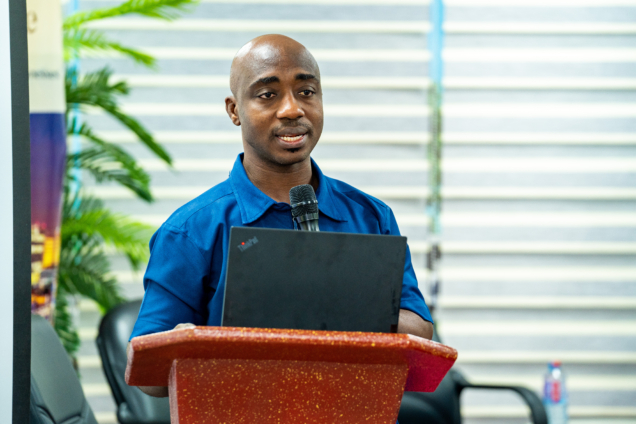
The Strategy and Transactions Partner at Deloitte Ghana and the Africa Infrastructure and Capital Projects Leader at Deloitte Africa, Yaw Appiah Lartey, has indicated that de-risking energy projects is critical to attracting investment and securing commitments from financial institutions.
According to him, the path to bankability lies in blending innovation with risk mitigation, strong partnerships, and alignment with both investor expectations and local realities
Speaking at the Future of Energy Conference Africa on the Bankability of Energy Projects, Mr. Lartey said even in Africa’s high-risk markets, clean energy initiatives can attract capital when ideas are translated into structured, de-risked, and impact-driven opportunities.
He added that bankable projects must pass through key stages:
With regard to idea validation and feasibility studies, he advised governments and stakeholders to conduct thorough resource assessments (solar, wind, hydro) and review policy frameworks.
According to IRENA (2022), over 60% of failed African energy projects stem from weak feasibility studies.
Mr. Appiah cited Kenya’s Lake Turkana Wind Power Project—365 turbines (850KW each), a high-voltage substation, and a 438km transmission line to the national grid—as a success built on detailed wind mapping.
On structuring the business model and securing early commitments, he said engaging governments, utilities, Development Finance Institutions (DFIs), and anchor off-takers is important, stressing that early commitments from institutions such as the IFC and AfDB can de-risk private capital.
Bankable Documentation, Investor Pitching, and Financial Close.
He noted that over 70% of African energy projects are structured as Public-Private Partnerships (PPPs).
A notable example is Ghana’s Bui Dam—a 400MW hydroelectric project on the Black Volta, developed through a PPP between the Government of Ghana and Sino Hydro, a Chinese state-owned construction company.
Barriers to Financing
Mr. Appiah Lartey emphasised challenges including bureaucracy, regulatory bottlenecks, corruption, taxes and tariffs, lack of financing options, technical and equipment gaps, shortage of skilled labour, limited private sector involvement, policy uncertainties, weak community engagement, and inadequate budget allocations.
De-risking Tools and Innovative Financing
He outlined strategies such as blended finance (concessional + commercial capital), political risk insurance (MIGA, ATI), currency hedging mechanisms, government guarantees, credit enhancements, and stronger community engagement for project sustainability.
Latest Stories
-
Church of Pentecost supports over 2,000 BECE candidates in Obuasi with career guidance seminar
36 minutes -
Brandon Asante and Coventry all but promoted to Premier League despite Sheffield Wednesday draw
58 minutes -
GPL 2025/26: Late Kwartemaa strike downs Hearts in Tema
1 hour -
Ghana Faces Sierra Leone Moment as Prosecutorial Powers come under strain
1 hour -
Don’t consume fish or seafood from Tema Shipyard until further notice – FDA warns
1 hour -
Why volunteering might be Africa’s most underrated career accelerator
1 hour -
ActionAid Ghana raises concern over gender gaps in Feed Ghana Programme
1 hour -
Windstorm wreaks havoc in Gushegu, displacing nearly 2,000 residents and damaging schools
1 hour -
Friends of Bridget Bonnie Marks her 35th birthday with donation to Kasseh Model Health Centre
2 hours -
From Ekumfi Kokodo to the Pulpit Stage: Essi Donkor’s gospel journey takes shape
3 hours -
Landfilling waste management creates no value, it’s an economic waste
3 hours -
Photos: Speaker Bagbin Commissions MPs constituency office under parliamentary decentralisation programme
3 hours -
Black Stars technical advisor Winfried Schäfer sacked as GFA shakes up backroom staff
3 hours -
Wenchi water project almost complete, critical to gov’t agenda – GWL MD
3 hours -
Anti-LGBTQ+ bill not part of government’s legislative agenda – Inusah Fuseini
3 hours