

Audio By Carbonatix
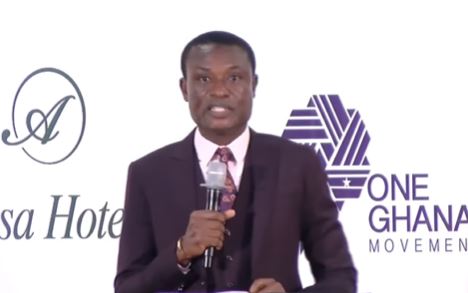
Special Prosecutor Kissi Agyebeng on Friday reiterated his commitment to do his best at the Office of the Special Prosecutor and leave when his time is up. However, there are critical fixes to the office that he suggests are imperative to ensure that the office functions as expected and corruption crushed.
Among his suggestions are the need to entrench the OSP in the constitution, enact a comprehensive Corrupt Practices Act, and establish specialised anti-corruption courts to expedite justice.
He spoke at the UPSA Law School and One Ghana Movement Constitution Day Public Lecture on the topic: "A Few Good Men: Suppressing and Repressing Corruption and State Capture in Aid of Development."
Agyebeng pointed to the necessity of formally incorporating the OSP into the national constitution, ensuring its longevity and independence beyond the tenure of any single individual.
“First, we must write the Office of the Special Prosecutor into the constitution and board it up firmly. Do not dwell on me. Leave me out of the equation. I am just one person – obviously. My tenure will end at some point, and like everyone else, I will leave the scene,” he stated.
He warned against the growing trend of equating the OSP’s work with his personal efforts, arguing that the fight against corruption should not be personalised but rather institutionalised for sustainability.
Agyebeng advocated for the enactment of a Corrupt Practices Act to clearly define corruption-related offenses, eliminating ambiguities that hinder effective prosecution. He criticised the current legal framework, describing it as convoluted and lacking clarity.
“The present formulation under section 79 of Act 959 is unhelpful and circuitous. It engenders confusion. It is symptomatic of our penchant for crafting criminal legislation in an arcane and roundabout fashion instead of simply stating what we mean to say,” he remarked.
He cited examples from Ghana’s legal history, including the Criminal Offences Act, 1960 (Act 29), where laws have been phrased in vague and overly complex terms, leading to prolonged debates and legal uncertainties.
To expedite the handling of corruption cases, the Special Prosecutor proposed the establishment of specialised anti-corruption courts, staffed with judges trained specifically in handling corruption-related matters.
“Third, we must set up specialised anti-corruption courts manned by especially trained judges in the field to swiftly and efficiently deal with corruption cases,” he noted, adding that justice must be delivered swiftly to deter corrupt practices.
Furthermore, he stressed the need to safeguard judicial independence and nurture a culture that rewards integrity while holding corrupt officials accountable.
Kissi Agyebeng also called for stringent measures to scrutinise unexplained wealth, not only among public officials but also within the private sector.
He proposed rigorous lifestyle audits and increased transparency in political party financing to curb the monetisation of public elections.
“On this score, we must forcefully address unexplained wealth not only among public officers but also private persons, with biting lifestyle auditing. Then again, we must highlight the vexed question of the opacity attending political party financing and the monetisation of public elections,” he urged.
He suggested the introduction of anti-corruption studies in Ghana’s basic and secondary school curricula as a way to help tackle corruption.
Kissi Agyebeng believes that early education on ethical governance and integrity will help cultivate a new generation committed to fighting corruption at every level of society.
“All I am saying is this – we must channel our anti-corruption laws as a construct for national development.”
Latest Stories
-
Sammy Gyamfi fires back at Amin Adam over BoG gold reserves controversy
11 minutes -
Wassa-Damang youth dismiss claims against Damang Mine
1 hour -
World Bank pledges $3bn investment in Ghana’s economy to boost growth
1 hour -
Stanbic, IFC and Mastercard seal $600,000 deal to power women entrepreneurs
1 hour -
Chief Imam urges peace, unity for development
2 hours -
NPP urges members to register for cards
2 hours -
Energy Commission sensitises stakeholders on draft EV charging, battery swap regulations
2 hours -
TMA donates food items to Muslims ahead of Eid al-Fitr
2 hours -
Court rejects budget document in Adu-Boahene trial; proceedings adjourned
2 hours -
Illegal mining evolving into human, national security threat, gangerism and degradation
2 hours -
NPP rallies students to drive 2028 victory
2 hours -
Fire ravages shops at Sakumono; eight structures affected
2 hours -
Western Region targets high-quality primary healthcare in 2026
2 hours -
Stakeholders urge support for local agro‑industrial innovations
2 hours -
Legal profession must uphold high standards – Nana Krobea Asante
2 hours