

Audio By Carbonatix
The 2020 Comprehensive Food Security and Vulnerability Analysis (CFSVA) has revealed that 11.6 per cent (3.6 million) of the Ghanaian population is food insecure relative to 5 per cent (1.2 million) of the population realised in 2009.
This indicates that food insecurity has worsened among the Ghanaian population over the period, thus, more Ghanaians have very limited access to sufficient and nutritious food for an active and healthy life.
The proportion of the population that is food insecure differs across places of residence. Food insecurity is more pronounced in rural than in urban areas. While 2.8 million (78%) of the population who are food insecure live in rural areas, 800,000 (22%) live in urban areas.
The Analysis was implemented by the Ghana Statistical Service (GSS) in collaboration with Ministry of Food and Agriculture (MOFA), with financial and technical assistance from the World Food Programme and Food and Agricultural Organisation of the United Nations.
In addition to the population that is food insecure, 2.1 million people nationwide were identified to be vulnerable to food insecurity. They were not food insecure at the time of the survey, however, their food consumption patterns were barely above the acceptable minimum.
This means that their food security situation is likely to deteriorate during shocks such as increased food prices, sudden price fluctuations, reduced income of a household member, loss of employment of household member, late rains/drought or heavy rains and floods among others.
From the survey results, the Covid-19 pandemic (63.8%) was a major shock experienced by Ghanaians within 12 months preceding the survey which had adverse effects on their consumption patterns.
The number of persons who are food insecure increased from 1.2 million to 3.6 million between 2009 and 2020. This requires immediate intervention to avoid further increase and future chronic food insecurity, mass hunger, and undernourishment among the population especially, mothers and children in the country.
Food insecurity has multitude of underlying factors that influence each other. These factors cannot be addressed discretely but in tandem with all stakeholders to achieve maximum success.
It is important to note that, lack of attention on chronic food insecurity could translate to a high degree of vulnerability, to famine and hunger.
For strategic intervention, it was recommended that identified groups are given social support, free agricultural extension services to improve household food production and reduce the risk of food insecurity.
There is also the need to enhance household socio-economic status through appropriate interventions measures that can detect deterioration in people’s food security, health, and nutrition status at an early stage for targeted interventions to promote food security.
Further, there must be policies to promote food production to ensure that food is available throughout the year and that the food could be accessed and transported from wherever it is produced and fully utilized by the population, all year round.
This can be achieved if we intensify irrigation and mechanization schemes to support large and small-scale farming to engender all-year-round food production.
The current policy on subsidy of agricultural inputs under the Planting for Food and Jobs programme should be re-packaged to target food and cash crop farmers and agro-pastoralists in food-insecure areas. Similarly, promotion of crop diversification, intensification and extension should be encouraged in the country.
Nutrition education and Social Behavioural Change Communication at the community level should also be promoted to increase the consumption of locally available nutritious foods.
It is expected that capacity strengthening of staff of MOFA and Ministry of Health/Ghana Health Service to collect and monitor food security situation quarterly will be encouraged to promote food security.
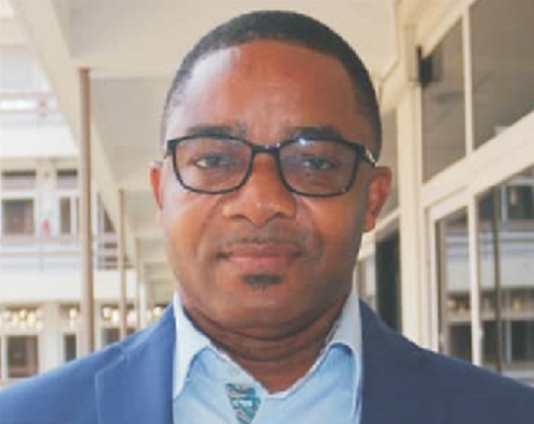
The author is Dr Peter Takyi Peprah, who is CFSVA Project Coordinator at Ghana Statistical Service (GSS).
Latest Stories
-
Anti-LGBTQ Bill: Forget the rumour mongers, I’m a man of action, and will pass the bill – Speaker
32 minutes -
Women and children among those killed in Sudanese army shelling of wedding celebration
36 minutes -
President Mahama is not sincere with Ghanaians on LGBTQ bill matter – Hassan Tampuli
54 minutes -
Gov’t to establish Prison Industrial Hub to equip inmates with income-generating skills – Prison Service boss
1 hour -
Alhassan Tampuli donates cement, roofing sheets to support storm victims in Gushegu
1 hour -
Alhassan Tampuli appeals for urgent support for storm victims in Gushegu
1 hour -
The hypocrisy must stop; pass Anti-LGBTQ+ Bill now – Alhassan Tampuli to Mahama
1 hour -
Imprisonment should be rehabilitative, not punitive – Ghana Prisons boss at UNGA
2 hours -
Ga Adangbe traditional priests petition Mahama over McDan aviation licence revocation
2 hours -
Anti-LGBTQ Bill: NDC’s arrogance is worrying – Hassan Tampuli
2 hours -
Let’s give OSP time to mature, not to scrap it – Hassan Tampuli
2 hours -
Nigeria convicts 386 Islamist militants in mass trials
2 hours -
Djibouti president wins election with 97.8% of vote, state media says
2 hours -
We don’t have mandate to deduct tax from rent allowance of security services personnel – Interior Ministry clarifies
3 hours -
Ablakwa receives Presidential Special Envoy on Reparations to advance global agenda
3 hours