

Audio By Carbonatix
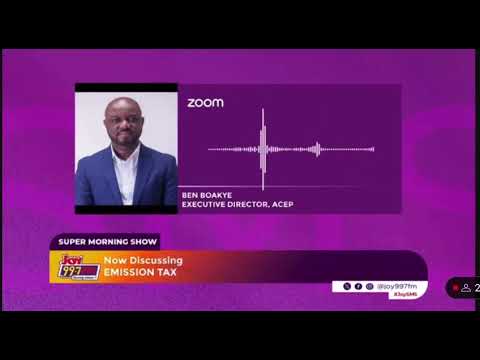
The Executive Director of the Africa Centre for Energy Policy (ACEP), Benjamin Boakye has raised serious concerns about procurement inefficiencies at the Electricity Company of Ghana (ECG).
Speaking on Joy FM’s Super Morning Show, Mr. Boakye revealed that every service or equipment procured by ECG costs at least two to three times more than the standard shelf price. He questioned why such inefficiencies persist without accountability.
“Why is that happening, and why does nobody care? Nobody is willing to deal with this inefficiency and mismanagement at ECG, yet we keep complaining about the government bringing money to pay electricity bills when people are abusing the revenue. It’s our tax money being used to pay these bills,” he said.
Mr. Boakye pointed to the inability of ECG to meet key milestones under the International Monetary Fund (IMF) programme as a reflection of its inefficiency and explained that one of the goals of the programme was for ECG to stay current on its obligations while the government addressed legacy debts. However, ECG has failed to meet this target, further deepening the financial challenges in the power sector.
He criticised the regulatory system, stating that the Public Utilities Regulatory Commission (PURC) has been ineffective in holding ECG accountable. He called for private sector involvement to ensure efficiency, with the government focusing on regulation rather than managing utilities directly.
“We need to demand that the right things are done. Once there is a regulator like the PURC, and they cannot regulate ECG effectively, then we need the private sector to be involved. The government should focus on regulating the private sector with the authority of the state to protect all of us, and not be part of the business and still pay a regulator that cannot oversee the operations properly,” Mr. Boakye added.
He also stressed that ECG’s inefficiencies continue to burden taxpayers, warning that without bold reforms, the company’s problems will persist and ultimately lead to more severe energy challenges.
In a broader discussion about Ghana’s power sector challenges, Mr. Boakye restated the need to fix ECG’s collection inefficiencies and ensure accountability in its operations. He warned that without these reforms, the country risks a return to prolonged power cuts, popularly known as Dumsor.
“The whole country agreed in 2014 to bring in a private entity to ensure investments and make sure power generation, transmission, and distribution translate into revenue. But political interference interrupted the process." he said
Mr. Boakye urged citizens to demand better management of the country’s utilities to prevent a cycle of inefficiency and financial losses that continues to drain national resources. “And if you track back between 2014 and now, government probably would have spent not less than $30 billion trying to address this power sector challenge,” he said.
Latest Stories
-
A source of excellence across generations – Vice President Opoku-Agyemang lauds Mfantsipim
35 minutes -
(Photos) Mfantsipim School launches historic 150th anniversary
59 minutes -
Knights and Ladies of Marshall group backs Catholic Bishops’ stance on anti-LGBTQ+
2 hours -
Bright Simons writes: All the Filla in the Ibrahim Mahama/E&P – Gold Fields Saga
2 hours -
Monetise Idiocy In Ghana
2 hours -
The Ghanaian prophet and the mysterious death of his scottish wife Charmain Speirs
3 hours -
Nearly 400 sentenced in Nigeria for links to militant Islamists
4 hours -
Ghana’s recovery supported by gold strength despite global oil price pressures – Standard Bank Research
4 hours -
Methodist Church hails Mfantsipim@150; calls for “fresh consecration” to excellence
4 hours -
‘Excellence is our inheritance’ – Nana Sam Brew-Butler hails Mfantsipim’s 150-year reign in leadership
4 hours -
Kwaku Azar writes: A-G vs OSP
4 hours -
Mfantsipim–Adisadel rivalry built excellence, not division – Sam Jonah
5 hours -
Vice President launches Mfantsipim’s 150 years of shaping Ghana’s greatest mind
5 hours -
I assure Otumfuo, Mahama will join him to commission KNUST Teaching Hospital by end of this year – Haruna Iddrisu
6 hours -
Barcelona dominate derby to extend La Liga lead
6 hours