

Audio By Carbonatix
Air quality experts are calling for urgent action to merge the scattered existing regulations that touch on air quality into a single National Air Quality Policy.
This is because Ghana is choking — slowly, silently — and the numbers are terrifying.
Air pollution now kills more people in the country than malaria, HIV, and tuberculosis combined.
In 2019, the World Health Organisation estimated that over 28,000 Ghanaians died from diseases linked to toxic air.
That’s roughly one person every 19 minutes. If the trend continues, more than 2,300 lives could be lost every month to the invisible killer.

Two years later, the Global State of Air Report pegged the figure even higher: 30,000 deaths in 2021 alone.
It was against this grim backdrop that experts at the maiden public lecture of the Ghana Thoracic Society raised the alarm — again.
Held at the British Council Hall in Accra under the theme “A Neglected Killer: Air Pollution and the Lung,” the event was a resounding call for policy reform, public education, and political will.
Desmond Appiah, Country Lead for the Clean Air Fund, was direct in his appeal.
“There is still a gap when it comes to a policy direction, a clear, clean air or air quality policy, which says this is our aspiration when it comes to air pollution. And these are the things that we think that we can work together.”
He added, “What a policy does is that it helps to guide how we do everything. So if government initiates or puts in place a national air quality policy, anybody coming to do some work in Ghana, which would have a bearing on air pollution or quality of air, would have to toe the line.”
Although Ghana has some standards on vehicle emissions, they are not mandatory. “And that is where I think the gap is,” Mr Appiah noted.

“But with the new EPA Act…I think that the EPA is working together with other stakeholders, DVLA, Standards Authority and the like, to work on some of these things.”
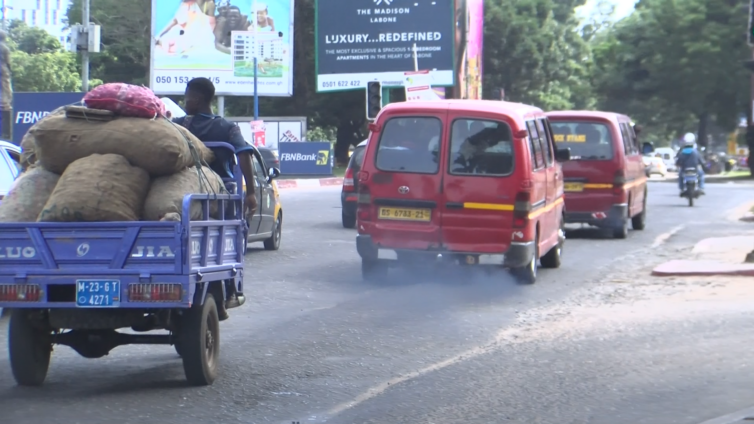
Desmond Appiah was also quick to point out that air pollution is “now the number one environmental challenge in the world and in Ghana.” It’s not just vehicle emissions.
“Poor waste management, dusty roads, and some farming practices” are all contributing to the crisis.
Paediatric pulmonologist, Dr Sandra Kwarteng Owusu, shared findings from a local study that monitored schoolchildren’s exposure levels. The results were disturbing.
“We realised that for most of the children, during the time they are on their way to school… they had higher levels of exposure,” she said.

“There was one particular school where the children had a lot of exposure during the day… it had the most children who reported asthma symptoms.”
For guest speaker Professor Kofi Amegah, tackling air pollution starts with everyday decisions — from how we cook to what we drive.
“We need to find a way and transition to clean cooking solutions by using LPG and getting rid of the charcoal,” he urged.
“The high-emitting vehicles — I think we need to find a way and either get rid of them by not giving them roadworthiness, or we need to tax them heavily.”

He added, “I’m in support of taxing these vehicles heavily so that it will serve as a deterrent… We can also look at a policy whereby there could be some form of replacement for a vehicle owner so that they can pay over time.”
Globally, air pollution caused an estimated 8.1 million deaths in 2021, according to the Global State of Air Report.
That’s over 22,000 deaths a day. The report, backed by UNICEF, reveals that one child dies every minute due to air pollution-related illnesses.
And it’s not just about death. The 2024 Air Quality Life Index (AQLI) shows that air pollution cuts the global average life expectancy by 1.9 years, amounting to 14.9 billion life-years lost worldwide.
Professor Jane Afriyie Mensah, President of the Ghana Thoracic Society, says the group’s mission is to translate such alarming data into public action.
“We have realised that a lot needs to go into education to let people understand how they can achieve optimal lung health,” she said.

“This is becoming alarming. And we need to raise our voices to address this menace.”
“We'll go sector by sector, looking at the people who are most at risk of air pollution. And then we will channel our educational activities through that.”
With 30,000 deaths and counting, Ghana’s air crisis can no longer be swept under the rug. The experts have spoken — now they await action.
Latest Stories
-
Lucy Agyepong honoured for excellence in engineering education at maiden GAAS Women’s Awards
3 seconds -
Call to Glory
7 minutes -
AFCON 2027: Sports Minister ‘convinced’ Black Stars will qualify despite losing opening two games
8 minutes -
CUTS welcomes VAT collection on cross-border digital services, urges fair treatment of Distance Learning students on overseas programmes
13 minutes -
Leave the Chiefs and fix the Galamsey Problem: Dr Solomon Owusu Advises President Mahama
15 minutes -
Pay attention to teachers and give them what is due – Ho District GNAT tells government
19 minutes -
Authorities knew of abuse allegations against Obuasi headmaster months before suspension – JoyNews investigation
24 minutes -
US teenager appears in court over alleged Hindu temple shooting plot
26 minutes -
Academic City donates paediatric rehabilitation staircase to Ga East Hospital
30 minutes -
Services drive 7.4% expansion in Ghana’s economic activity
41 minutes -
‘I don’t make music for awards, I make it to connect people’ – Rocky Dawuni
53 minutes -
Farmer jailed for three months over assault on wife in viral video
59 minutes -
Police arrest eight in Okaishie operation targeting illicit drugs and medicines
1 hour -
David Agyemang Yeboah: Marriage is not the problem; your approach is
1 hour -
Lawyer sues Standards Authority over used-vehicle import restrictions
1 hour