

Audio By Carbonatix
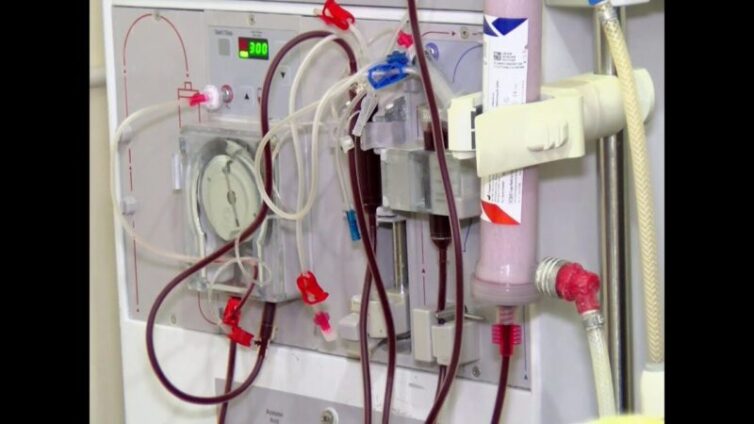
The Chief Executive Officer of the National Health Insurance Authority (NHIA), Dr Dacosta Aboagye, has announced that the government's free dialysis services will be available in 40 health facilities across the country from December 1, 2024.
The NHIA recently added dialysis services to its benefit package, and the policy is set to begin on December 1. This initiative aims to provide relief to many Ghanaians who cannot afford the cost of dialysis.
Currently, the cost of dialysis in the country ranges between GHC300 and GHC1,000, and available data suggests that between 4 million and 5.2 million citizens have some form of renal function impairment.
According to Dr Aboagye, patients will be able to access the service in 40 pilot health facilities, including private hospitals.
“We have currently listed about 40 of these centres that our patients would have to go to,” he said.
He explained that on Tuesday, November 26, the NHIA will engage the heads of these facilities to discuss how they will implement the service for patients.
Speaking on Joy News’ AM Show on Monday, November 25, Dr Aboagye further emphasised that the programme is sustainable, as the Authority has the necessary funds to implement it.
He also stated that a change of government will not affect the free dialysis treatment, as the service has already been incorporated into the NHIA's benefits package and is backed by the constitution.
Vice President Dr Mahamudu Bawumia, who is seeking to become the substantive president, has promised to provide free dialysis treatment to patients.
He earlier announced that the NHIA would begin the programme on December 1. According to him, the new free dialysis policy reflects his government’s commitment to improving the well-being of citizens suffering from renal diseases.
The pilot programme was launched earlier this year for patients over 60 and under 18 years of age.
Meanwhile, John Mahama of the NDC, who is seeking re-election, has promised to establish modern dialysis centres in regions that do not currently have one. The former president stated that the decentralisation of these centres would improve access to treatment.
Available data indicates that approximately 2,000 people are currently receiving dialysis in the country.
These individuals often seek alternative forms of treatment and access renal care only when the situation becomes acute. This negatively impacts their quality of life and life expectancy.
Latest Stories
-
Health Ministry engages Ga Mantse ahead of Free Primary Healthcare launch
10 minutes -
We can tackle multiple priorities – Sam George defends Anti-LGBTQ Bill push
45 minutes -
Statement: Ghana Chamber of Mines’ Response to Claims in Joe Jackson’s “Ananse Stories about the Economy of Ghana”
46 minutes -
GES opens 2026 teacher recruitment for licensed B.Ed graduates
49 minutes -
Ghana must value skilled trades, build resilient learners — Ibn Chambas
57 minutes -
Ghana must rethink education around relevance, resilience and responsibility — Ibn Chambas
60 minutes -
Prince Harry faces defamation lawsuit from charity he co-founded
1 hour -
South Korea deploys thermal cameras to track escaped zoo wolf
1 hour -
Calls for royal meeting with Epstein survivors grow ahead of US visit
1 hour -
Ibn Chambas advocates blend of technology and human values in education
1 hour -
UMA improves healthcare access in Asutifi North with GH₵700k ‘Kim Taylor Legacy’ Walkway
1 hour -
Scholarships Authority and Fanaka University offer sponsorship for procurement and supply chain studies
1 hour -
Bisa Kdei drops new single ‘Go N Look’ featuring Medikal
1 hour -
Benin facing rising terrorism in north as French military presence faces growing criticism
1 hour -
UEW Public Lecture Series 2026: Education debate ‘about the soul of Ghana’s future’ — Dr Ibn Chambas
1 hour