

Audio By Carbonatix
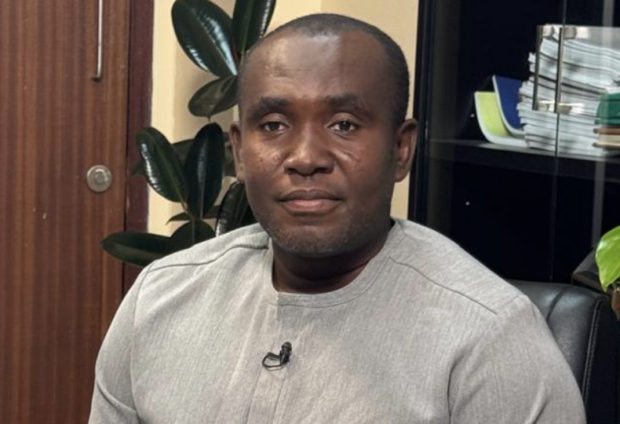
The Executive Secretary of the Public Utilities and Regulatory Commission (PURC), Dr Shaffic Suleman, says revenue from the GH¢1 levy on petroleum products has been critical in clearing long-standing energy sector debts and stabilising Ghana’s power supply.
Speaking on Joy News’ PM Express Business Edition, he said the funds—amounting to what he described as about $8 billion accumulated through government intervention—have been used to settle arrears owed to independent power producers and gas suppliers.
“A report from the finance ministry indicates that the ¢1 on the petroleum products that was passed, has been used… that money has accumulated. If you see the report, that’s about $8 billion,” he said.
He explained that the funds have been allocated to multiple obligations across the energy value chain.
“So they’ve used that ¢8 billion to pay off most of the arrears we’ve not paid, all the arrears from the IPPs. We’ve also used some of it to pay to get back the risk guarantees on the Sankofa Gye Nyame gas production,” he said.
He added that part of the money was also used to restore financial assurances tied to Ghana’s energy contracts.
“We’ve also paid off the accumulated debt that was putting Ghana’s credit rating at a very terrible outlook… so we’ve paid and restored that World Bank risk guarantee with ENI. So it’s now making Ghana look so good, and our credit rating has also taken shape,” he said.
According to him, additional payments have gone to gas suppliers under key production agreements.
“I think we’ve also used that amount to pay for the cost of the gas, the ¢70 million to the gas suppliers, to the Sankofa partners, then we are also paying to the Jubilee Partners Gas Supply,” he noted.
He stressed that these interventions are directly linked to keeping the electricity supply stable.
“So we are using all that… to pay and sustain that part, and that’s actually what is keeping the light on.”
Asked whether this has reduced the debt burden, he responded: “Yes! drop the debt significantly.”
He cautioned that the issue is not a one-off obligation but a recurring financing need for the sector.
“So let me explain this for you, so every year, before our lights can be kept on consistently for 12 months, the Ministry of Finance must cough out money to ensure that we pay for the cost of all these fuels.”
He further revealed the scale of monthly financing required to sustain the electricity supply.
“So every month on average is $92 million. As we speak, it’s $92 million. So when you see your lights on for 30 days, what it means is that aside from the tariff we are paying, the Ministry of Finance is also putting in $92 million to make the lights come on.”
Dr Suleman’s comments underscore the continued fiscal pressure on Ghana’s power sector, even as debt-clearing efforts improve the country’s credit outlook and restore key guarantees with international partners.
Latest Stories
-
Three Saudi nationals killed in Houthi attacks on Riyadh airport
6 minutes -
Jinapor demands accountability from energy sector agencies ahead of 2027
12 minutes -
Cars torched and shops looted as anti-migrant violence erupts in South Africa
17 minutes -
We’ll strengthen unity and party structures to win 2028 election – John Boadu assures Kufuor
20 minutes -
Mahama’s meeting with UN financial inclusion renews focus on women’s access to finance – Joyce Bawah Mogtari
23 minutes -
‘Africa is not the future; Africa is the now’ — Sammy Gyamfi tells African youth
27 minutes -
Mahama begins 2-day ‘Resetting Ghana’ tour of Ahafo Region
32 minutes -
It is a nuisance law; stop pretending it is a religious war
41 minutes -
KGL U17 Colts 2026: Prempeh Elite Academy, Western Region, two others battle for final berths
59 minutes -
LA 2028: Near misses and the crashouts, but Black Queens cannot afford another Olympic Games slip-up
1 hour -
Wode Maya recounts how he won Miss Trudy’s heart with Shatta Wale’s song
1 hour -
Dede Chancelor makes appearance at Milan Fashion Week 2026
2 hours -
Today’s Front pages: Friday, October 9, 2026
2 hours -
Edmond Kombat named Energy Sector Reform Programme Champion of the Year 2026
4 hours -
Women get 82.8% of secured credit transactions but only GH¢3.1bn – Bawah Mogtari
4 hours